
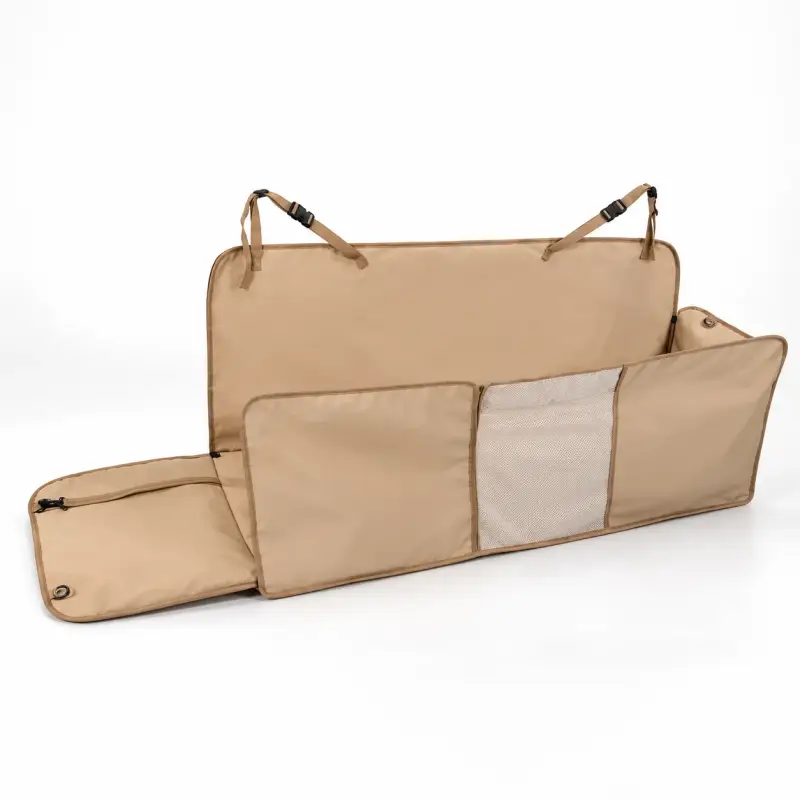
Ref. R19-01
Rear-seat dog car seat cover with side panels
Rear-seat cover format; compare protected area, side panels, headrest straps, openings and cleaning.
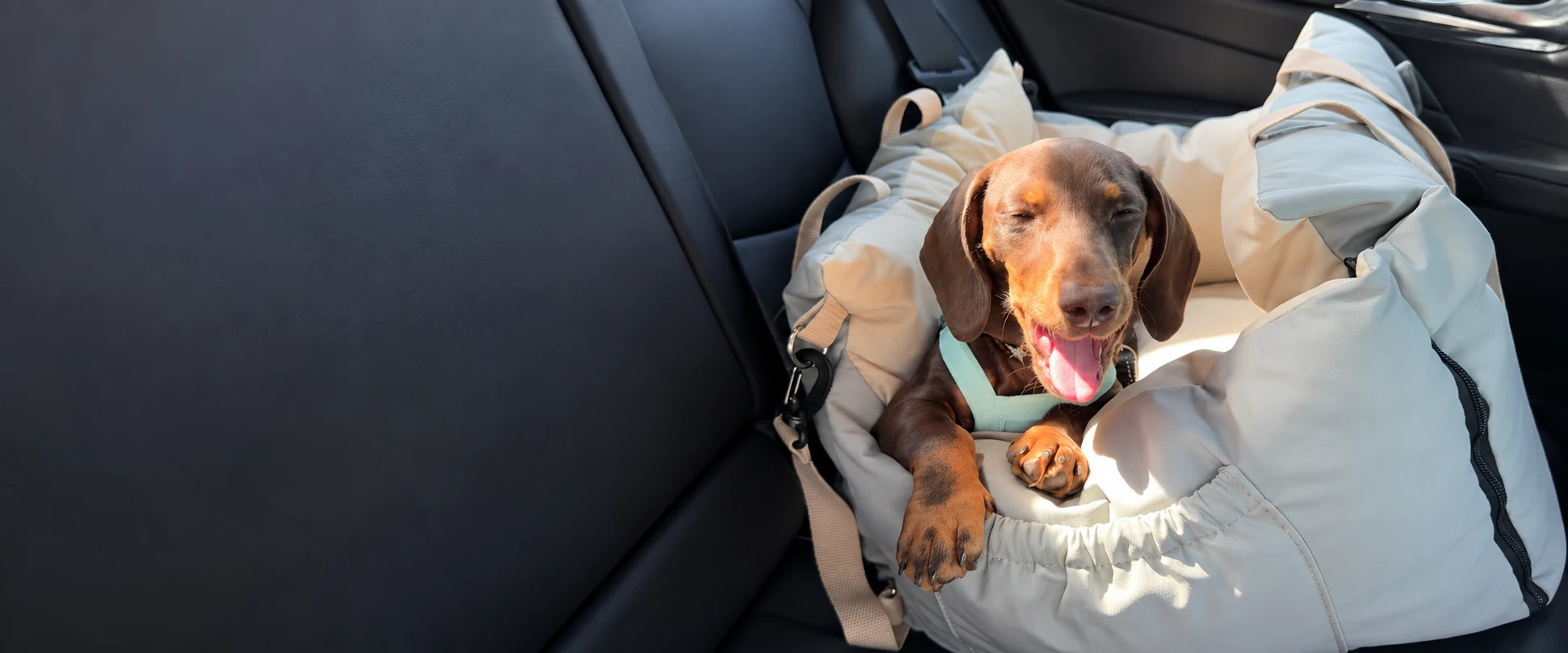
Explore dog car seats, dog booster seats, cushioned car beds and rear-seat dog car seat covers for wholesale and private-label ranges. Compare dog fit, vehicle fit, attachment, cover construction and cleaning before choosing colours, branding or packaging.
These 12 references serve different purposes: R19-01 and R19-03 are rear-seat protective covers or hammocks; R19-02 and R19-06–10 and R19-12 show cushioned seat formats; R19-05 is a booster-style design; R19-04 is a structured carrier, and R19-11 is a foldable framed seat. Start with the intended vehicle position and usable dog space, then compare the exact supplied straps, closures, support, cleaning and packed format by Ref. ID. Covers protect upholstery, while a raised seat, strap or carrier photo does not prove crash protection.
Rear-seat cover format; compare protected area, side panels, headrest straps, openings and cleaning.
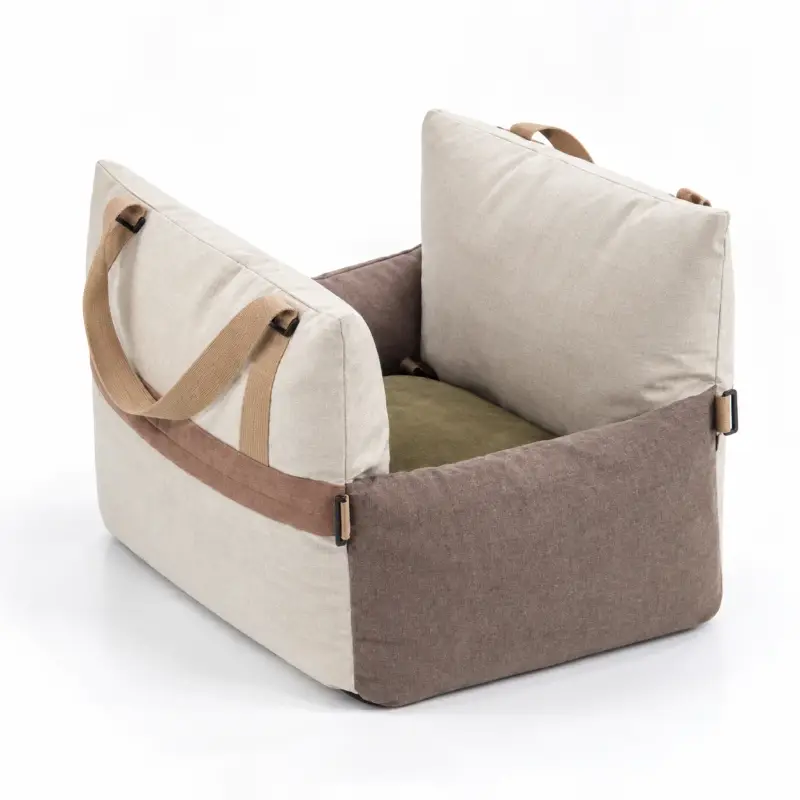
Cushioned dog car seat; compare usable interior, bolster height, footprint, base support and attachment.
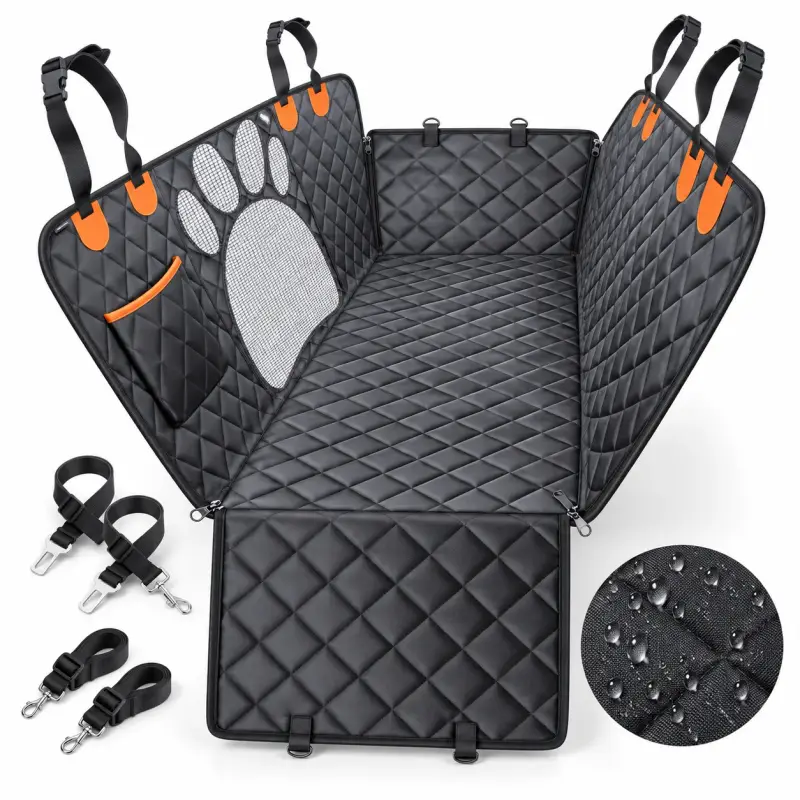
Hammock-style seat cover; compare rear-seat coverage, side panels, attachment straps, openings and cleaning.
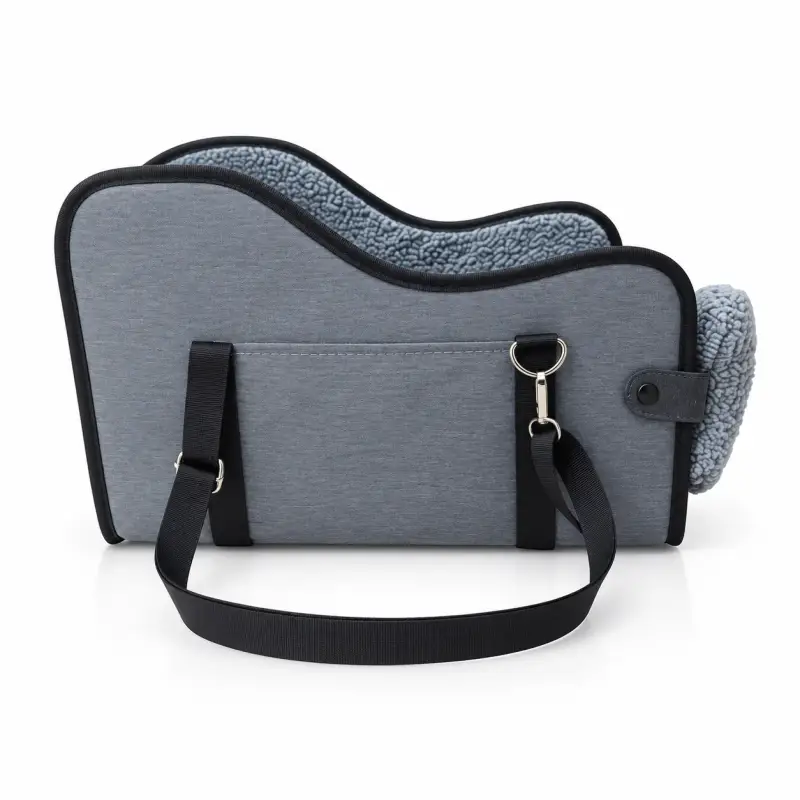
Structured in-car carrier; compare usable pet space, body support, access, handles, closures and vehicle installation.
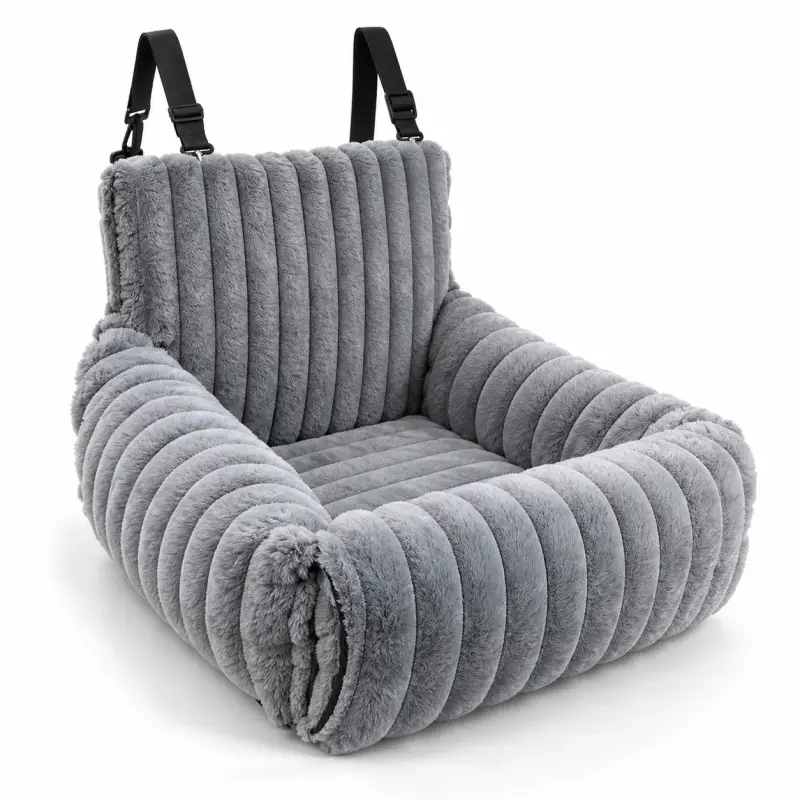
Raised dog booster seat; compare usable dog space, support, vehicle fit and attachment route.
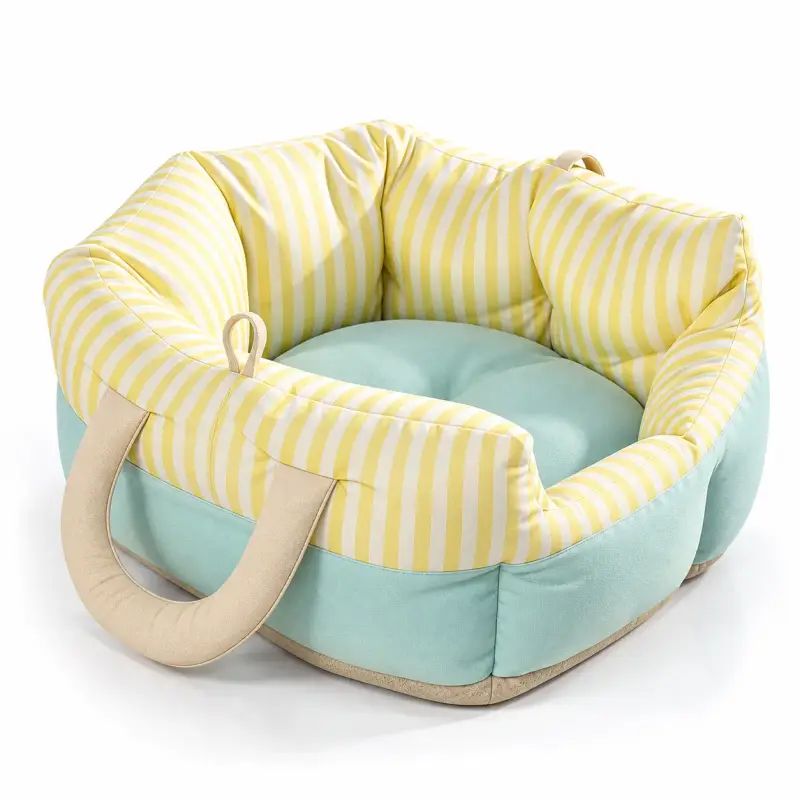
Round padded seat; compare usable diameter, bolster height, footprint, base, attachment and care.
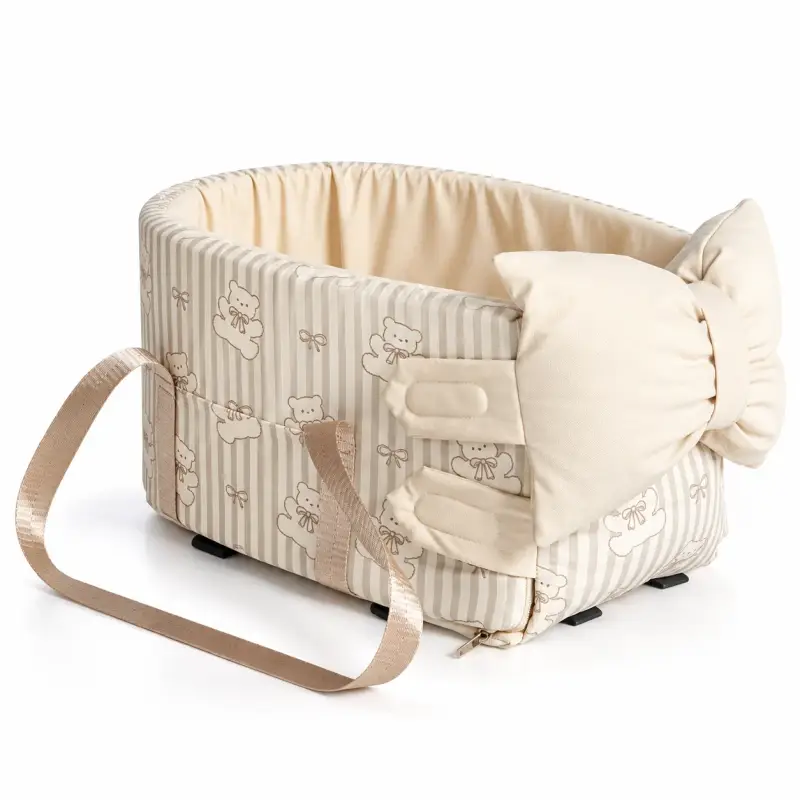
Padded dog car seat with handles; compare interior, footprint, handles, attachment and packed shape.
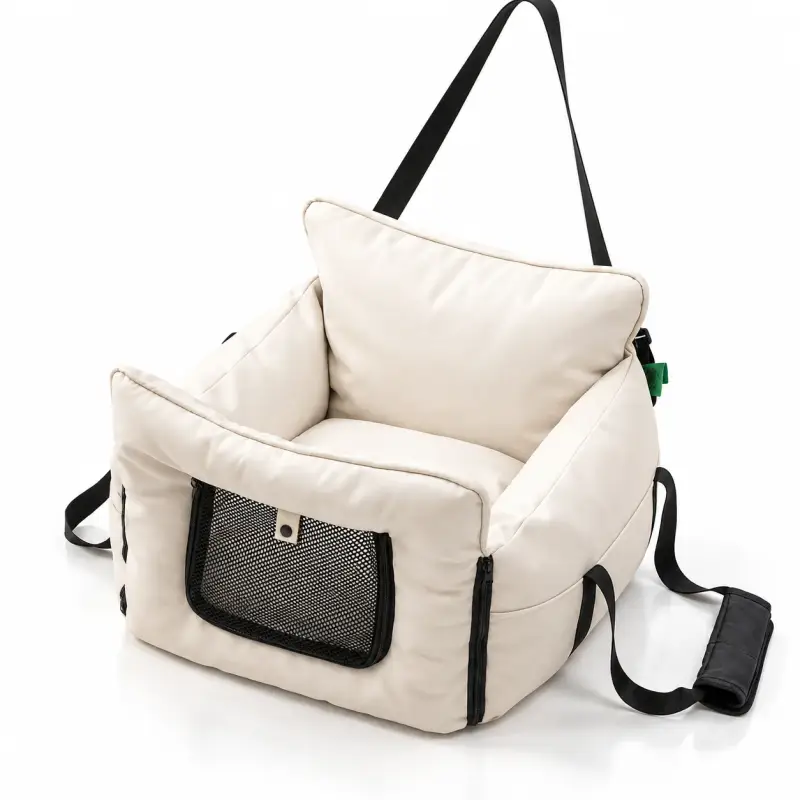
Cushioned dog car seat; compare usable space, pocket placement, footprint, attachment and cleaning.
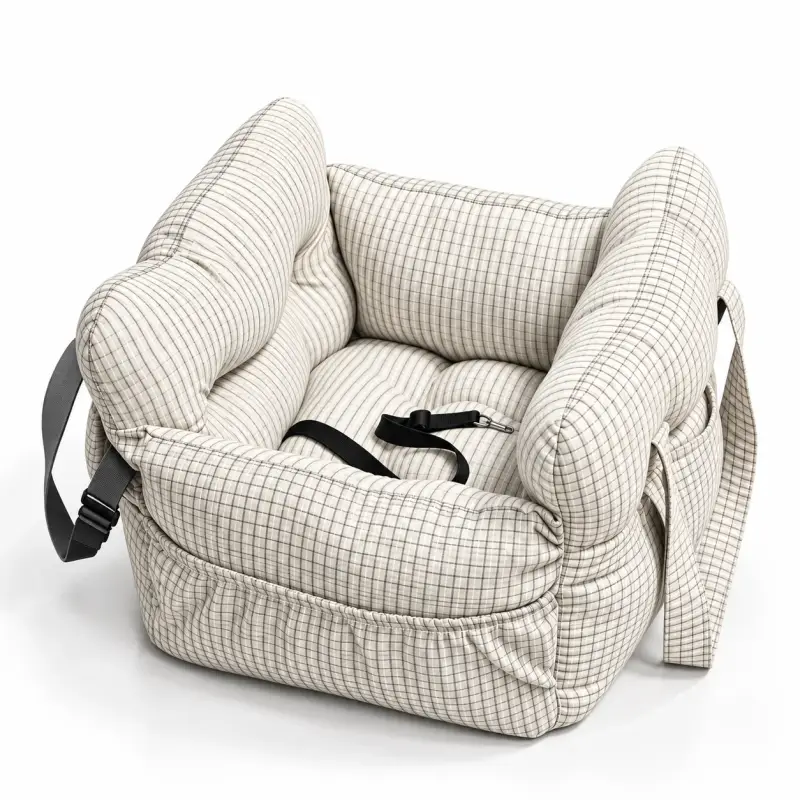
Padded seat format; compare interior, bolster support, footprint, attachment and removable cover details.
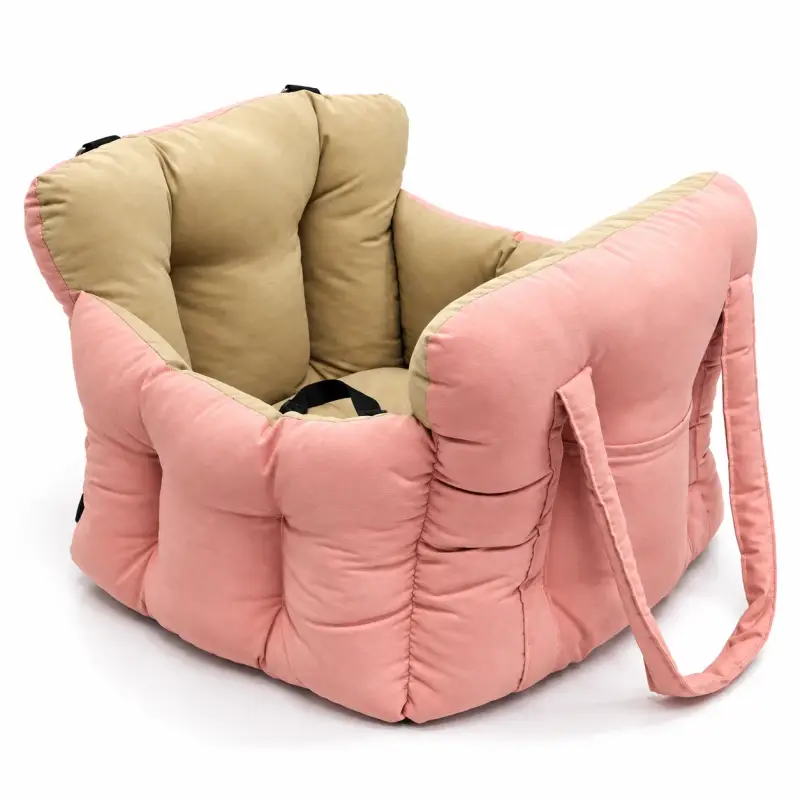
Padded car-seat format; compare usable space, bolster height, footprint, attachment and colour or fabric options.
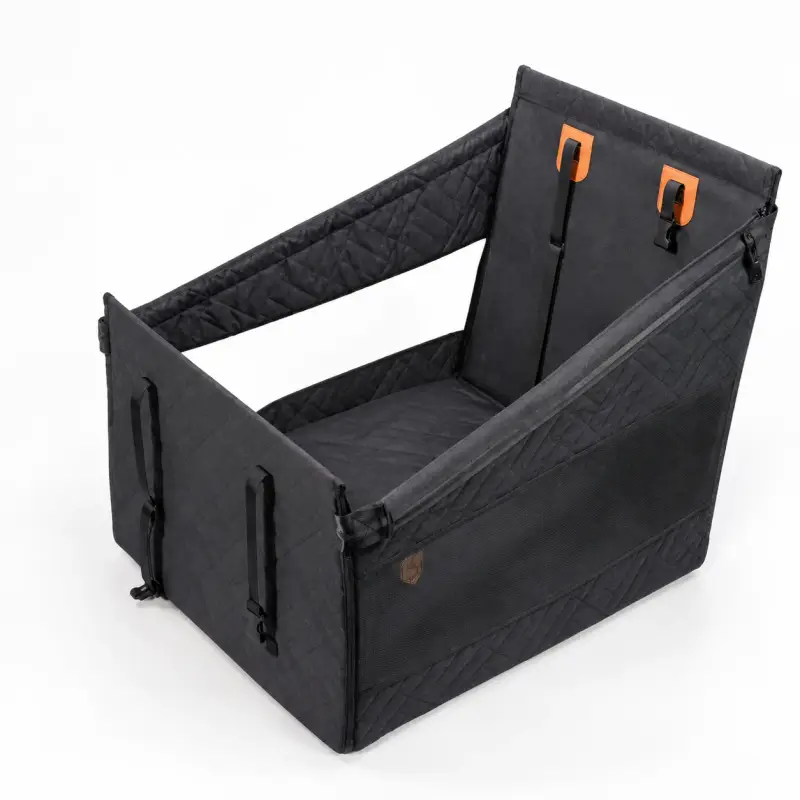
Foldable framed seat; compare usable space, frame support, closures, attachment and packed configuration.
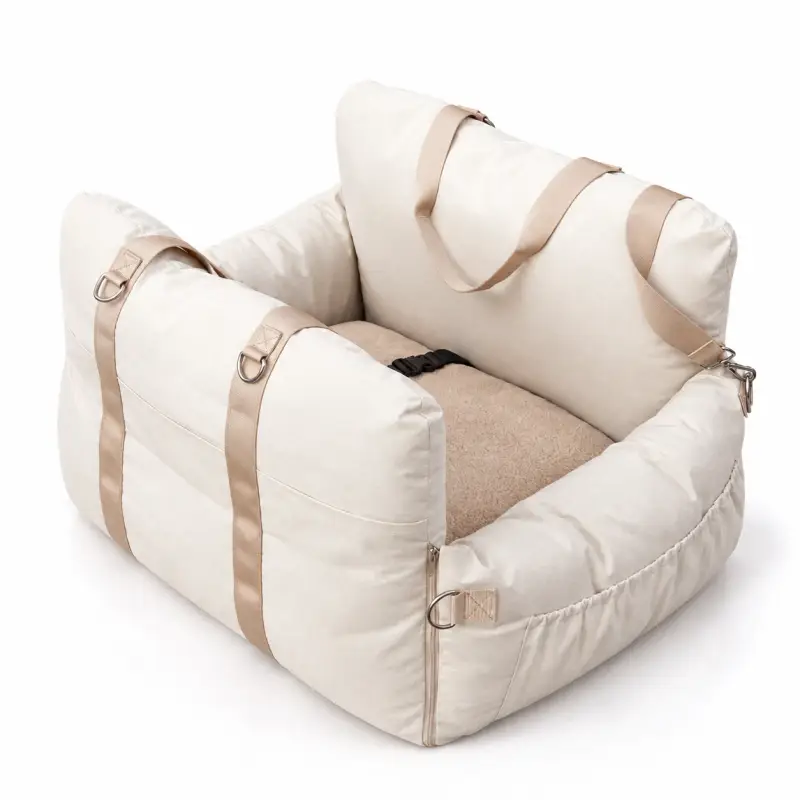
Cushioned seat with handles; compare interior, footprint, handles, attachment, cover and packing.
Choose a Ref. ID from the four different purposes above, or send your own reference. State whether you want upholstery protection (R19-01 or R19-03), a cushioned dog place, an elevated booster, or a structured in-car carrier. A quote should separately identify pet-fit measurements, vehicle-fit dimensions, included installation parts and evidence for any claimed crash protection.
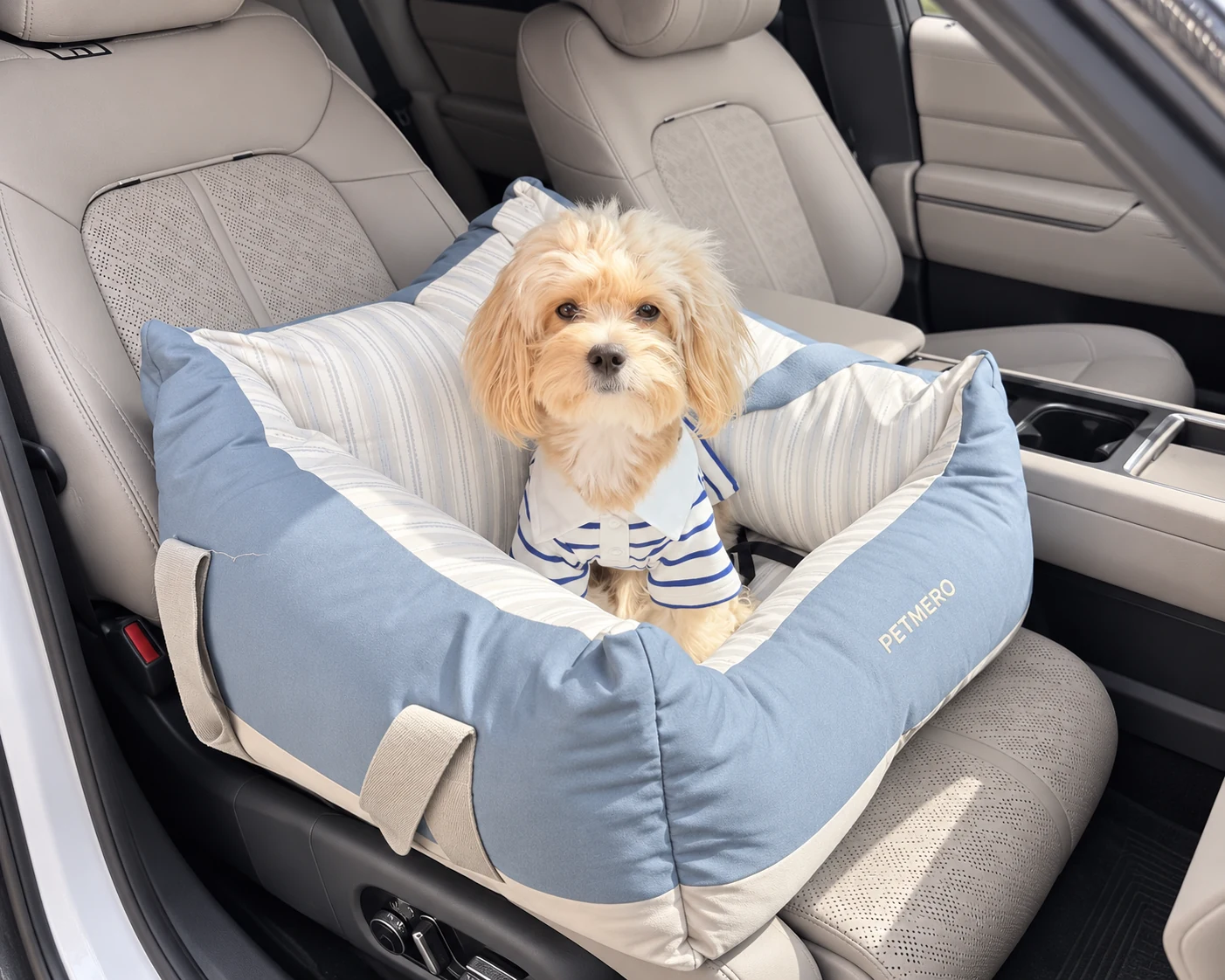
A cushioned dog car seat, a raised booster seat and a rear-seat cover solve different travel needs. Compare the selected design’s intended use before deciding what you will promise on the retail pack.
Compare usable interior space, bolster or side height, outside footprint, base support and the way the seat is installed in the vehicle.
Compare the raised seating area, support structure, dog-size range and attachment route. Added height alone is not evidence of crash protection.
These primarily protect the vehicle seat and define a travel area rather than forming a padded seat. Compare coverage, side panels, attachment points and access to seat-belt openings where included.
Compare usable dog space, frame or body support, closures, handles and the exact installation arrangement for the selected design.
Compare dog fit, vehicle fit and attachment together. Padded seats, booster seats and rear-seat covers solve different travel needs.
Start with usable dog space, bolster height, outside footprint and the complete installation arrangement.
Compare the raised dog space, support structure, vehicle fit and attachment route as one system.
Compare the protected seat area, side panels, attachment points and access to vehicle hardware.
Compare the supported dog space, frame or body, closures, handles and vehicle installation.
Match the dog's dimensions to the actual interior rather than relying on a weight label alone.
Compare the outside footprint and attachment route with the intended vehicle-seat position.
Check the supplied straps or hardware, removable parts and approved care method for the exact version.
Confirm the actual fabric, lining, quilting and trim used on the selected dog car seat or cover.
Match any water-resistant, durable or washable claim to the approved material and care method.
Confirm fill, base, inserts or frame parts and how they shape the usable dog space.
Review the complete sample because softness and support are different from tested vehicle protection.
Confirm headrest straps, seat straps, buckles, clips, anchors or other supplied parts and their stated purpose.
Check the installation route in the intended vehicle position and keep safety claims evidence-based.
Confirm which parts detach, how each component is cleaned and how replacement covers or liners are identified.
Keep size and version references matched so spare parts fit the approved construction.
| Part of the specification | What to include |
|---|---|
| Usable dog space | Interior length and width, side or bolster height, entry opening and any padding or liner that reduces the actual space. |
| Vehicle fit | Intended seat position, outside footprint, headrest or seat dimensions needed for installation and clearance around controls or seat-belt hardware. |
| Attachment system | Headrest straps, seat straps, anchor points, buckles, clips or other supplied parts and the complete installation route for the selected model. |
| Cover, liner and cleaning | Which parts are removable, the approved care method for each material and how covers, liners or inserts are refitted. |
| Seat-cover coverage | For hammock or cover styles, record the protected seat area, side-panel arrangement, openings and the vehicle-seat configuration the pattern is designed around. |
| Packed shape | Folded or compressed dimensions, removable parts and any steps needed for a cushioned or structured product to regain its intended shape after unpacking. |
Choose the dog car seat by vehicle fit and attachment routing before surface styling. Any change to the restraint path needs separate review; collision protection must not be assumed.
Start with vehicle-fit dimensions and attachment layout for the chosen dog car seat or pet car-seat cover. Ask what fit information and model-specific evidence can be supplied.
For a dog car seat or pet seat cover, review label and logo positions away from attachment routes. Keep any vehicle-safety wording separate from appearance and packaging approval.
Changes to dog car-seat fit, attachment routing or booster structure need a model-specific review. A sample change alone does not demonstrate collision protection or crash-test status. The PETMERO customization process covers design and sample sign-off; it is not evidence of crash protection.
Coordinate the approved fabric, lining, piping or trim for the selected construction and confirm the care method on the finished sample.
Choose a label, patch or printed area that does not interfere with attachment points, openings or removable covers. Keep fit, installation and care information clear.
Changing the dog space, outside footprint, base support or strap system can affect vehicle fit and product behaviour. Confirm feasibility and review the revised sample before production.
For dog car seats and booster seats, provide the vehicle seating position, product dimensions, attachment routing and intended dog size. Specify the requested function before pricing; photos, straps or a sample alone do not demonstrate crash-test performance.
“We are interested in R19-05 dog booster seats. Could you confirm the usable inside space, vehicle-seat attachment method, cover options and private-label packaging?” Include your estimated quantity and destination when available. Any vehicle-safety or crash-protection claim must be supported by test evidence for the exact model and installation.
Compare dog car-seat quotes using the same fit dimensions, seat construction, attachment layout and packing scope; crash-safety claims require separate evidence.
For the selected dog car seat, record the fit dimensions, attachment routing, cushion construction and care instructions. Vehicle crash-protection claims require separate model-specific evidence.
Install the complete sample in the exact intended vehicle location using its supplied parts and instructions. Check dog clearance, vehicle seat and headrest contact, buckle or belt access, and all attachment points; photograph the fitted route for the buying specification. This is a fit and installation check, not a substitute for a collision test.
Remove and refit covers or liners, review the base and support, and check how the product looks and functions after any folding or compression used for packing.
Approve the final materials, included parts, installation and care instructions, branding, packing and any model-specific performance claim before production.
For padded or structured seats, check how compression or folding affects the base, sides, cover and final appearance after unpacking.
Pack and identify the exact straps, buckles, clips or other supplied attachment parts so the customer can follow the approved installation.
Use clear size and model references so replacement covers, liners or hardware match the approved dog car seat.
Buying questions about dog car-seat dimensions, attachment paths, covers and evidence needed for any vehicle-safety claim.
Start with the dog's body dimensions and the product's usable interior, then compare the outside footprint with the intended vehicle-seat position. A weight label alone does not establish fit.
A dog car seat can be padded or structured. A booster-style design raises the dog within the vehicle. The raised position does not by itself establish crash protection, so compare support, attachment and intended use for the exact model.
No. A rear-seat cover or hammock mainly protects the vehicle seat and creates a defined travel area. A padded dog car seat or booster seat has its own interior and support structure.
Do not assume universal fit. Compare the outside footprint, intended seat position, headrest or seat attachment route and any required clearance with the target vehicle configuration.
Crash-test evidence must identify the exact model and size or weight range, test method and conditions, laboratory or evaluator, result, and complete installation or restraint configuration. Check that the supplied attachments match what was tested, and do not extend the result to modified sizes or attachment systems without evidence. Product photos, belts, tethers, soft bolsters and vehicle-fit trials do not themselves demonstrate collision protection.
That depends on the selected construction. Confirm which parts are removable and follow the approved care method for the actual cover, filling, liner and base; removable does not automatically mean machine-washable.
Compare the protected seat area, side-panel layout, headrest or seat attachments, openings for vehicle hardware where included, surface construction and cleaning method.
Yes, subject to the selected design and project feasibility. Fabric, colour and branding changes are usually simpler than changing the outside footprint, support structure or attachment system, which may require a revised sample.
A Ref. ID, image or product link is enough to begin. Add the intended dog size, vehicle-seat position, quantity, destination, attachment, branding or packaging requirements whenever those details are available.