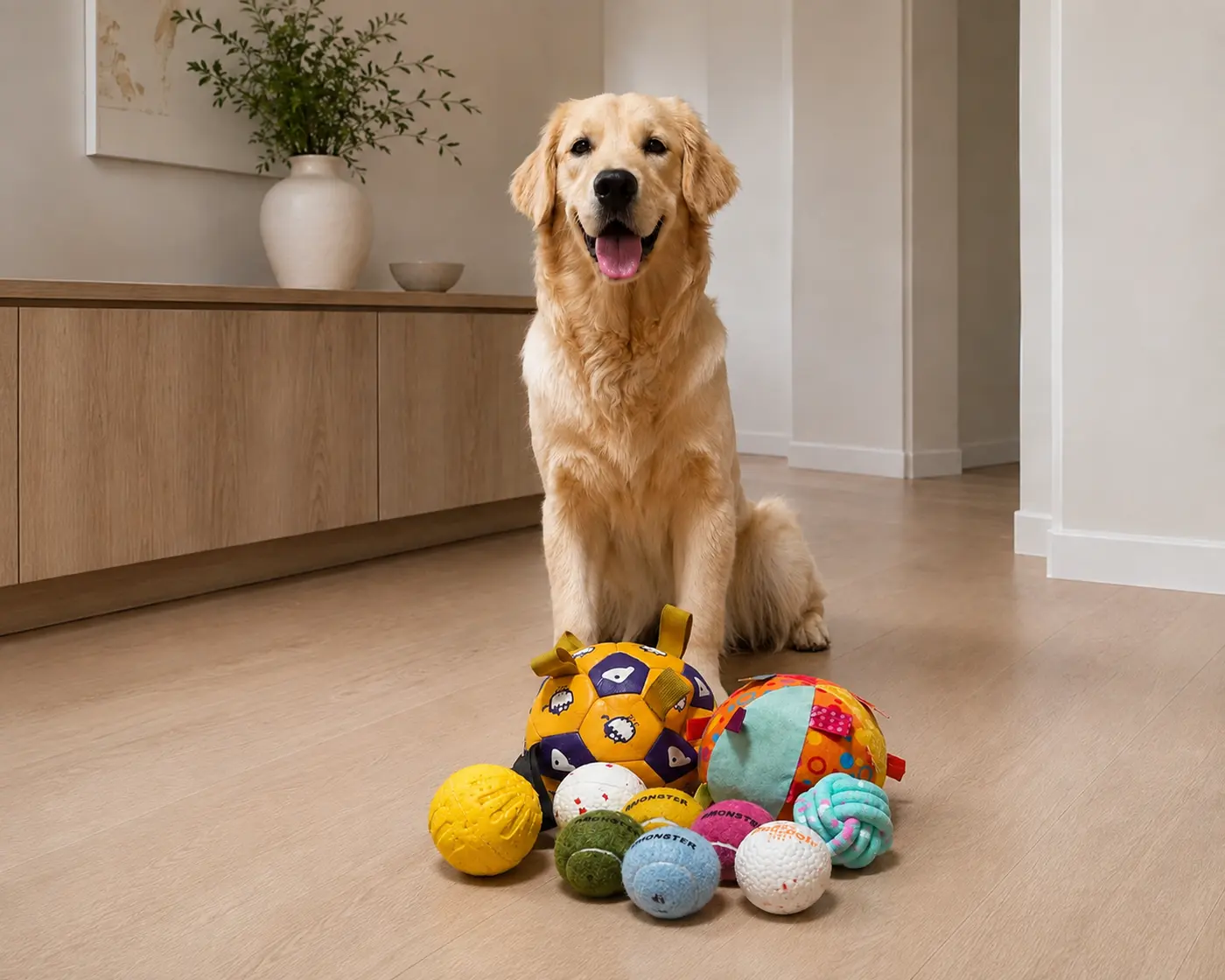
When a buyer says “slow feeder bowl,” the actual product direction may still be very broad. Some projects are mainly for dry food, some are better for wet food or mixed feeding, some need a lick mat direction, and some work better as a roller-ball feeder for lickable foods.
That is why products in the same category can still differ in material, structure, stability, and quote.
A better way to discuss the project is to confirm four things first: what the pet will eat, how the product should slow the feeding, which material direction fits the market, and whether the project is a single SKU or a small product line.
This article breaks the decision into clear parts so a buyer can move from a general idea to a more accurate product discussion.
On this page
01 — Start with the feeding use 02 — Compare the main directions 03 — Material choices 04 — Slow feeder bowl structures 05 — Roller-ball feeders 06 — Lick mat patterns 07 — Bottom stability 08 — Product line planning Prepare your inquiry FAQStart with how the product will actually be used
A feeding product project becomes much easier when the intended use is clear at the beginning.
Some buyers mainly need a product that slows down dry kibble meals. Others need a calmer licking activity for soft treats. Some want a mixed collection so the brand can offer more than one feeding experience.
The structure should follow the feeding use, not the other way around.
Before discussing details, it helps to clarify:
- whether the product is mainly for dry food, wet food, or lickable food;
- whether the goal is slower eating, enrichment, or both;
- the approximate dog size or muzzle size;
- whether the project is a single item or a coordinated series.
Once those points are clearer, it becomes easier to compare structures, materials, and customization directions without creating confusion.
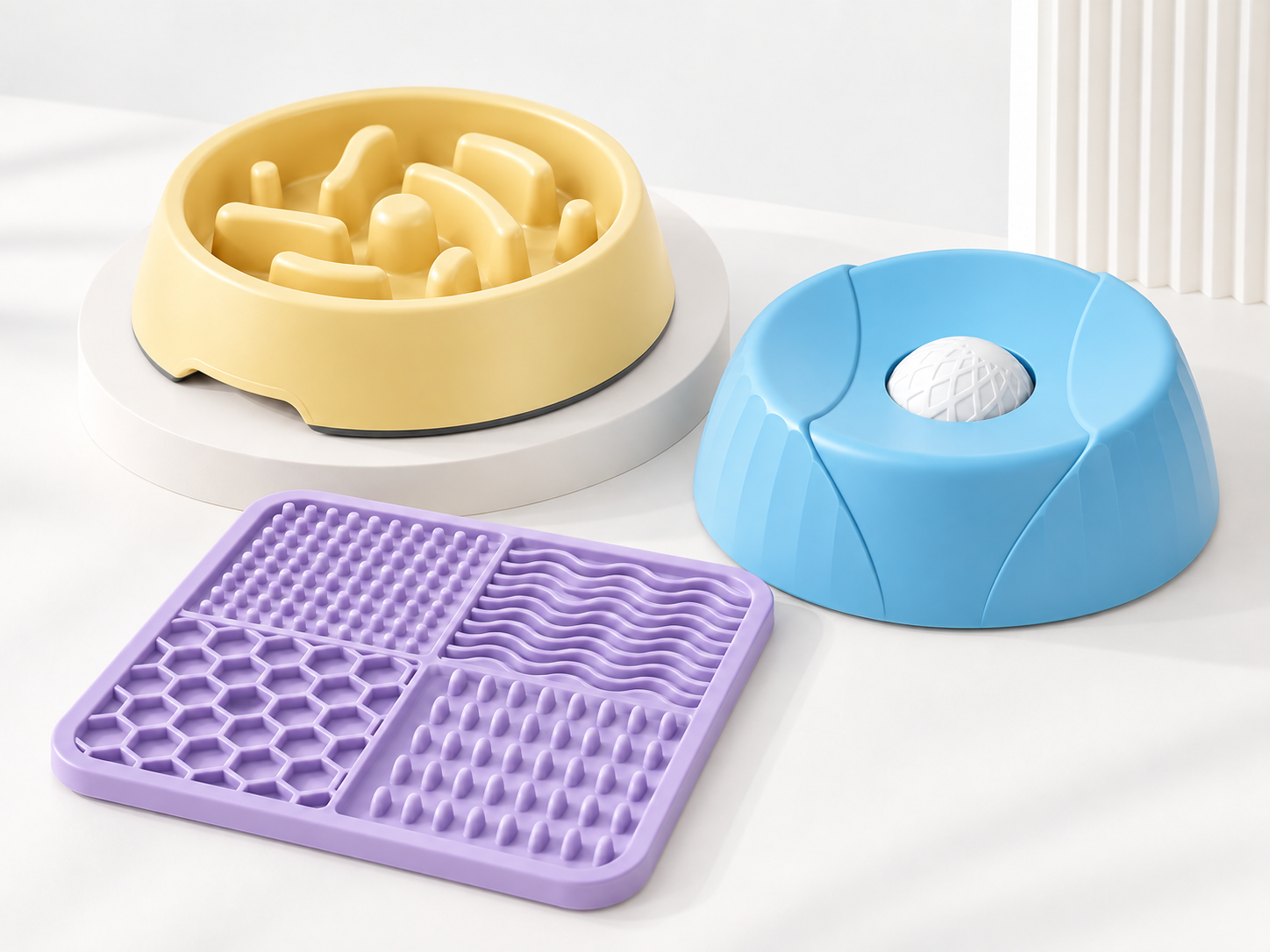
Slow feeder bowls, lick mats, and roller-ball feeders do not solve the same need
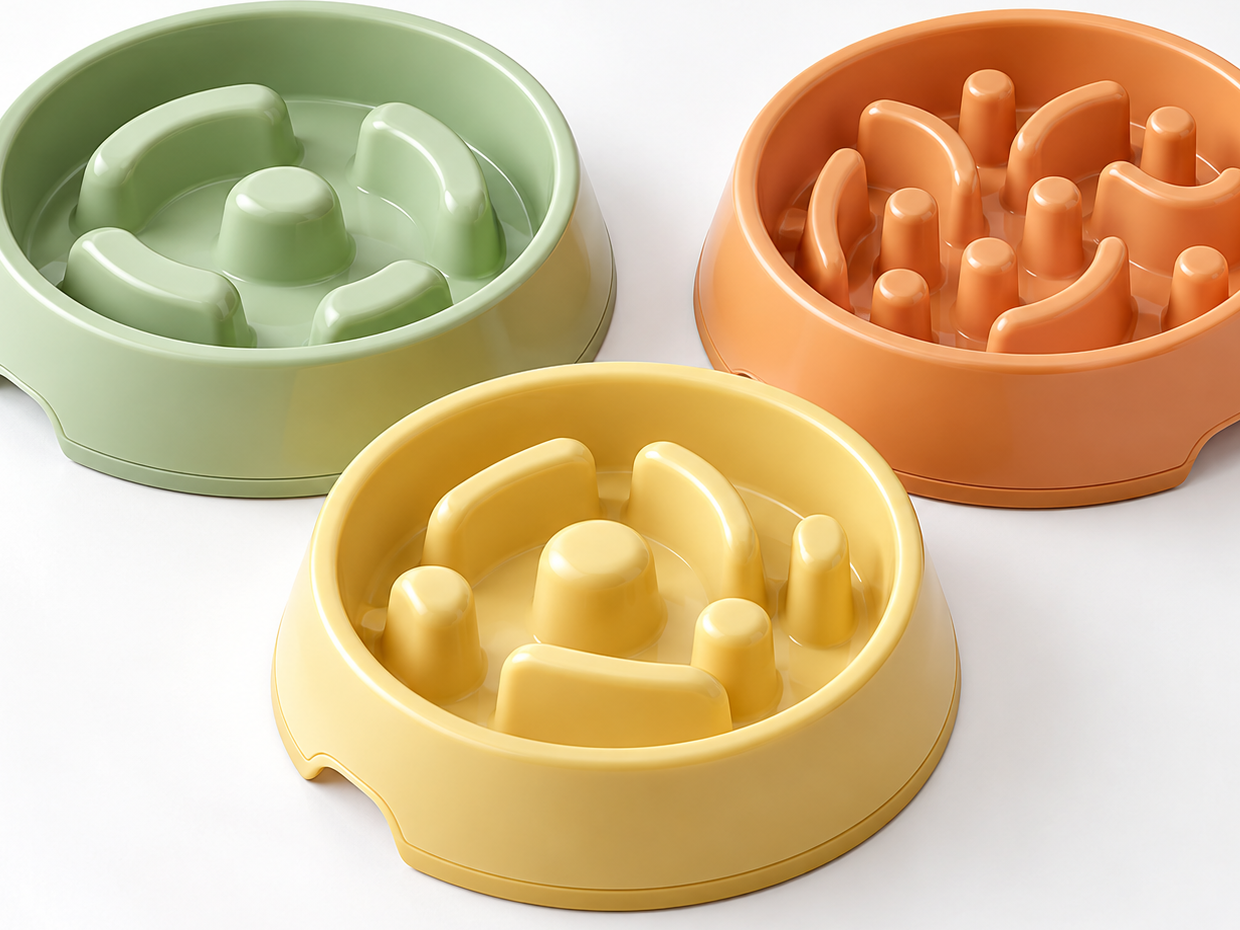
A slow feeder bowl is usually the most familiar option for dry food or chunkier meals.
A lick mat is usually better when the product is designed for spreadable, softer, or thinner layers of food.
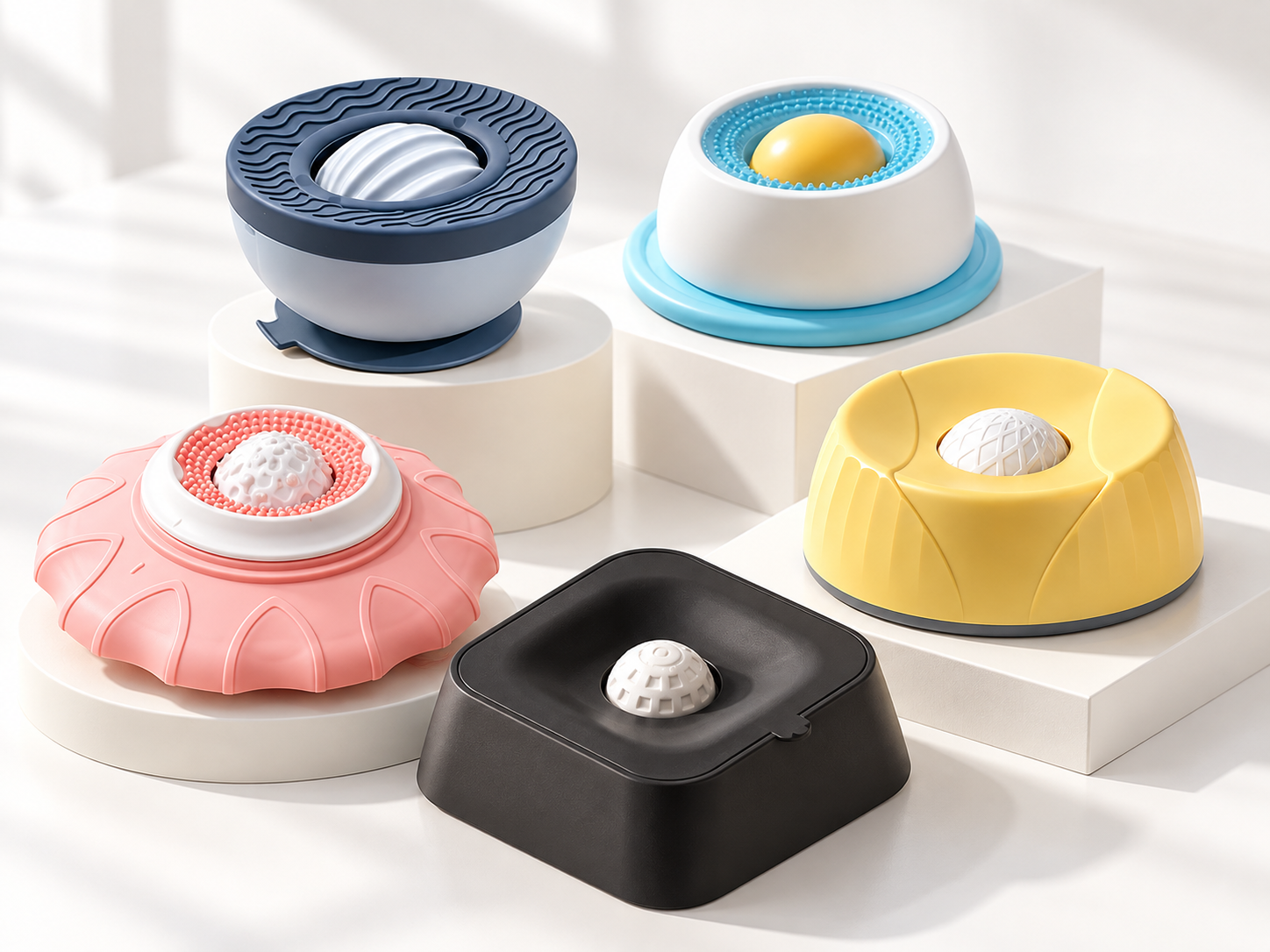
A roller-ball feeder is less common, but it can be a useful direction when the goal is to combine licking with moving food through a ball-based structure.
| Direction | Usually suitable for | What buyers often like | What should be checked |
|---|---|---|---|
| Slow feeder bowl | Dry food, some wet food, mixed meals | Easy to understand, broad demand, many shape options | Barrier height, bowl width, cleaning, bottom stability |
| Lick mat | Spreadable treats and soft feeding enrichment | Flexible format, easy color variation, simple collection extension | Pattern depth, suction layout, edge rigidity, packaging |
| Roller-ball feeder | Lickable foods and interactive enrichment | More distinctive concept, stronger product differentiation | Ball fit, movement feel, leakage control, cleaning, stable base |
If the goal is to build a more complete range, these directions can work together. If the goal is to launch a first SKU quickly, it is usually better to decide which one will carry the project first.
Material changes the feel, positioning, and product logic
Material is not only a cost decision. It also affects how the product feels in hand, how heavy it is, how stable it sits, and how the final collection looks.
Usually practical for everyday slow feeder bowls. It is easy to color, easy to scale into several shapes, and often works well for broader price positioning.
Often a natural choice for lick mats and some bowl bottoms because it is flexible, softer in feel, and works well for suction-based structures.
Can give the project a cleaner, more durable, or more premium direction. It can be used as a full bowl direction or as part of a combined structure.
Can support a more decorative or premium retail direction, especially for feeding collections that want a calmer tabletop look, but weight and shipping protection need more attention.
When comparing materials, the best question is not “Which one is best?” but “Which one matches the feeding use, target market, and product line position?”
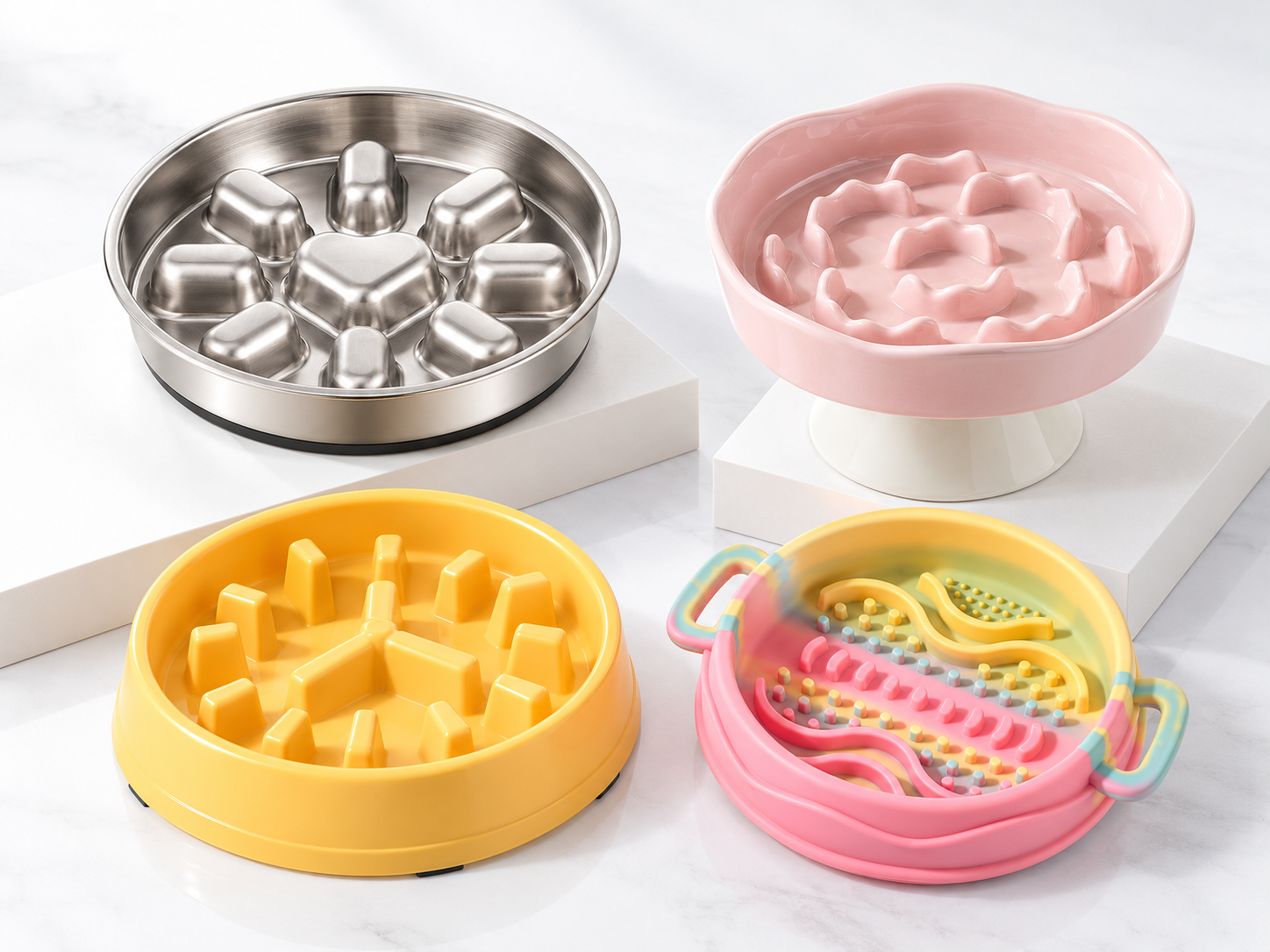
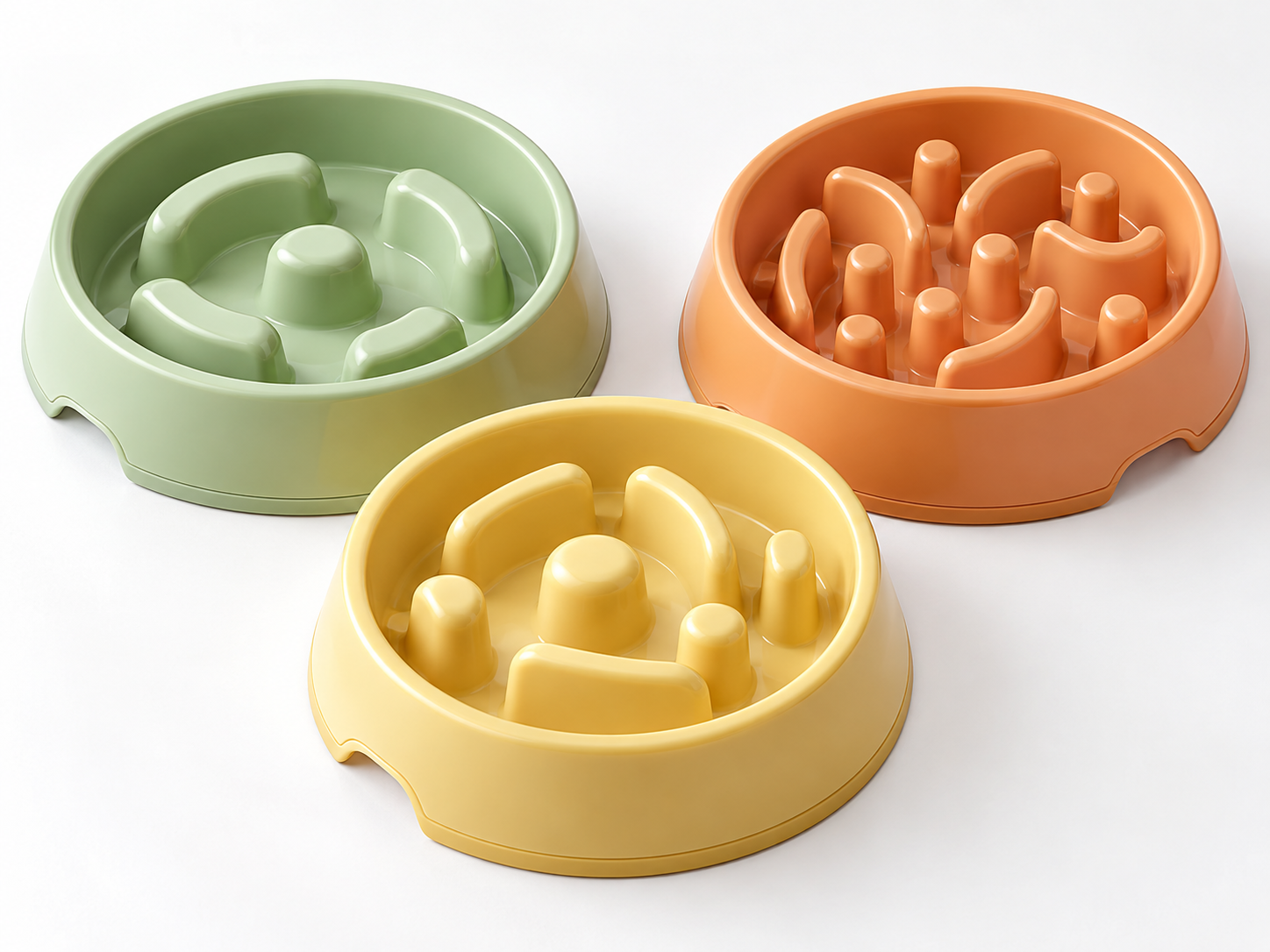
Different slow feeder bowl structures suit different feeding rhythms
Not every slow feeder bowl needs an extremely complex maze.
Some products work better with wider rounded barriers, while others use narrower channels or higher internal walls to create a stronger slowing effect.
When reviewing a bowl structure, it helps to check:
- how wide the eating paths are;
- whether the center area is too open or too blocked;
- whether the internal posts are rounded and practical to clean;
- whether the pattern looks suitable for the target pet size.
A design can look attractive in a rendering but still feel inconvenient if the channels are awkward, too tight, or unnecessarily difficult to clean.
Compare product directions, review the customization process, or send the project information you already have before every detail is fixed.
Feeding Products
Compare slow feeder bowl, lick mat, and related feeding directions before narrowing the final SKU plan.
View Products →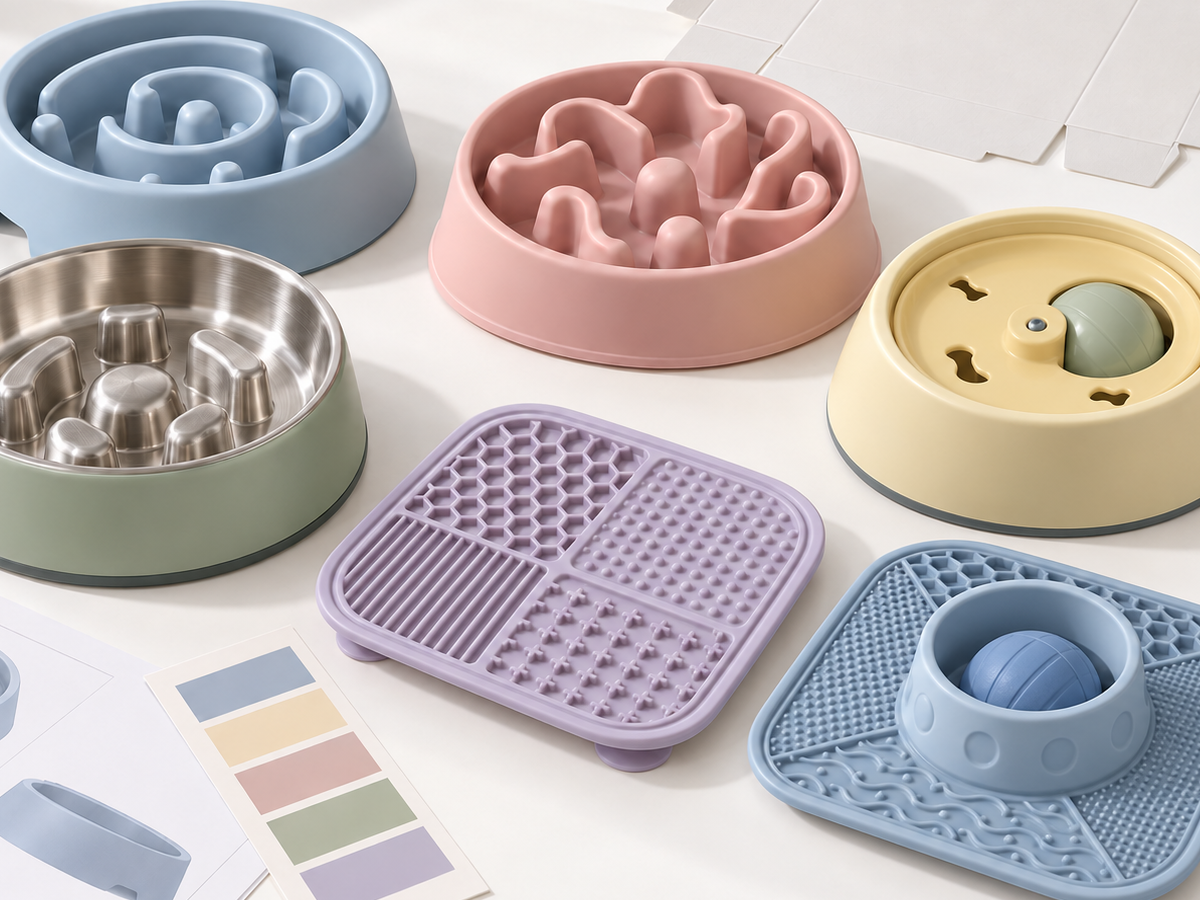
Customization
See how product selection, samples, revisions, packaging, and approval can be organized step by step.
View Customization →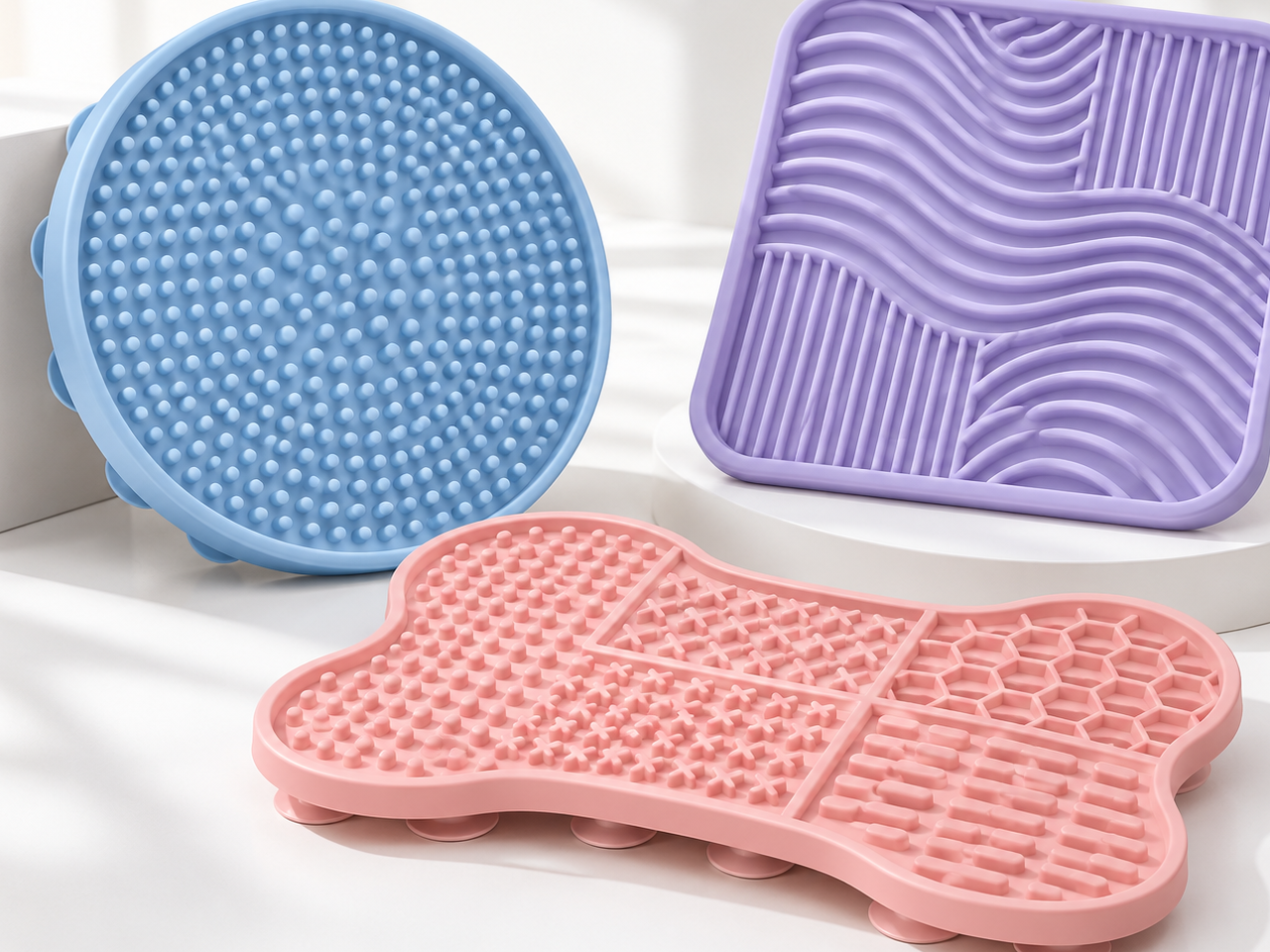
Discuss Your Project
Send the information you already have. Open details can be confirmed after the first discussion.
Send Inquiry →Need Help Narrowing Your Feeding Product Options?
Send your reference image and main product idea to start the discussion.
Send Inquiry View ProductsRoller-ball slow feeder bowls are a more specialized direction
Compared with traditional slow feeder bowls, a roller-ball feeder is less common and usually more specific in how it is used.
It can be a useful direction for soft or lickable pet-safe foods, including yogurt-style treats, puree-style snacks, or other smooth enrichment foods allowed in the target market.
Because the product relies on a moving ball structure, buyers usually need to review more than appearance:
- how smoothly the ball moves;
- whether the opening size is practical;
- whether the product stays stable during use;
- how easy the structure is to clean after feeding.
This direction can help a brand stand out, but only when the feeding logic and structure both make sense.
Lick mat patterns should make the feeding idea clearer, not more confusing
Lick mats can look simple, but the pattern still matters.
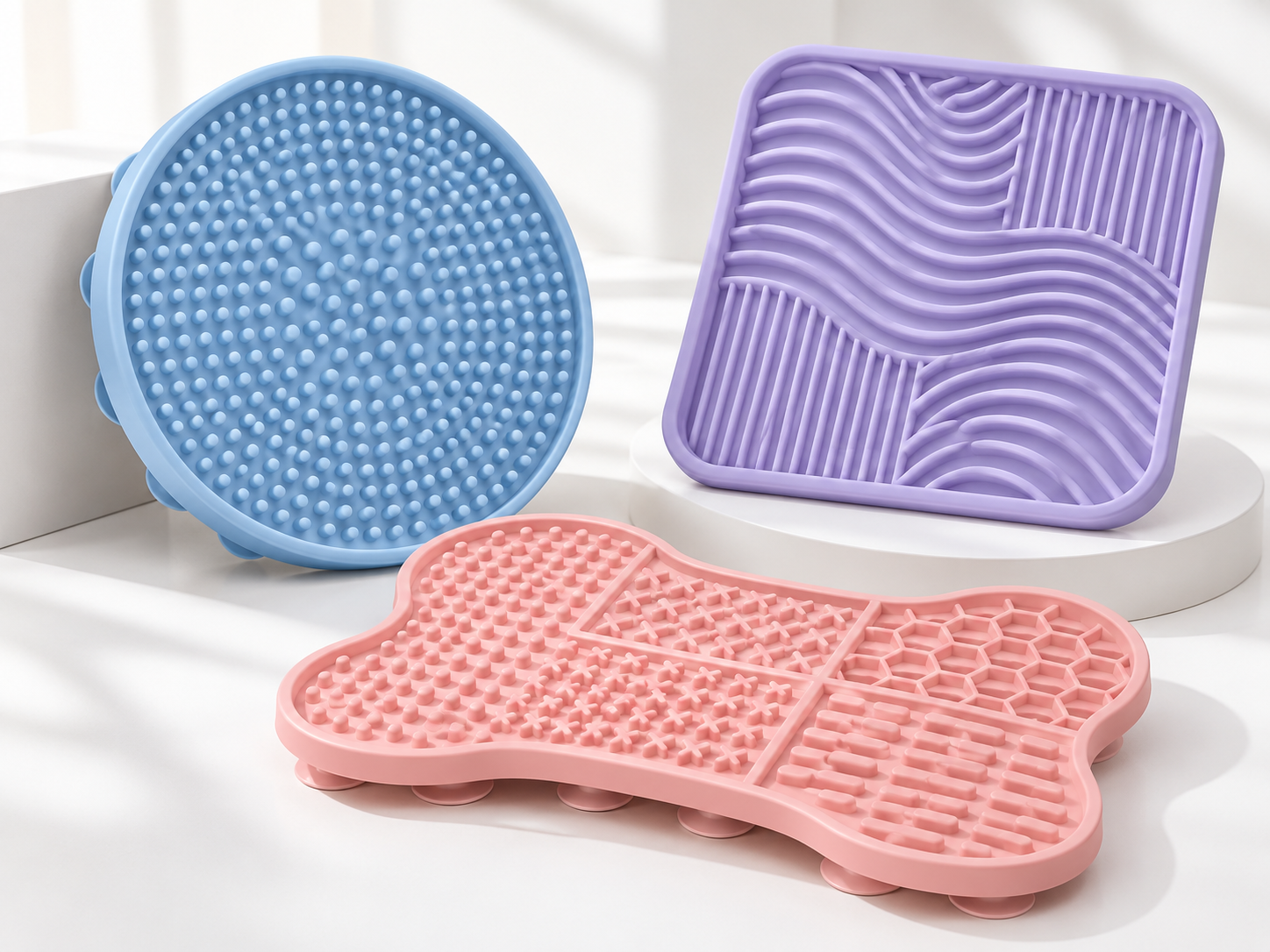
Dot textures, wave textures, honeycomb areas, and divided zones can all create a different use experience. Some layouts are better for a thinner spread. Others help create a slightly slower licking rhythm.
It is also common to see different outer shapes, such as round, square, or bone-shaped formats.
For buyers, the key point is practical clarity: the pattern should match the intended food use and the overall positioning of the product line.
Bottom stability is one of the easiest details to overlook
A feeding product can look good from the top and still perform poorly if the bottom structure is weak.
Depending on the product type, buyers may want to check:
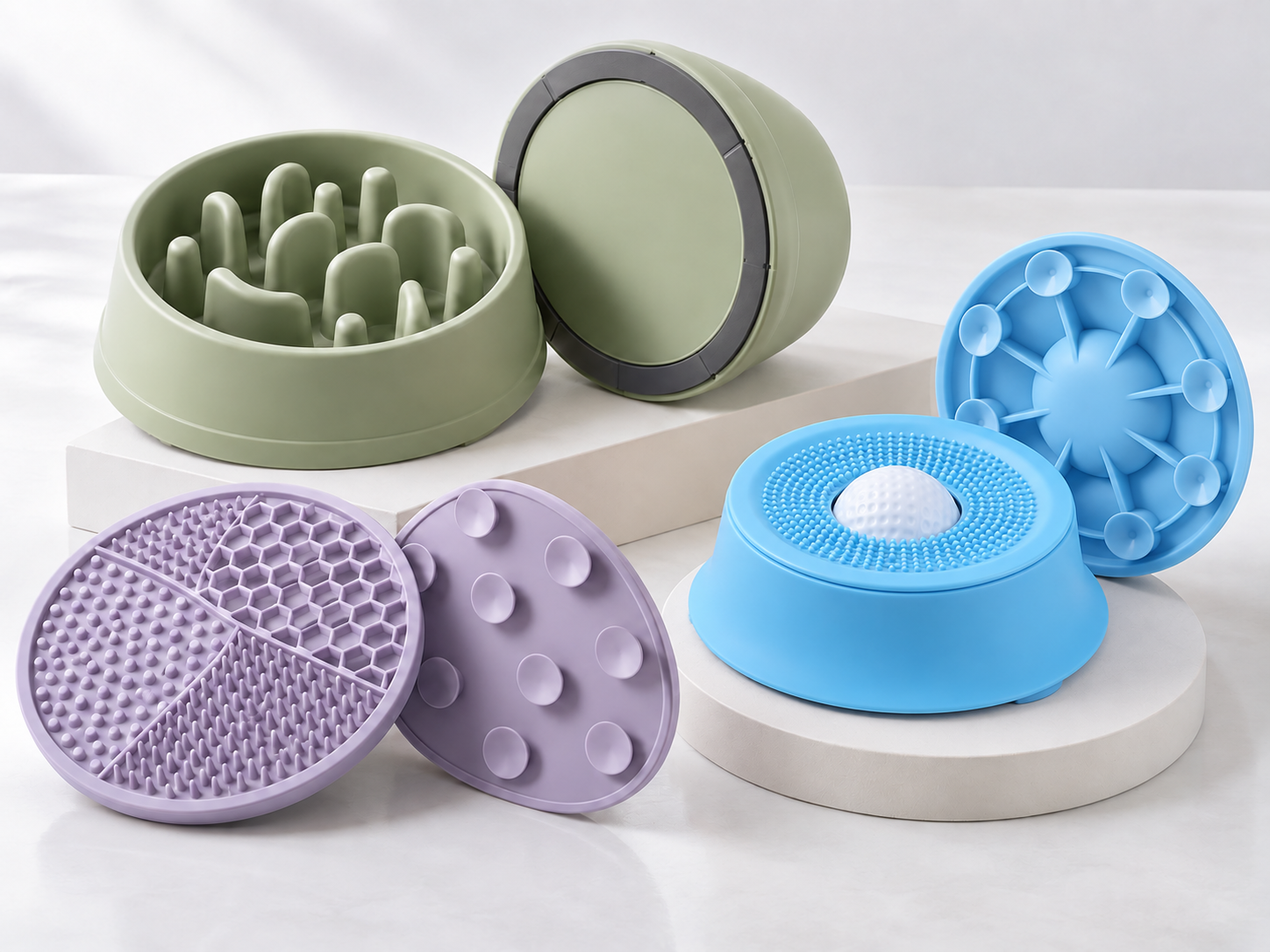
- an anti-slip ring;
- a silicone bottom;
- a widened base;
- suction cups on the back of a lick mat;
- a stable suction-style or anti-slip base for a roller-ball feeder.
This is especially important when the product is likely to move during active feeding or licking.
A stronger collection usually starts with a clearer product line plan
A product line feels more coherent when each SKU has a clear reason to exist.
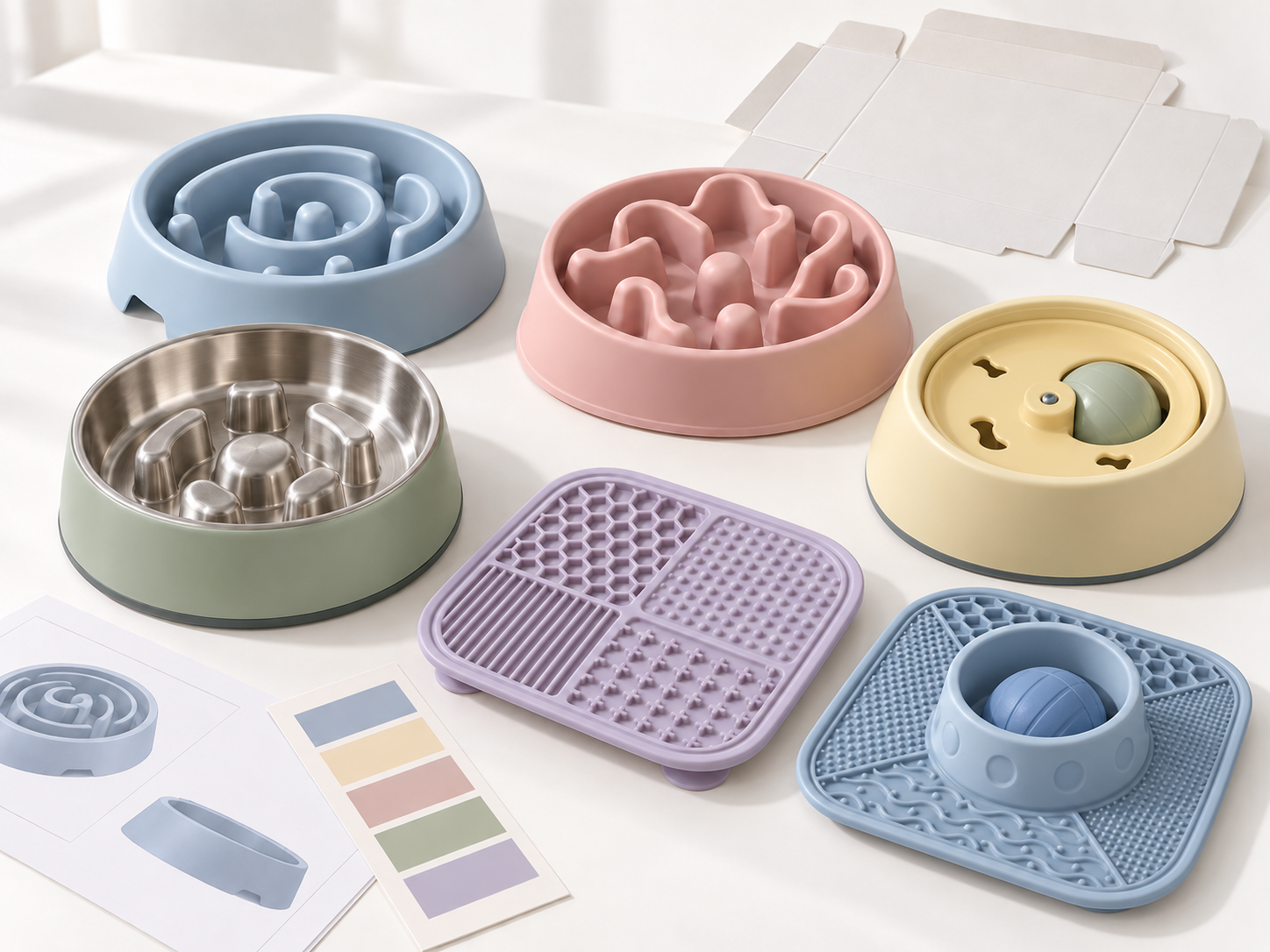
For example, a feeding collection might combine:
- a practical everyday slow feeder bowl;
- a lick mat for enrichment and soft feeding;
- a more distinctive roller-ball feeder;
- a premium material direction such as stainless steel or ceramic for a different market position.
The goal is not to add more items for the sake of quantity. The goal is to make each added product serve a different feeding use or buying reason.
Before moving into full production, it helps to confirm the actual sample, the material direction, the stability details, and any packaging idea that will travel with the product.
Start with the key information, not with a perfect brief
You do not need to solve every detail before contacting a supplier. A practical inquiry can still start with partial information.
Usually, it helps to send:
- the product direction you are considering;
- the target pet size or general use scenario;
- the main food type;
- the preferred material direction if you already know it;
- reference images or a target visual style;
- packaging ideas if they are already part of the project.
If some details are still open, that is normal. The important point is to make the main product logic clear first.
Frequently asked questions
Should a first feeding project include both a slow feeder bowl and a lick mat?
It can, but it does not have to. If the buyer wants a focused launch, starting with one main direction is usually easier. If the collection strategy is already clear, the two can also be developed together.
Is a lick mat only for treats?
Not necessarily. It is often used for treat-based enrichment, but some projects also consider soft feeding use. The main point is to match the pattern with the intended food type.
When does a roller-ball feeder make sense?
It usually makes more sense when the brand specifically wants a more interactive or differentiated feeding product, not simply another standard bowl.
Does a premium material automatically make the product better?
No. A more premium material can support a different market position, but the right choice still depends on feeding use, retail positioning, cleaning expectations, and the overall product plan.