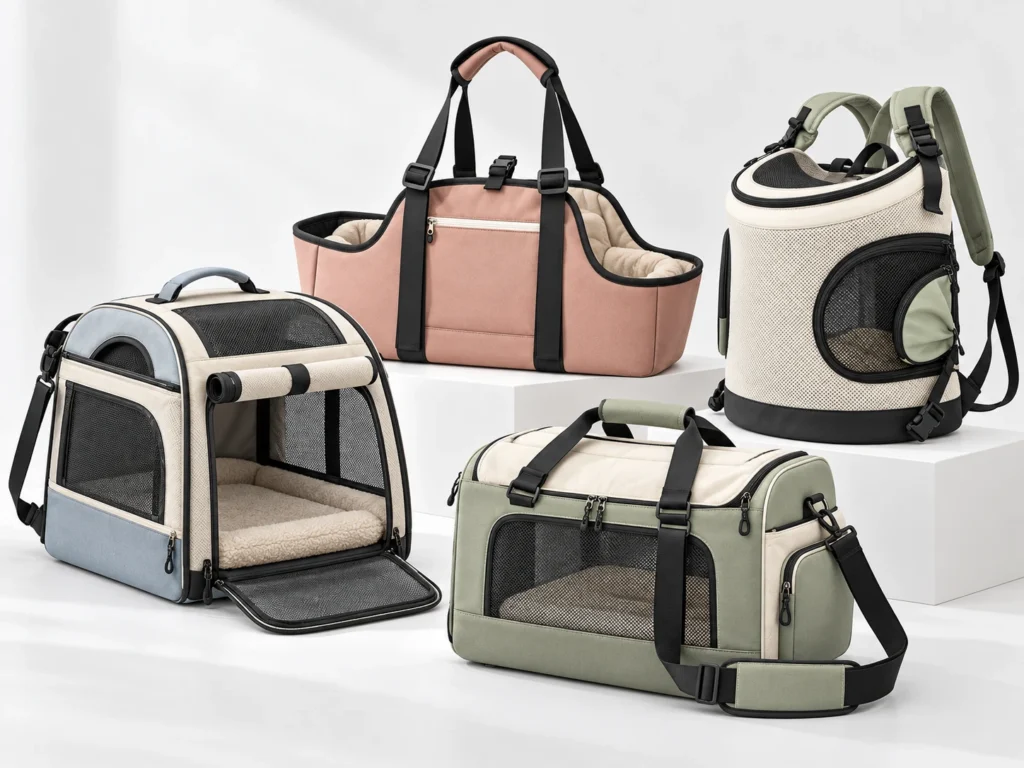
In pet backpack and soft travel bag inquiries, size, weight capacity, and whether the design is soft-sided or more structured are usually the first questions. Materials, MOQ, and style recommendations often come next.
But size and weight capacity alone do not answer the more important question: is the product actually a good fit for the pet and comfortable for the person carrying it?
Two pets at the same weight can have very different body lengths, widths, and proportions. Two pet backpacks or soft travel bags with similar exterior dimensions can also offer very different usable interior space once the inner mat, base board, support structure, and bag shape are taken into account.
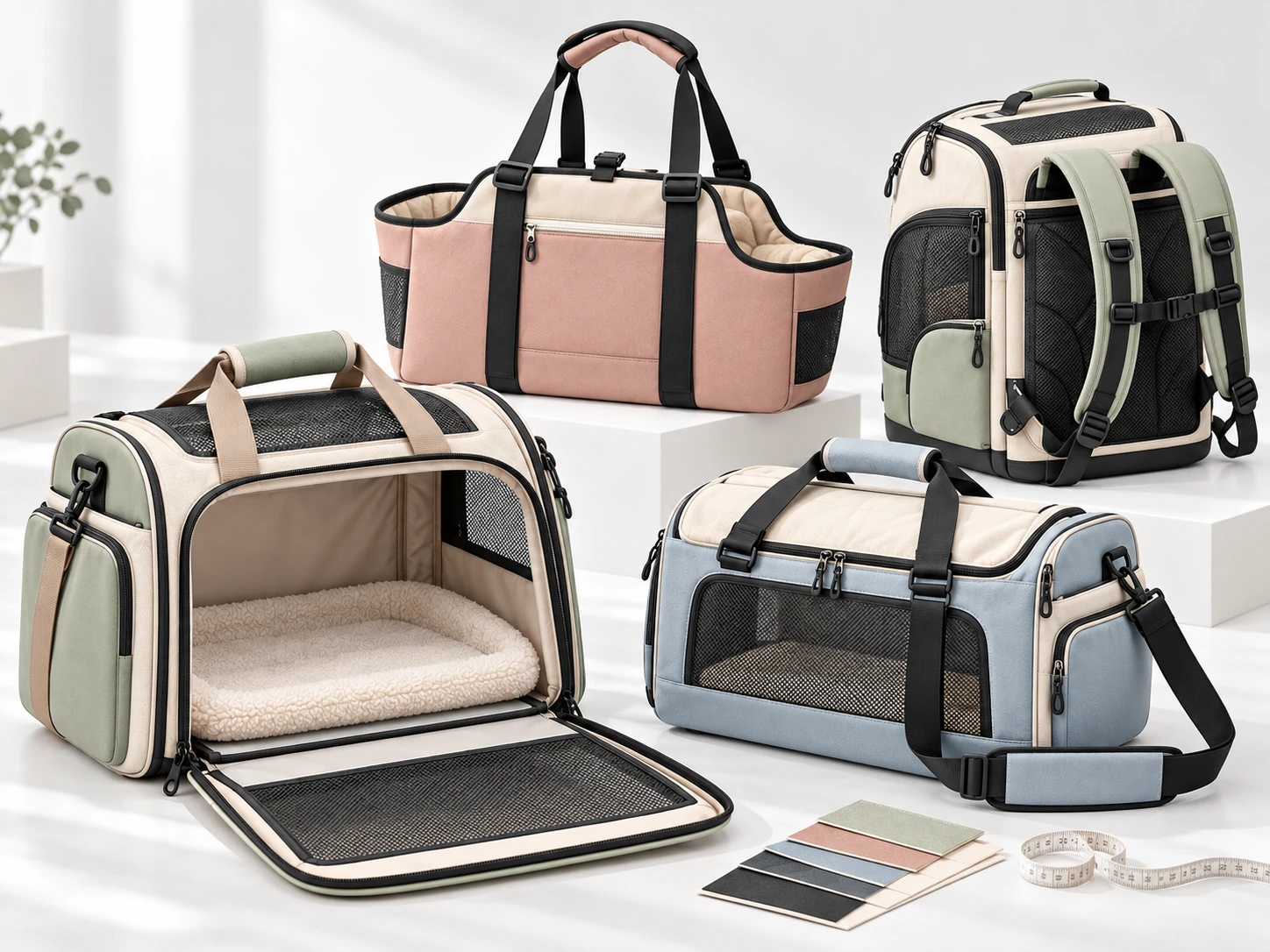
This guide focuses on pet backpacks and related soft travel bag styles, including open totes, shoulder bags, and designs with handles, shoulder straps, or wheels.
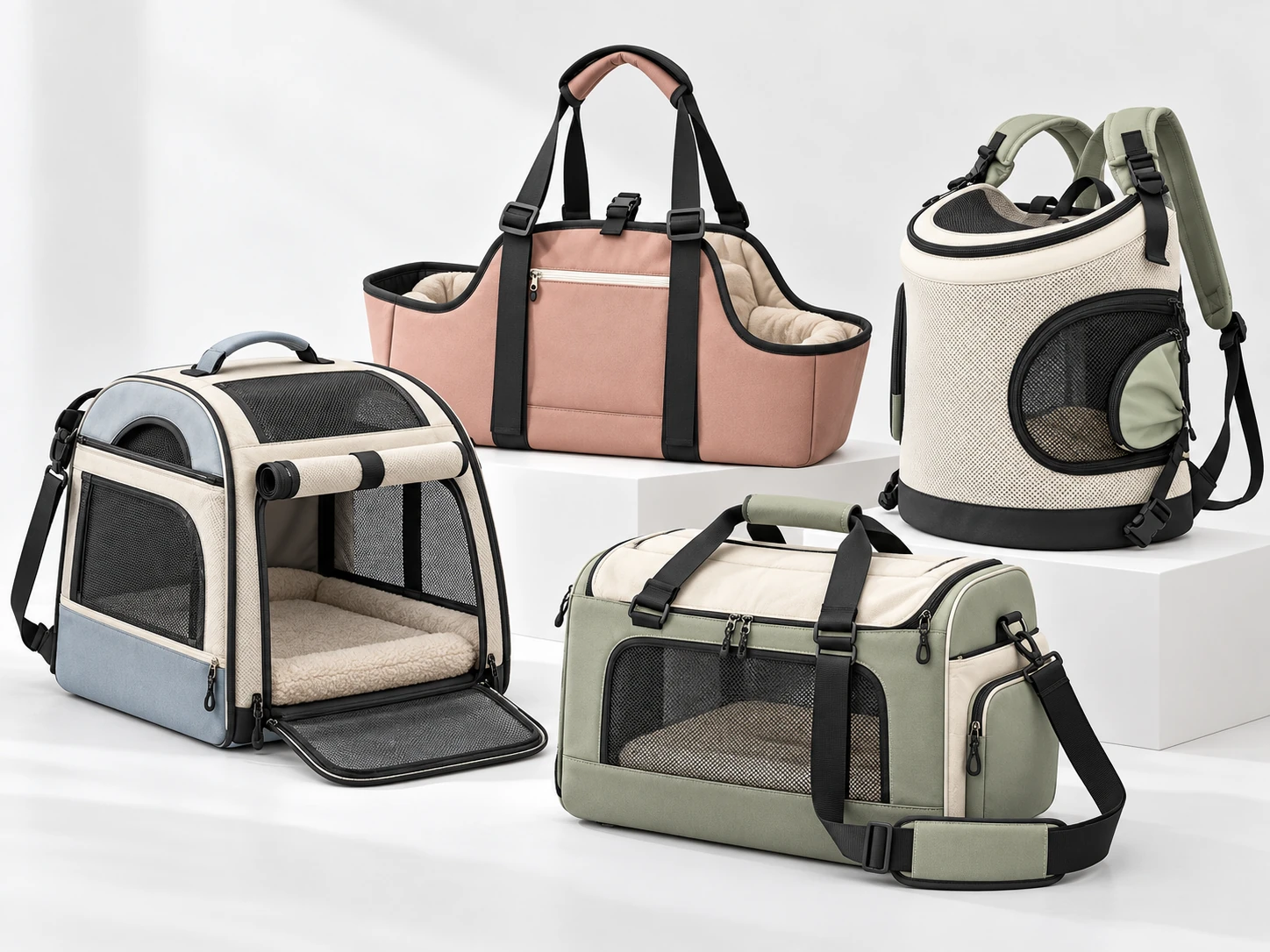
Weight limit and usable space answer different questions
“Suitable for pets up to 8 kg” is easy to understand, but it only answers part of the fit question.
Imagine two pets that both weigh 7 kg. One may be longer and leaner, while the other is shorter with a wider chest and body. Their weight is the same, but the interior space they need is not.
Weight guidance is more useful for checking whether the base, bag body, shoulder straps, connection points, and support structure are suitable for the intended load. It also helps define the general recommended use range of the product.
To judge whether the pet can actually fit comfortably inside, also look at:
- Body Length;
- Body Width;
- Standing Height;
- and usable internal space.
Weight answers “can the product support the intended load?” Dimensions answer “does the pet have enough usable space?”
Both need to be checked together rather than using one as a substitute for the other.
External dimensions are not the same as the space the pet can use
If a pet backpack or soft travel bag is listed as 45 × 28 × 30 cm, first confirm whether those numbers describe the exterior or the usable interior.
A soft pet backpack or travel bag may also include a removable mat, padding, a base board, support rods, zipper borders, inward-sloping side walls, or a narrower top. Each of these can reduce part of the usable space.
For example, a tote may look wide from the outside, but a thick inner mat can reduce the floor space available to the pet.
It is therefore useful to separate two ideas when building a size guide:
External Dimensions
Useful for understanding the overall product size, packing volume, and carrying footprint.
Usable Internal Space
Useful for judging the space the pet actually has inside the finished product.
This is also why final sizing should not be decided from a drawing or exterior photo alone.
Different pet backpack and soft travel bag styles need different fit checks
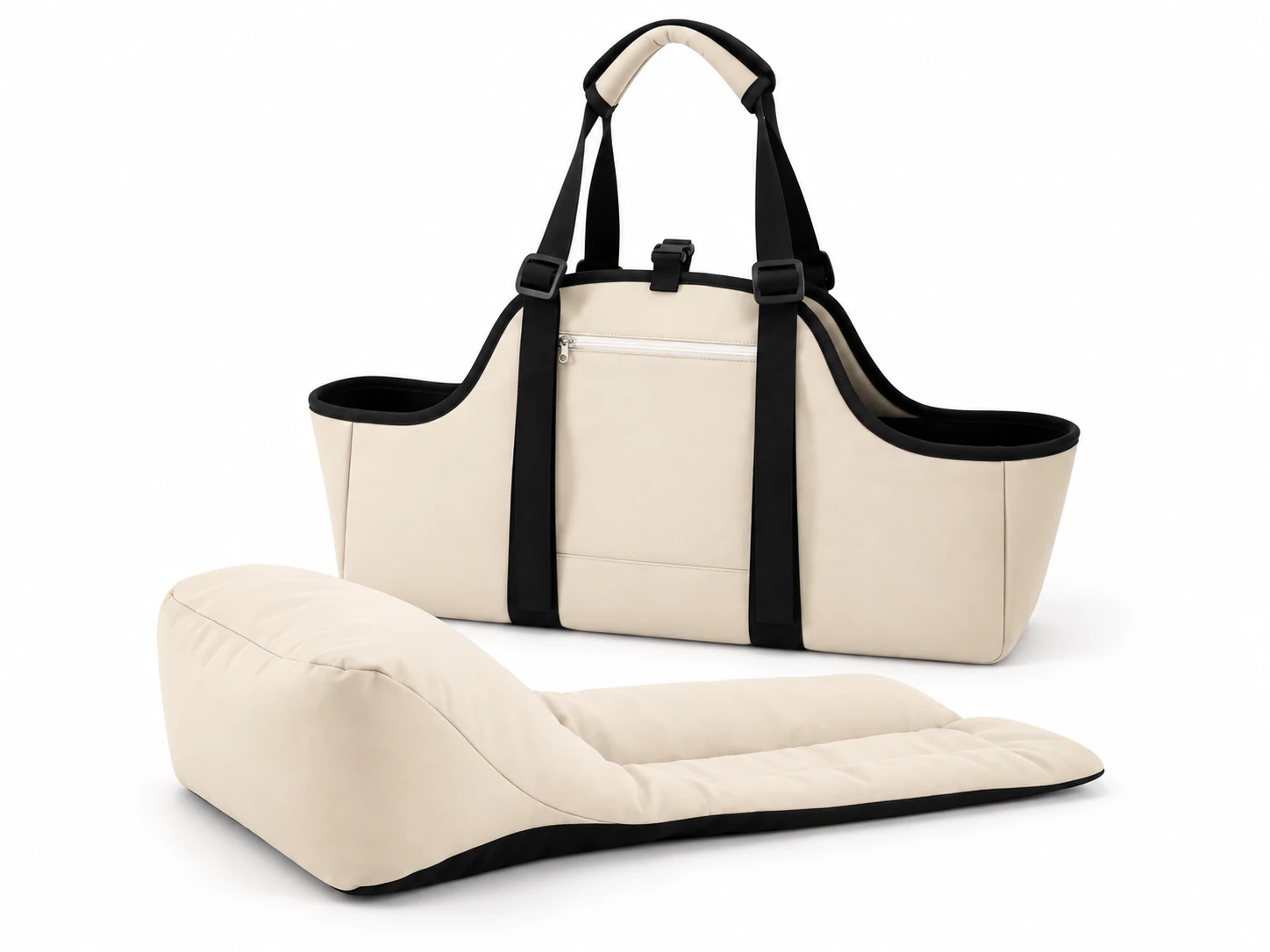
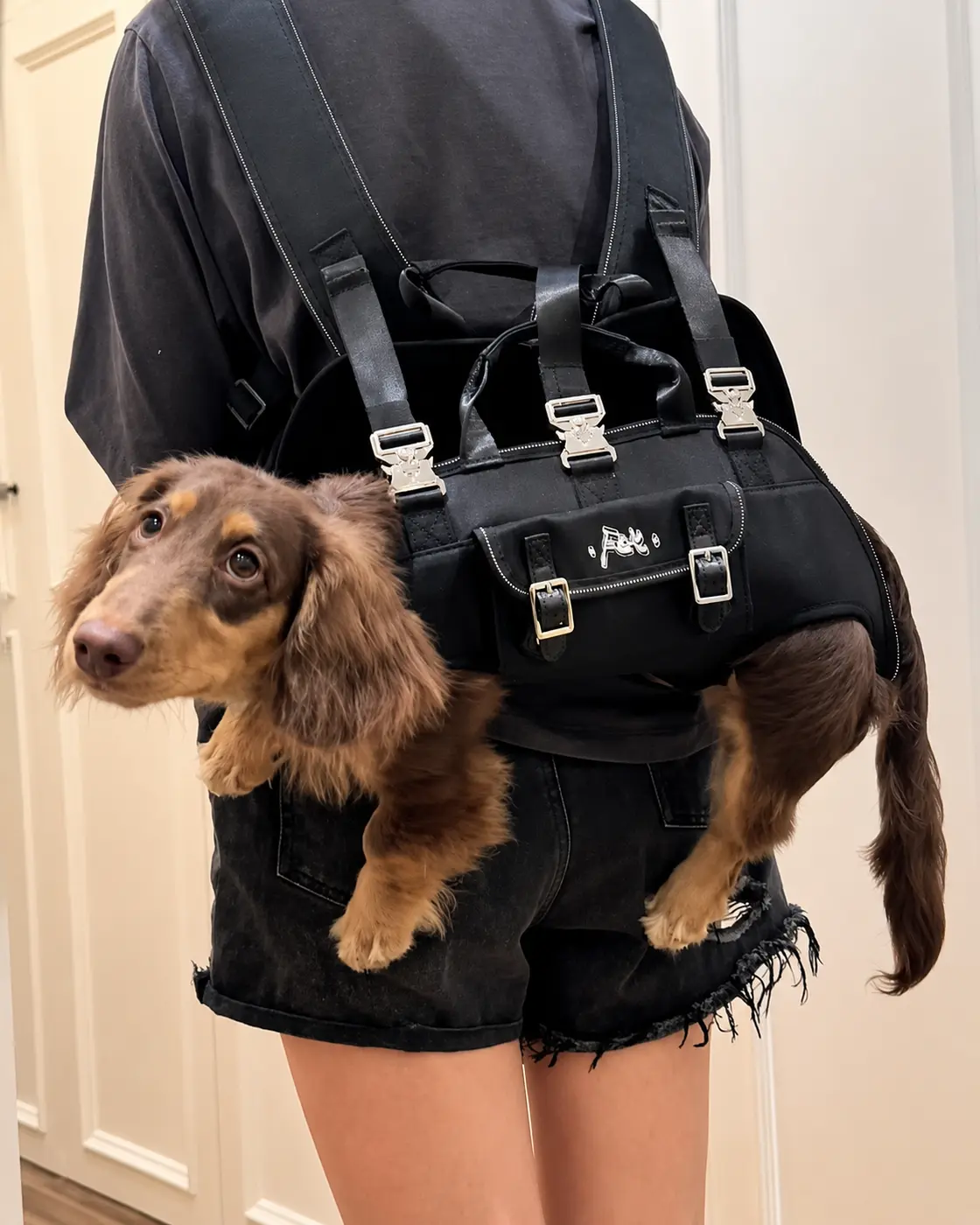
Open Tote / Shoulder Bag
These designs can look simple, but the real fit depends heavily on the base size, inner-mat thickness, bag stiffness, opening size, shoulder-strap length, and where the pet’s weight sits.
A soft inner mat can improve the contact surface for the pet, but a very thick mat also reduces usable space. If the bag body is too soft, it may also move inward toward the pet once weight is added.
So the useful question is not only “how large is the bag?” It is also “what shape does the bag hold once the pet’s weight is inside?”
Pet Backpack
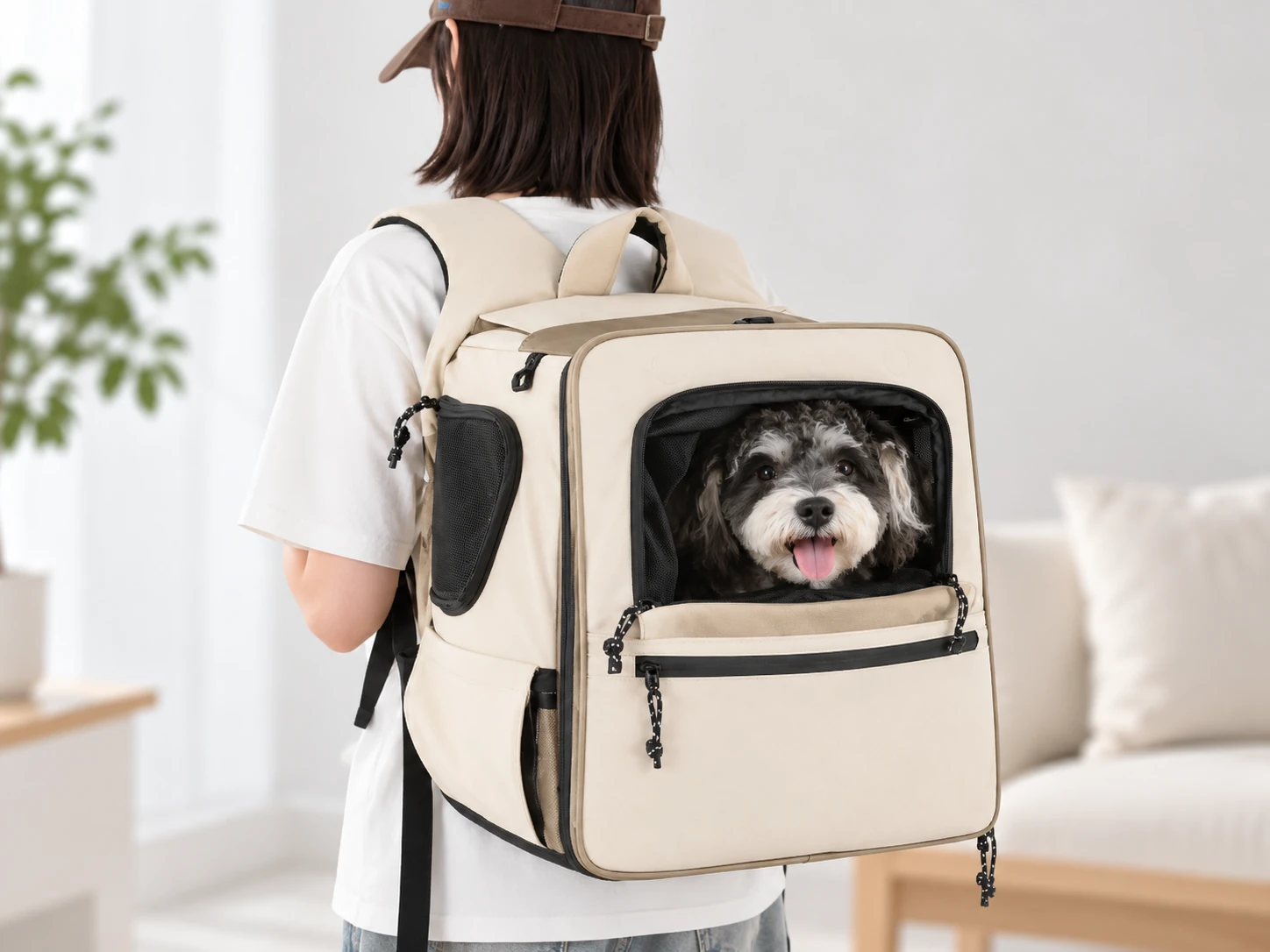
A backpack is more complex because it has to work for two users at the same time: the pet inside and the person carrying it.
Along with interior space, check the bottom support, back panel, shoulder straps, frame or support structure, mesh area, opening position, overall product weight, and how the pet’s weight is distributed inside the backpack.
If the base does not have enough support, it may sag noticeably once the pet’s weight is added. And even when the backpack can handle the load, narrow or poorly positioned straps and weak back support can still make it uncomfortable to carry.
For a backpack, “fit” therefore means more than whether the pet can get inside. It also means whether the backpack stays stable and distributes the weight reasonably when worn.
More Enclosed Pet Backpack Designs
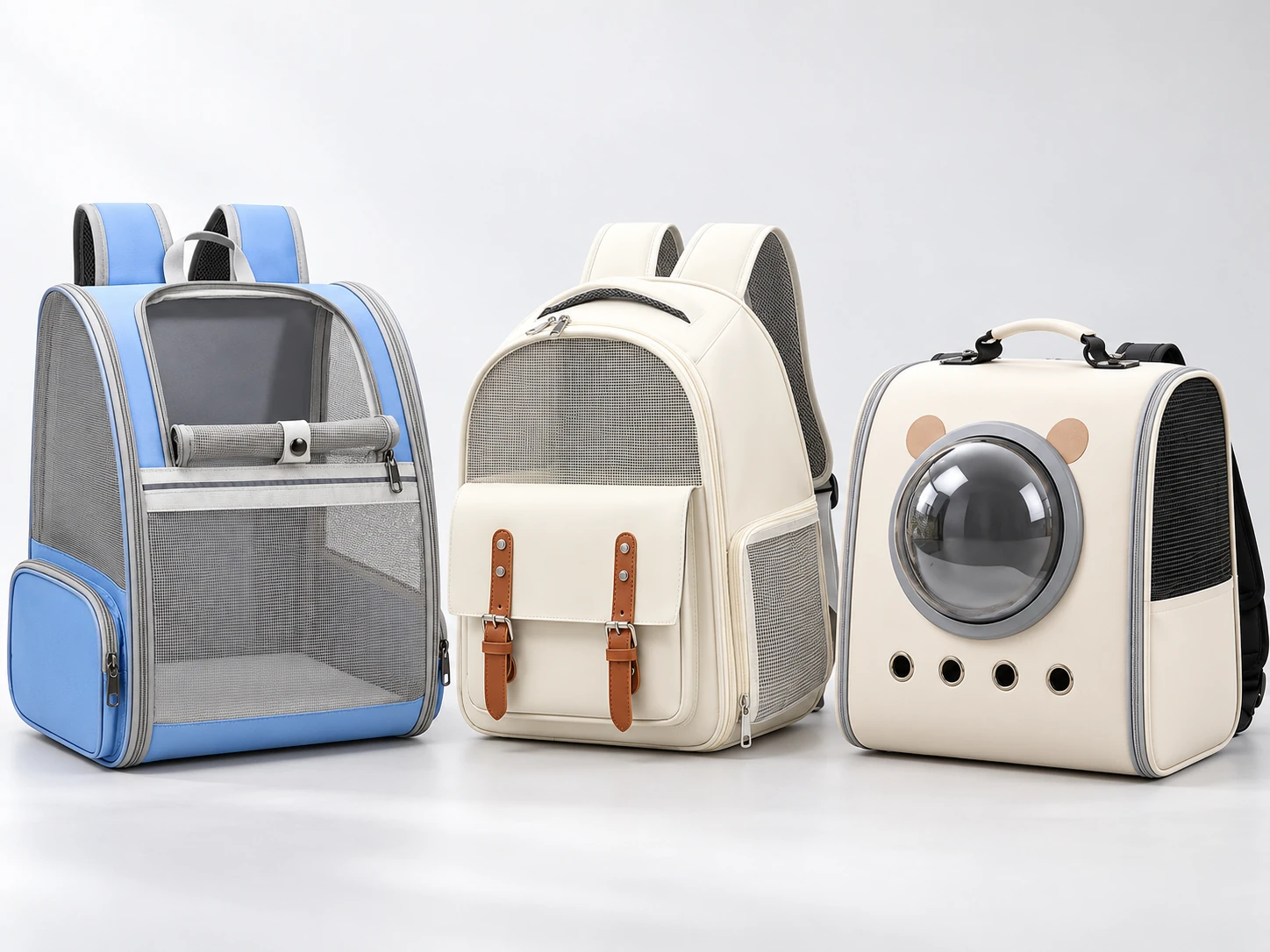
A more enclosed backpack adds another important check: ventilation.
The more enclosed the backpack is—and the less mesh it uses—the more carefully airflow needs to be checked. In warmer weather, customers are also more likely to pay attention to mesh coverage, airflow around the head and body, and whether the interior feels too compact.
Size and ventilation are therefore not completely separate issues. The more enclosed and compact the design, the more carefully ventilation and usable movement space need to be checked.
Rolling / Wheeled Soft Travel Bag
For a wheeled soft travel bag, also look at base rigidity, the space taken by the pull handle and wheel structure, overall product weight, whether the interior floor stays level, and whether the pet remains stable when the product is pulled or carried.
Wheels can make transport easier for the person, but they do not automatically create more room for the pet. Added hardware can take up space, so the complete structure still needs to be checked.
Material choice changes the way a pet backpack fits and feels
For a pet backpack or soft travel bag, material is not only an appearance decision. A more useful question is: does the material make the product softer, more supportive, more enclosed, or take up more usable interior space?
Softer Fabric
Softer woven fabrics are easier to fold and store and can provide some flexibility. At the same time, check whether the side walls move inward, whether the shape changes once pet weight is added, and whether the backpack or travel bag keeps enough usable space during carrying.
Mesh
Mesh is not only about visibility. It also affects ventilation, air exchange, flexibility, and how open the backpack feels.
More mesh does not automatically make the whole product better, because the mesh still has to work with the supporting frame and the rest of the bag structure.
Padding
Padding affects both sides of the experience. It can make the pet’s contact surface softer and can reduce pressure on the wearer through padded straps or a padded back panel. But thick padding also takes up volume and can reduce usable internal space.
Bottom Board
The base needs to balance support and softness. If it is too soft, the pet’s weight may make the floor sag. If it is very rigid without a suitable contact layer, it may feel less comfortable for the pet.
It is therefore more useful to think in terms of rigid support + a soft contact layer rather than asking only whether the base is “hard” or “soft.”
Leather / PU / More Closed Surface Materials
More enclosed or structured surface materials can create a different look and level of support, but they do not ventilate in the same way as large mesh panels or softer open constructions.
For these styles, ventilation zones, opening design, interior temperature, and cleaning method still need to be considered rather than assuming the surface material alone determines quality.
The opening is part of the fit
Enough interior space does not automatically mean the pet can enter the backpack or travel bag easily.
Common opening styles include:
- Top Opening;
- Front Opening;
- Side Opening;
- Full-Zip Opening;
- Open-Top Tote.
Different pets may respond differently to each entry style, so the practical check is whether the opening size matches the usable interior and the intended way the pet enters the product.
A pet backpack may have enough internal height but still be awkward to use if the top opening is too narrow. An open tote, on the other hand, also needs a suitable closure or restraint approach if the pet could climb or jump out.
There is no single opening style that is always best. The opening should match the intended product use.
Pet Backpacks
Compare usable space, base support, ventilation, openings, and strap structure before narrowing the style and size range.
View Pet Backpacks →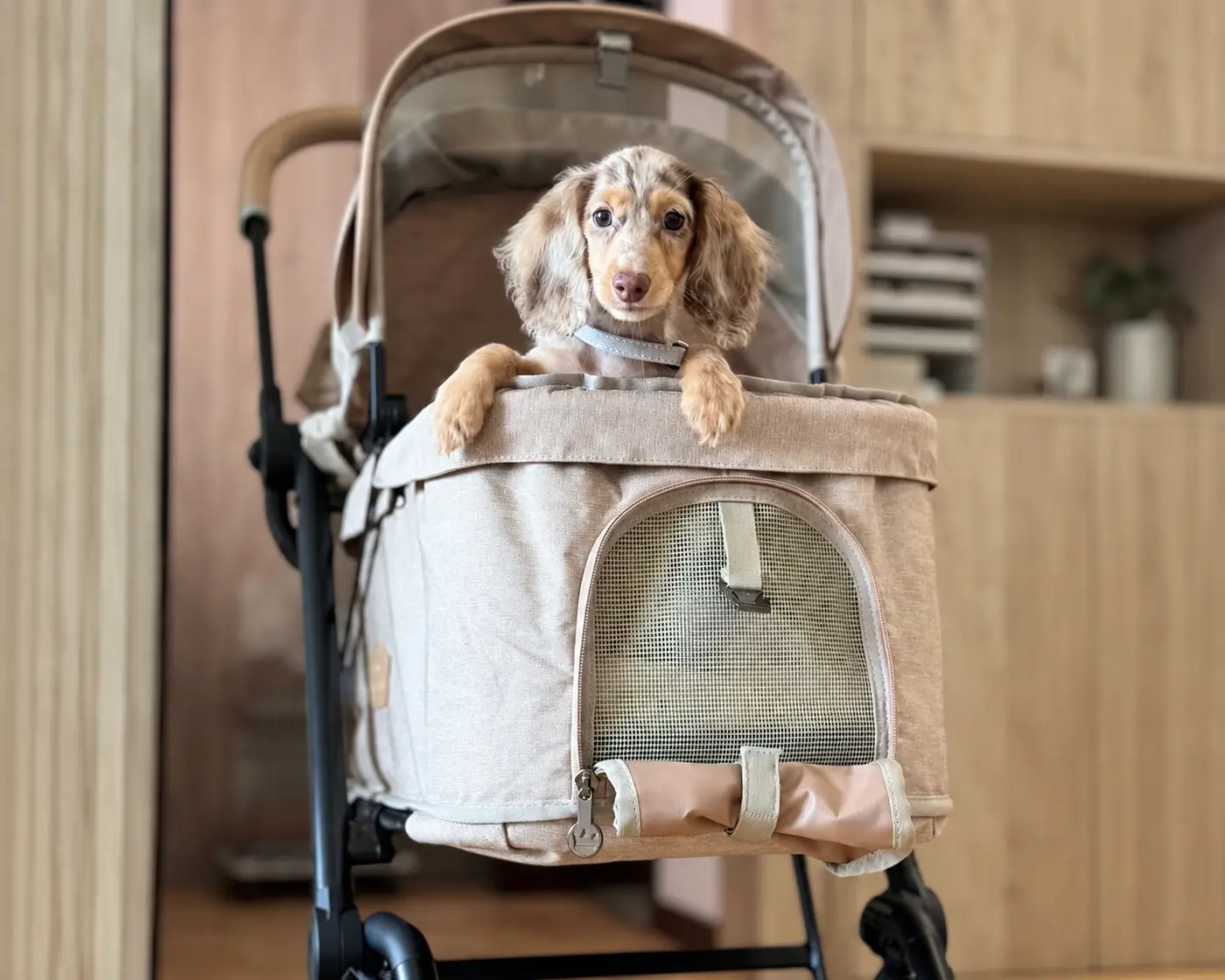
Travel
If the project goes beyond pet backpacks, review the wider travel range and plan related product directions together.
View Travel Products →
Customization
Once the pet backpack structure and size range are clear, continue with materials, colors, logo, packaging, and other brand details.
View Customization →Pet measurements are more useful when the method is clearly defined
When a brand creates a size guide, it can start with a few measurements that are easy to explain and repeat.
Body Length
The measurement method needs to stay consistent. There is no need to assume every brand uses exactly the same start and end points. What matters is that your size guide clearly shows customers where each measurement starts and ends.
For example, if the guide uses neck to tail base, show that clearly in the measuring diagram rather than leaving the customer to guess.
Standing Height
For enclosed or semi-enclosed pet backpacks and soft travel bags, the pet’s natural standing height can help define the approximate height requirement. The reference points should again stay consistent across the size guide.
Body Width
For wider pets, pets with fuller coats, or pets with a broader chest, body width helps avoid decisions based on length alone.
Weight
Keep weight guidance beside the size information, but do not ask it to do the whole sizing job by itself.
Pet Dimensions → space reference
Pet Weight → support and load reference
Do not copy another pet backpack’s size chart without checking your own product
Competitor size guides can be useful for understanding common market size ranges, but they should not be copied directly onto a different product.
If any of the following changes, the usable interior can change too:
- base-board width;
- bag curvature;
- mesh-to-fabric ratio;
- padding;
- support rods;
- back panel;
- opening;
- inner mat.
A more reliable sequence is:
Confirm the product structure → review the complete sample → measure the real usable space → build the size chart.
That is more useful than copying a competitor chart first and then trying to force the product to match those numbers.
Build a size range around meaningful differences, not extra SKU names
Small, Medium, and Large should not be added just to make the range look bigger.
The useful question is whether each step gives the pet a clearly different amount of usable space.
| What to compare | Why it matters |
|---|---|
| Internal Length | Whether the pet’s body length fits the available space |
| Internal Width | Body width and room to settle inside |
| Internal Height | Standing or sitting space, depending on the backpack or bag structure |
| Opening Size | Whether the pet can enter the backpack or bag easily |
| Weight Guidance | Support and load reference |
| Product Weight | The load the person carries before the pet is added |
| Bottom Support | How stable the backpack or travel bag remains once weight is inside |
If two sizes look different on the outside but provide almost the same usable interior, customers may not gain much from having both SKUs.
Confirm final sizing on a fully assembled sample
A specification sheet can rule out clearly unsuitable options, but a fully assembled sample is what shows whether the backpack or soft travel bag works as intended.
| Check | What to confirm | Why it matters |
|---|---|---|
| Internal Dimensions | Measure the usable interior after the inner mat and padding are installed. | Confirms the space the pet can actually use. |
| Bottom Stability | Check whether the base changes shape or sags under the intended load. | Shows whether the bottom provides enough support. |
| Zippers & Openings | Open and close the product fully and confirm the usable opening size. | Affects entry, exit, and daily handling. |
| Mesh & Ventilation | Review mesh position and ventilation areas on the complete sample. | Important for more enclosed backpack designs. |
| Support Frame | Check whether the product keeps its intended shape. | Helps protect usable internal space. |
| Shoulder Straps | Review attachment points, width, adjustment, and how the load feels when carried. | Affects carrying comfort and weight distribution. |
| Back Panel | Check support, padding, and how the panel sits against the wearer. | Important for backpack stability and comfort. |
| Shape Recovery After Folding | For foldable styles, unpack the product and confirm that it returns to its intended shape. | Helps identify deformation after packing or storage. |
| Padding & Inner Mat | Confirm thickness, softness, and how much usable interior remains after installation. | Balances pet comfort with usable space. |
That is why the final size chart should be finalized only after the sample structure has been confirmed.
A useful size guide can be detailed internally and simple for the customer
Product development can keep a detailed internal record, but the final customer-facing size guide should help people make a decision quickly.
For the customer, it can stay focused on:
- Size;
- Backpack / Bag Dimensions;
- Pet Measurement Range;
- Weight Guidance;
- Opening Size when needed;
- Measuring Diagram.
Customers do not need every material thickness, support-rod detail, or internal engineering parameter on the retail page.
The internal decision process can be detailed. The customer choice should stay clear.
Pet Backpack Size Guide FAQs
Should a pet backpack be chosen mainly by weight or by dimensions?
Both matter. Weight is more useful for checking the support and load range, while body length, width, and height are more useful for judging the space the pet needs inside.
Do two 7 kg pets always need the same backpack size?
No. Pets at the same weight can have different body lengths, widths, and proportions, so kilograms alone are not enough to determine fit.
Are the dimensions shown for a pet backpack always interior dimensions?
Not necessarily. Confirm whether the listed measurements are external dimensions or actual internal dimensions before using them in a size guide.
Why does a pet backpack also need to consider the wearer’s comfort?
Because the person carries the combined load. Shoulder straps, the back panel, bottom support, and weight distribution all affect how the backpack feels in use.
Is more mesh always better?
No. Mesh can improve ventilation, but it still needs to work with the support frame, bag strength, openings, and overall structure.
Is a thicker inner mat always more comfortable?
Not necessarily. A soft mat can improve the contact surface, but extra thickness also reduces usable internal space, so thickness and support need to be considered together.
What should be checked on a foldable pet backpack or soft travel bag?
Along with folded size, check whether the backpack or soft travel bag recovers its intended shape after unpacking and whether the base and support structure remain stable.
Prepare your Pet Backpack project
If you already have a reference style, share the product image, target size, target pet size range, expected load, material preference, and target quantity.
If the size range is not fixed yet, start with Body Length + Body Width + Standing Height + Weight, then confirm the final range against Internal Space + Bottom Support + Ventilation + Carrying Structure.