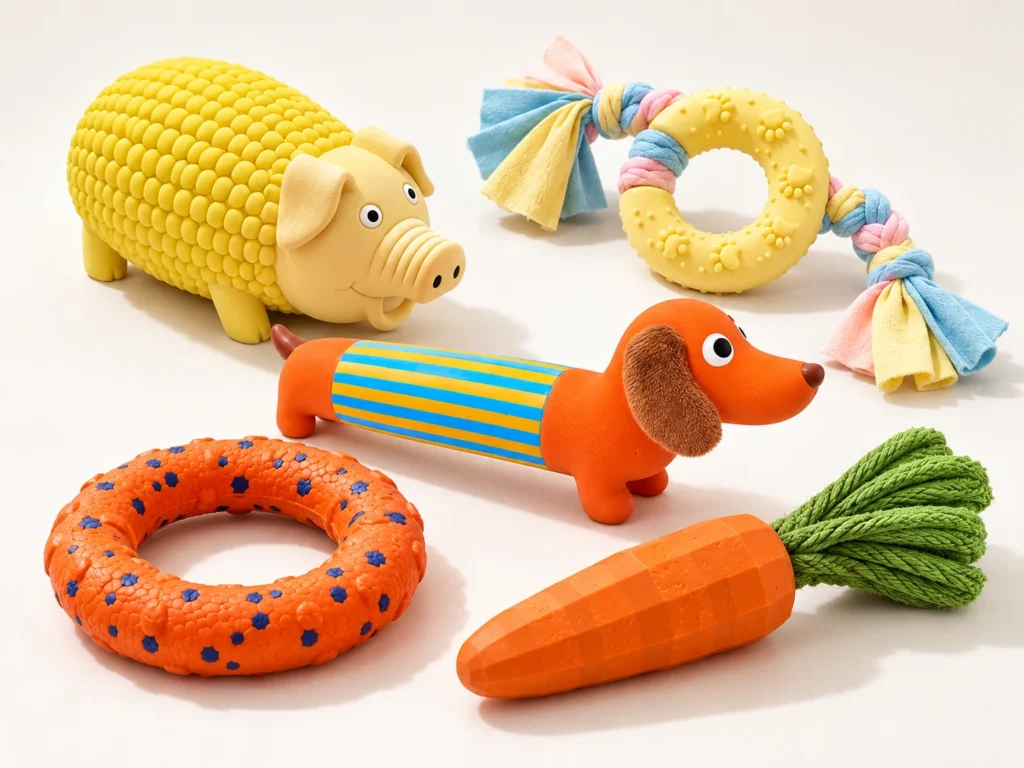
Soft chew toys are easy to squeeze, which can raise questions about how well they’ll hold up. Harder toys feel sturdy, but that doesn’t necessarily mean they’re right for a dog’s teeth. Judging by feel alone makes it easy to confuse “hard” with “durable,” or “soft” with “safe.”
When choosing a dog chew toy, start with the dog’s dental condition and chewing habits. Then look at the toy’s size, flexibility and overall construction. Dogs that chew with sustained force need toys that can better withstand that use—but not necessarily the hardest toy you can find.
This article covers non-edible chew toys made from materials such as rubber and TPR (thermoplastic rubber), not edible chews or treats. We’ll look at what soft and hard really mean, how to choose for different dogs, and how pet brands and buyers can compare finished samples.
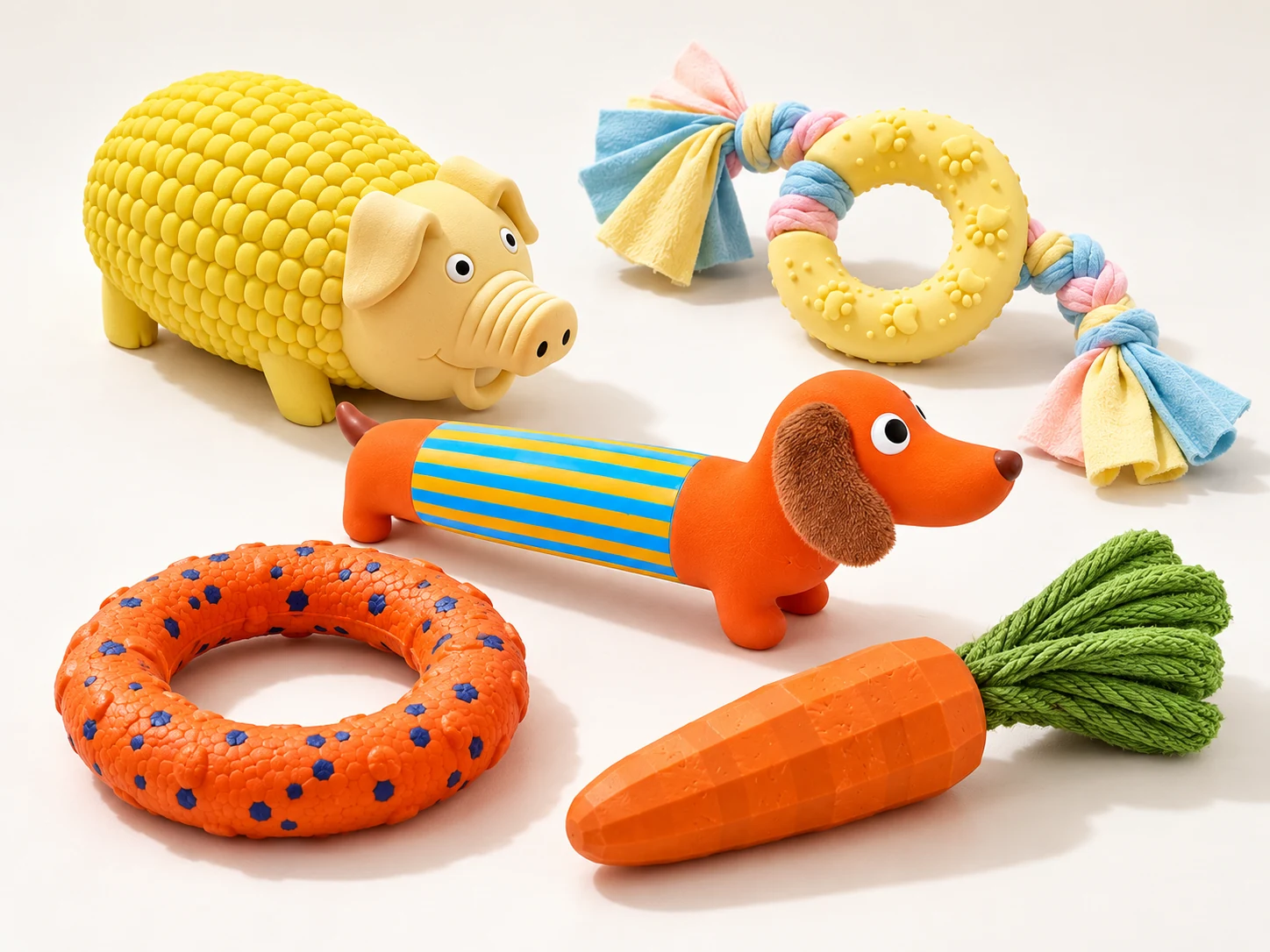
What Do Softness, Hardness and Durability Actually Mean?
How easily a toy compresses, whether it bends and whether a dog can bite off a piece are three different things.
Softness usually describes how easily the surface gives under pressure, or how easily the whole toy changes shape. Recovery is how the toy returns to its shape after that pressure is released. Chew durability concerns how well the complete toy resists punctures, tears and pieces being bitten off.
Take a thin-walled hollow ball. It may squeeze flat and spring back as soon as you let go. Neither result tells you whether a dog repeatedly biting one spot could puncture its wall.
Likewise, a thick, short chew stick might barely bend. That alone doesn’t tell you whether its material is harder or more resistant to chewing damage.
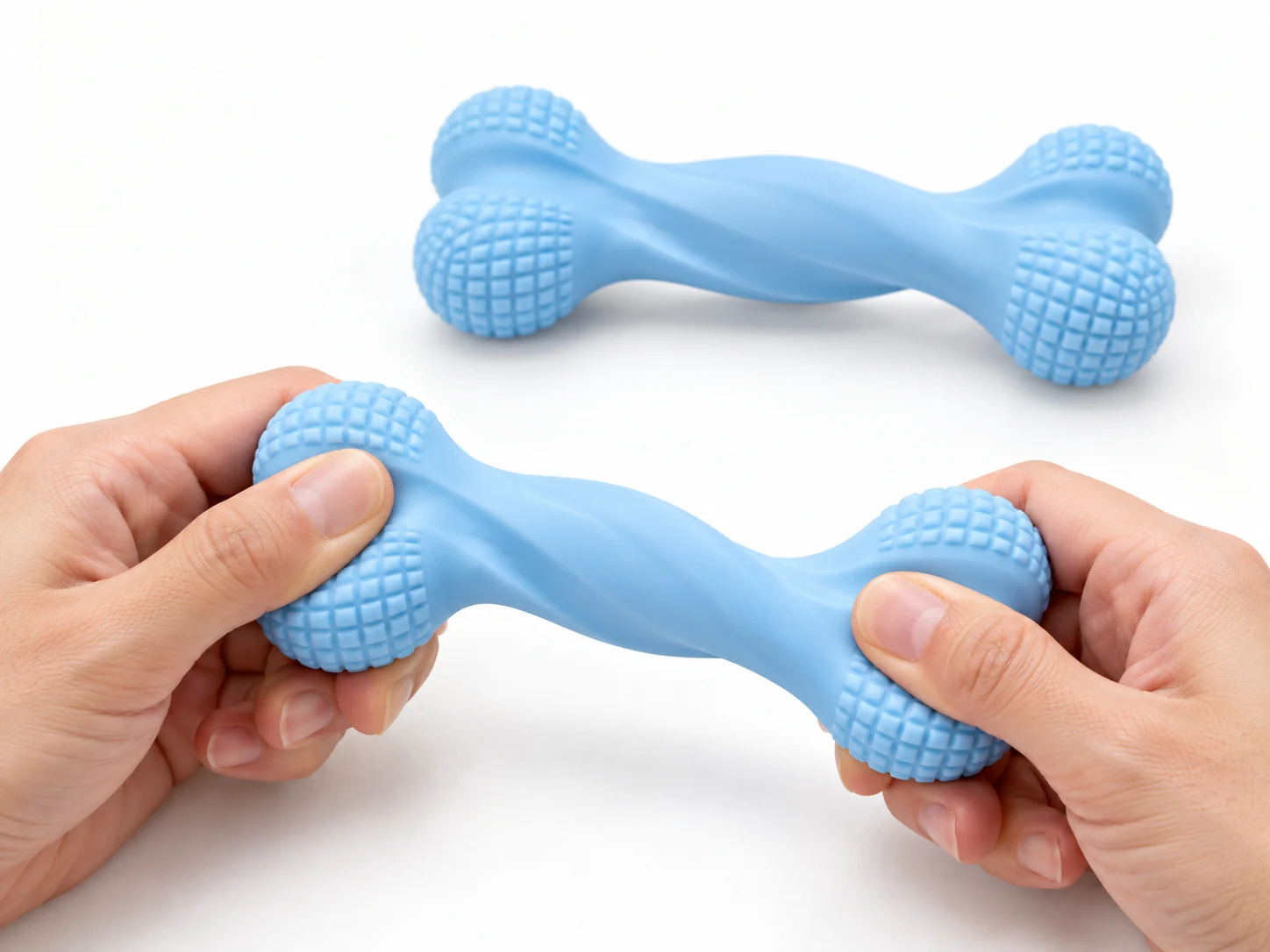
How can you make an initial comparison by feel?
Gently press the main body of each toy, bend the parts a dog is likely to grip where appropriate, and see how it returns to shape. Don’t judge only by small raised bumps: the bumps may feel soft while the body beneath them is quite firm.
You can also check whether a fingernail makes a slight indentation in the main surface as an initial warning sign for excessive hardness. If the surface barely gives, don’t assume the toy is suitable for chewing simply because it feels strong.
These are initial screening checks, not proof that a toy is safe for teeth or that it will withstand chewing. Wall thickness, hollow sections and shape all affect how a toy feels. Different designs should not be expected to bend by the same amount.
| What you notice in a sample | What it may tell you | What you still need to check |
|---|---|---|
| The body feels soft and is easy to press or bend | The finished toy changes shape readily | Whether any thin sections or small parts could be bitten off |
| The body feels firmer but still has some give | Its material or construction differs from a softer version | Whether damage resistance is actually improved, and whether its size and weight are suitable |
| Raised bumps feel soft, but the body barely compresses | The soft feel may come mainly from the surface features | How the main body feels—not just the bumps |
| The surface is difficult to indent and the whole toy barely gives | Excessive hardness may be a concern | Reconsider the material, construction and intended use instead of automatically calling it a heavy-chewer toy |
These are not standardized hardness grades. Choosing a chew toy means considering both the risk of a toy being too hard on teeth and the risk of pieces being swallowed if it breaks.
Should Puppies, Adult Dogs and Senior Dogs Use Different Chew Toys?
Age helps narrow the options, but how an individual dog actually chews still matters. Dogs of a similar age and size may have very different chewing habits.
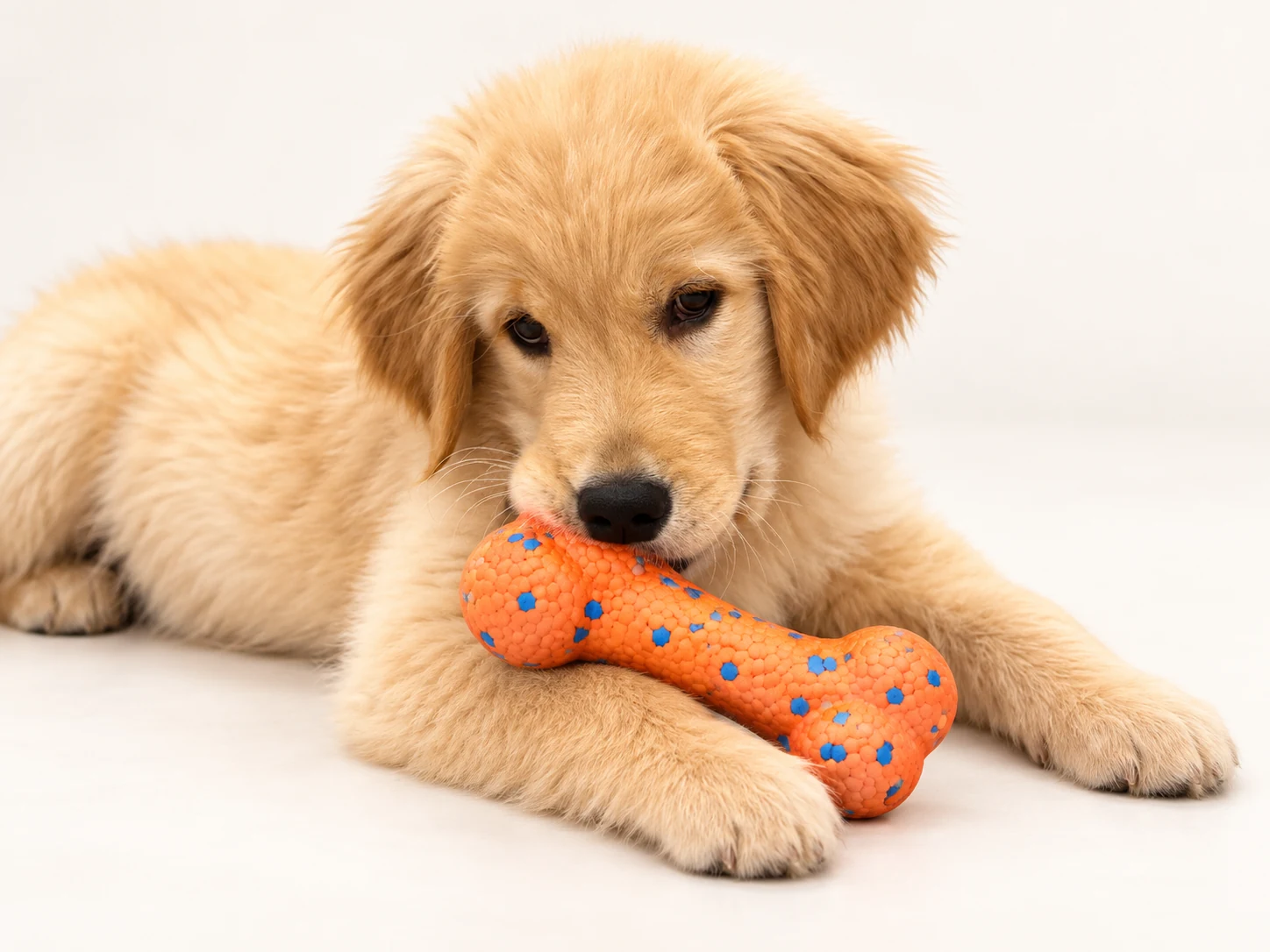
Teething puppies: look for suitable flexibility and keep checking the size
Puppies explore objects by chewing, and during teething they may also chew to ease gum discomfort. Start by comparing toys designed for puppies with some flexibility. If a softer toy wears out, switching straight to a very hard adult chew toy is not necessarily the right answer.
A soft body doesn’t make every design suitable. Narrow tips, thin flaps or small projections may still be easy to bite off.
As a puppy grows, reassess the toy’s size and how it is being used. A toy that once fitted may become too small, or stop matching the puppy’s chewing behavior. A puppy version should differ in its material, size and intended use—not simply be a smaller or pastel-colored adult toy.
Adult dogs: watch how they chew, not just how big they are
Some dogs mostly carry a toy around and give it an occasional nibble. Others hold one end and chew hard for long periods. Some prefer grabbing and pulling at protruding parts.
For dogs that mainly carry or lightly chew, flexible, easy-to-pick-up designs are worth comparing. For dogs that chew with sustained force, pay closer attention to tear resistance, thickness and vulnerable areas of the finished toy rather than simply choosing a harder material.
For example, if a dog repeatedly tears a toy at its narrow neck, that neck deserves attention even when the rest of the toy is thick. If it likes to pull on small projections, inspect those areas in particular.
Small dogs can be vigorous chewers, and large dogs may chew gently. Body size helps determine an appropriate toy size, but it does not determine hardness on its own.
Senior dogs: consider dental condition and how easily they can hold the toy
Older dogs may still enjoy chewing, but their teeth and habits vary. Watch whether a dog can comfortably pick up, hold and chew a toy rather than automatically selecting the softest version for every senior dog.
If a dog has mouth pain, damaged teeth or trouble chewing, consult a veterinarian first. Switching to a softer toy is not a substitute for addressing those problems.
At every age, choose a suitable size and supervise play. Remove a toy immediately if you notice cracks, missing pieces or loose parts.
Why Can Two Rubber or TPR Dog Toys Feel So Different?
A material label is only the starting point. Two toys both described as rubber or TPR may still use different formulations and constructions.
Different formulations can change flexibility and tear resistance
A material family doesn’t come in one fixed hardness. Changes in formulation can affect how a toy feels when pressed, how it springs back and how well it resists tearing. Those properties do not necessarily improve together.
So it isn’t useful to rank whole material families as always softer or always more durable. And once one sample has been approved, its result shouldn’t be assumed to apply to every toy made from the same general material.
Hollow and solid designs change how a finished toy feels
Imagine two toys made from the same formulation: a thin-walled hollow ball and a thick, solid short stick. The ball may squash easily while the stick barely bends.
That mainly shows a difference in construction. It doesn’t prove that one material formulation is softer.
If a hollow toy is given thinner walls to make it easier to squeeze, those thinner sections also need to be reviewed for damage. For a solid or thicker design, weight and how easily a dog can carry it matter too.
Size and local thickness can change the feel as well
Make the same shape larger or thicker and it may become harder to bend even without changing the formulation.
When developing a size range, compare complete samples at each size. A suitable small version doesn’t mean the large one only needs to be scaled up. Nor does shrinking a large toy automatically make it suitable for puppies.
With raised bumps, thin edges or grooves, inspect the main body and those local features separately. A flexible surface texture does not make the entire toy soft, and those textures alone do not establish a tooth-cleaning or dental-health benefit.
Explore Dog Chew Toy Options and Next Steps
Explore chew toy styles through Chew Dog Toys, see other ways dogs play through Dog Toys, or visit Customization to learn about developing a custom product.
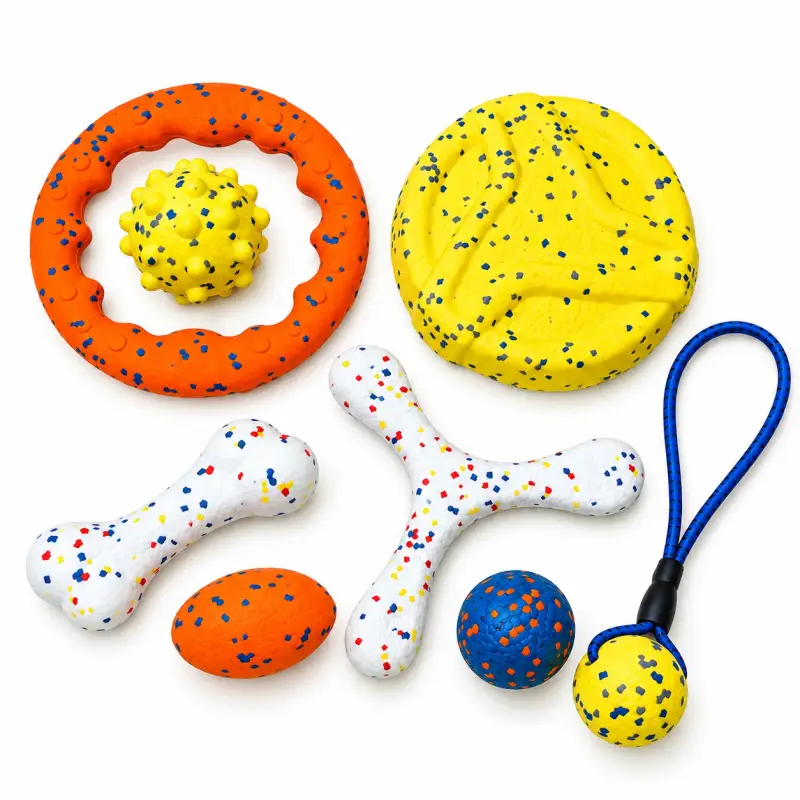
Chew Dog Toys
Compare chew toy shapes, sizes and construction to find a starting point for your target dogs and their chewing habits.
View Chew Dog Toys →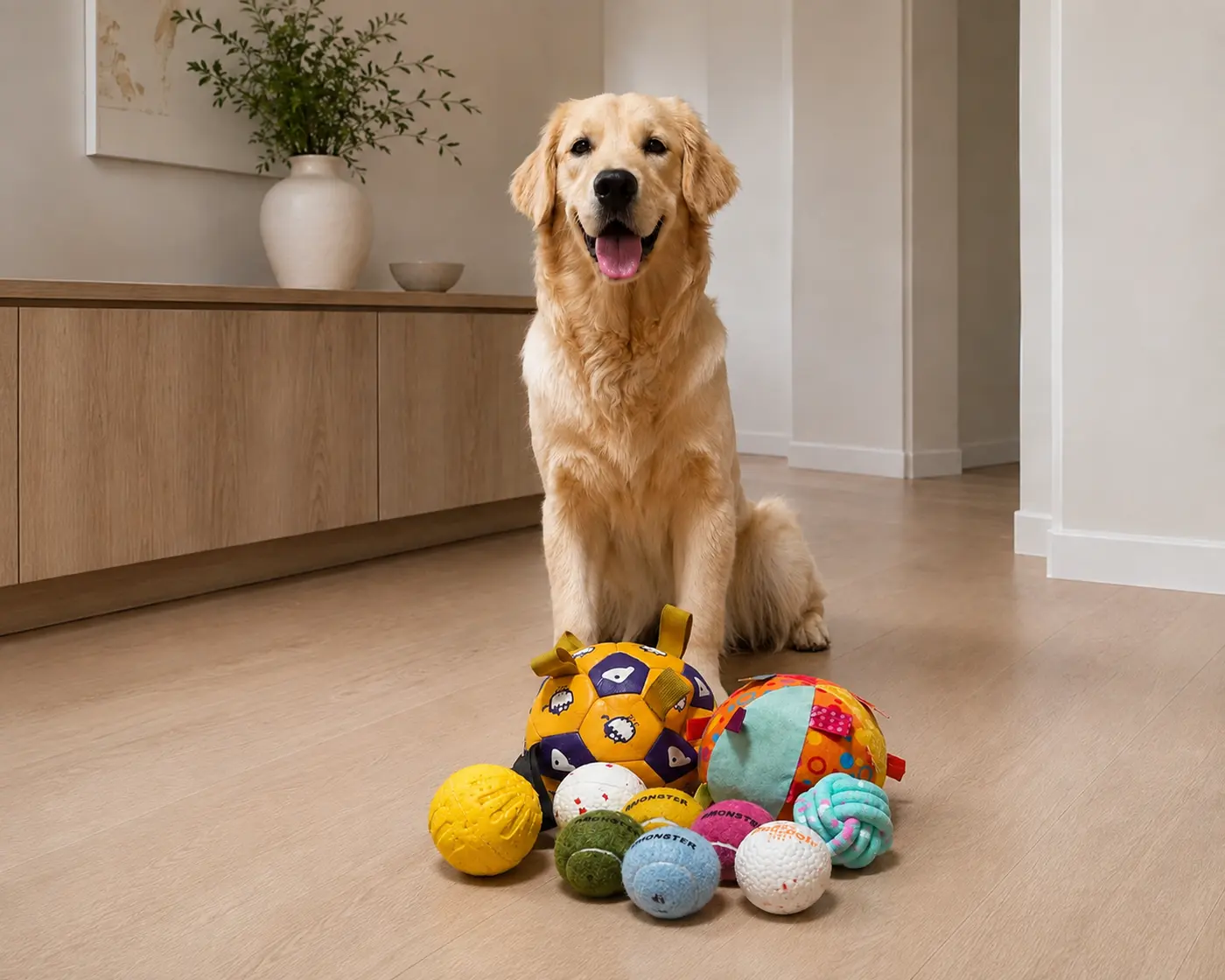
Dog Toys
If you’re building a broader dog toy range, explore plush, rope, fetch and interactive play options too.
View Dog Toys →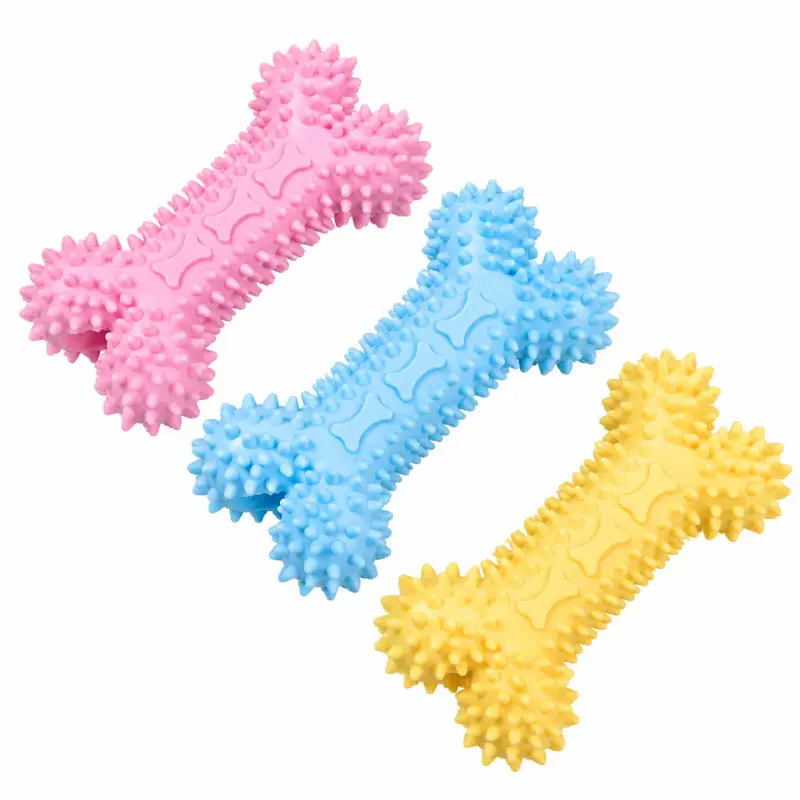
Customization
Already have a reference product or a starting idea? Explore options for sizes, colors, branding and packaging before discussing samples.
View Customization →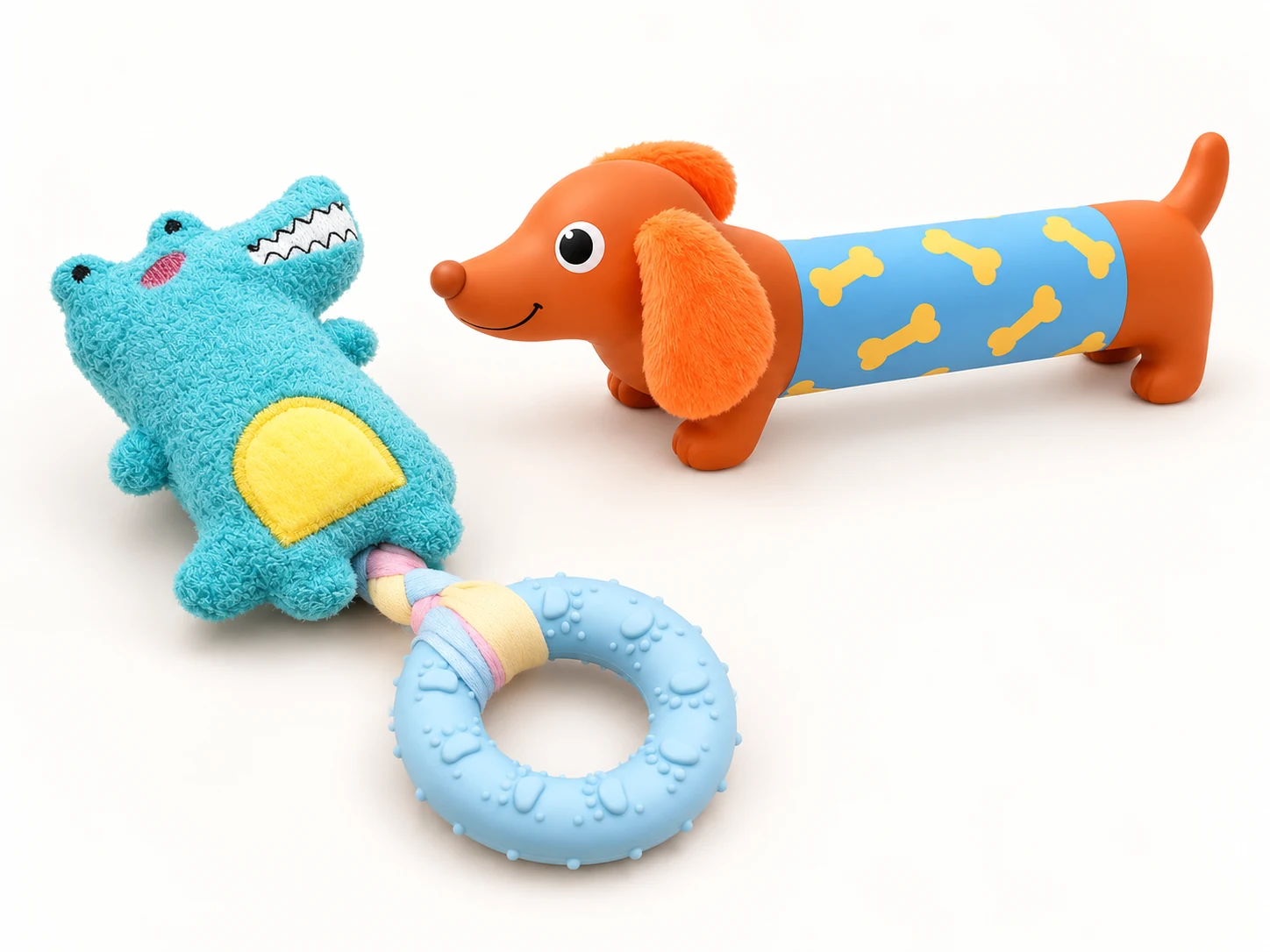
If a Chew Toy Breaks Easily, Does That Mean It's Too Soft?
Not necessarily. Start by finding out where the damage first appeared and how the toy was being used. Simply asking for a harder material may change the feel of the whole toy without fixing its weakest point.
For example, a bone-shaped toy may remain intact along the body but repeatedly tear at a narrow connection. In that case, compare the shape, thickness and material performance around that connection first. Making the entire toy harder doesn’t prove that the problem area will improve.
If a thicker main body quickly develops missing pieces in several places, review the material, size and chewing behavior together rather than just adding more thickness.
| What you observe | What to compare first | What it means for sample changes |
|---|---|---|
| A narrow neck or long tip tears first | Local thickness, length, shape and tear resistance | Decide whether the easy-to-grip weak point should be redesigned first |
| Pieces come off several areas of a thicker body | Material behavior, toy size and how the dog uses it | Review whether the material and toy are suited to the intended use |
| The body stays intact but an attached part comes loose | Attachment method and areas exposed to pulling | Address the connection rather than assuming the body is too soft |
| The surface shows tooth marks but no clear cracks or missing pieces | Whether marks are spreading or new damage is developing | Record these separately from cracks or missing pieces; do not promise continued safe use |
These observations help direct a comparison. A photograph alone cannot establish the sole cause or guarantee that a change will work. A damaged toy should be removed—not given back to the dog to see how it breaks further.
Adding thickness has trade-offs as well: the toy may become heavier and harder to squeeze. Compare its overall feel and suitability again after any change.
A useful improvement addresses the part that actually needs attention while keeping the flexibility you want—not simply making each new sample harder.
How Should Brands Compare Soft and Hard Chew Toy Samples?
For pet brands and buyers developing a chew toy range, “a little softer” or “more durable” doesn’t describe a complete product requirement. It helps to show which feel should stay the same, which area needs work and which sample you’re referring to.
First decide whether you’re comparing formulations or finished designs
If the goal is to compare formulations, keep the shape, size and thickness as consistent as possible. That makes it easier to see whether differences in feel come from the material.
You can still compare a hollow ball with a solid bone as possible products, but you cannot attribute every difference in their feel to material alone.
For example, a brand may like the body flexibility of an existing sample but worry that its tip is easily damaged. Keep that reference sample and discuss possible changes to the tip’s structure and material separately. If material, size and shape all change at once, it’s much harder to tell what made the difference.
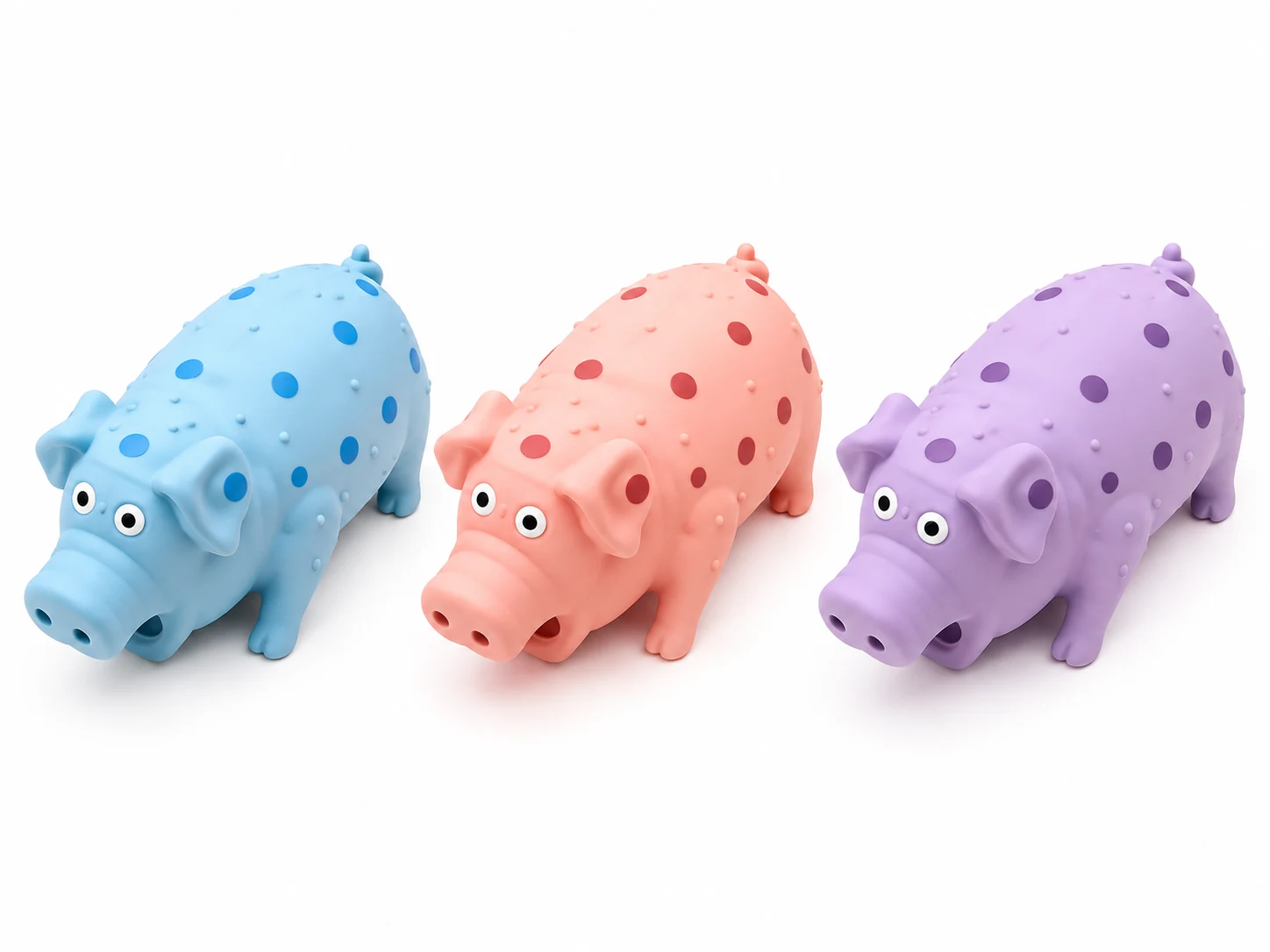
Describe the part that needs to feel different
These requests are clearer than “make the whole toy a bit softer”:
- Keep the current bend in the main body, but review the thinner tip.
- Make the body easier to press while checking whether a thinner wall is more vulnerable to damage.
- Keep the feel of the reference sample, then check whether the new size still works as intended.
Buyers do not have to choose a hardness number before they can start. A reference sample and a description of the specific area can be enough to begin a useful discussion.
Keep feel checks separate from chewing-damage assessments
Pressing, bending and observing recovery help compare how toys feel. They cannot predict how long a dog will use them, and they do not replace an assessment of the complete toy.
If a supplier provides material test results, ask whether they come from a material test specimen or a finished toy, how the test was performed and which material or sample version was tested. Material data can help, but the finished toy’s vulnerable areas still need attention.
When recording damage, distinguish between surface marks, growing cracks and pieces that have detached. Photograph the affected areas. This allows clearer comparisons between versions than describing all three as “not durable.”
How should you use Shore A values?
Shore A is a scale used to describe how a material resists indentation under specified test conditions.
It can help identify and check a material, but values should be compared on the same scale under comparable test conditions—not as isolated numbers without a test method.
Shore A is not a dog suitability rating. One number cannot prove that a toy is puppy-safe, safe for teeth or guaranteed to last. Finished toys of different shapes and sizes can feel different even when the measured material hardness is the same.
Connect sample decisions to the purchase requirements
| What to confirm | How to describe or compare it | What it helps establish |
|---|---|---|
| Sample identity | Record the design, size and version; keep the reference sample | Whether later comparisons refer to the same product proposal |
| Intended use | Describe target dogs, size range and chewing habits | What use the toy is being developed for |
| Feel to retain | Identify how the body or a particular section presses, bends and recovers | Which characteristics to keep and which to change |
| Material and structure | Record material information, key thicknesses, hollow areas and connections | Avoid approving only a material name while overlooking the toy’s construction |
| Evidence used | State what was tested, how, which version and where damage occurred | Whether findings can fairly compare candidate samples |
| Final approval | Compare the updated finished sample with the agreed requirements | Which sample and specifications will be used for later checks |
When comparing quotes, make sure the sizes, materials and construction are comparable. If one version is thicker, heavier or built differently, a price difference should not simply be explained as “harder costs more.” Clear product requirements give buyers a sound basis for comparing both feel and quotes.
After approval, retain the corresponding material and construction records. If the formulation, size or body thickness changes later, review the finished toy again rather than assuming the earlier sample result still applies.
Common Questions About Soft and Hard Dog Chew Toys
Can you tell how hard a chew toy is from photos?
Not reliably. Photos can show shape and appearance, but not how the material responds to pressure. Toys that look identical can also use different formulations or internal structures. You still need a physical sample before making that judgment.
Does “for aggressive chewers” always mean harder?
No. The label is not a substitute for knowing the material, size and construction. Find out what chewing behavior the product is designed for and what supports that description rather than equating “aggressive chewer” with maximum hardness.
Can different colors identify softer or harder versions?
A brand can use colors to distinguish its own versions, but colors have no universal hardness meaning. If you offer color-coded versions, describe their intended use clearly and make sure the finished samples match those descriptions.
If a toy shows tooth marks, should you switch to a harder one?
Not based on tooth marks alone. Check the product instructions and look for cracks, missing pieces, loose parts or significant wear. Stop using the toy if you find those problems. When choosing a replacement, consider its size, construction and the dog’s chewing habits—not just a higher hardness.
Choosing or Customizing Dog Chew Toys for Your Brand?
Start with a reference photo or sample and share the planned sizes, target dogs and chewing habits. If there’s an existing toy you’d like to improve, show the specific area you want changed and any relevant photos. This makes comparing options easier.
You don’t need to settle on a material or hardness number first. The feel of a reference sample can be a starting point: what should remain as it is, what is too difficult to squeeze and which parts need to be reconsidered.
Contact PETMERO to discuss chew toy styles, materials, construction and a sample approach for your project.