
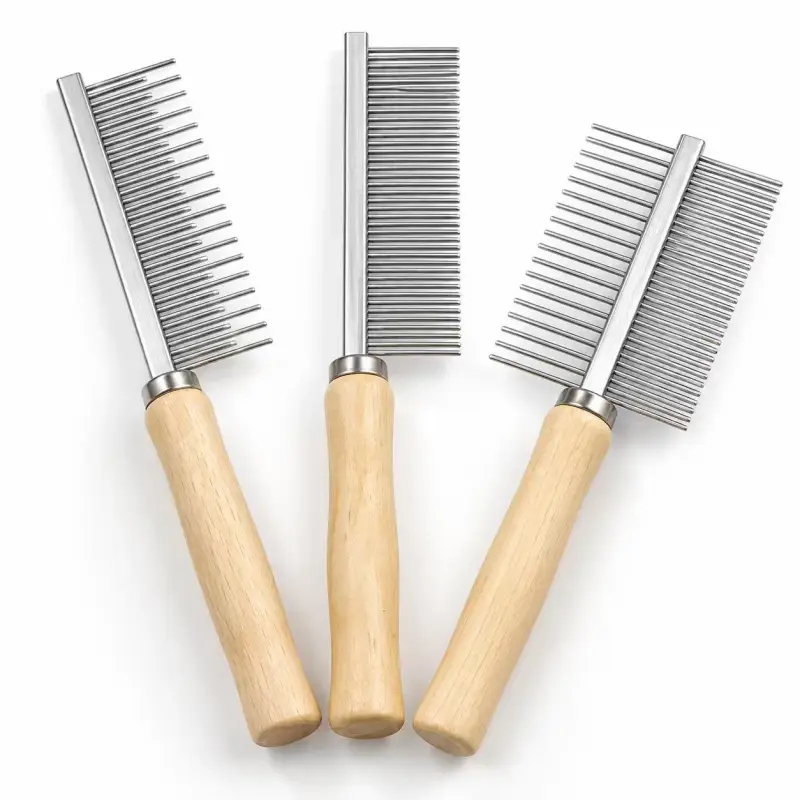
Ref. R36-01
Wood-handled pet combs with varied teeth
Several tooth layouts are shown with wood handles; compare spacing, working width and tooth length before shortlisting.
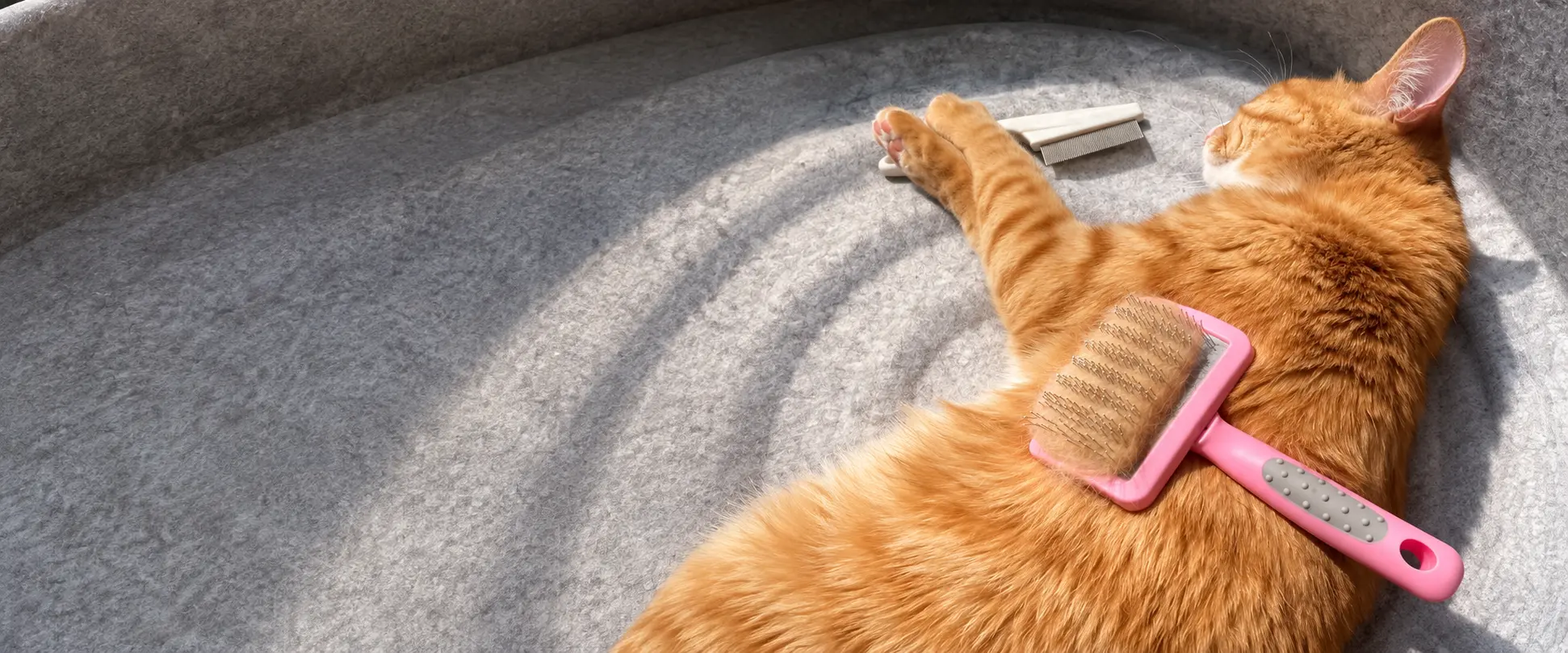
Compare grooming combs for dogs and cats, including fine-tooth, wide-tooth and compact comb formats. Check tooth spacing, working width, handle construction and packaging against the selected sample.
Explore 12 pet comb references, including fine-tooth, mixed-tooth, pin-style, de-shedding, curved-tooth and compact designs. Compare the actual comb head, tooth or pin spacing, working width and grip for each style. Choose a Ref. ID to ask about samples, colours, branding and packaging for that specific design.
Several tooth layouts are shown with wood handles; compare spacing, working width and tooth length before shortlisting.
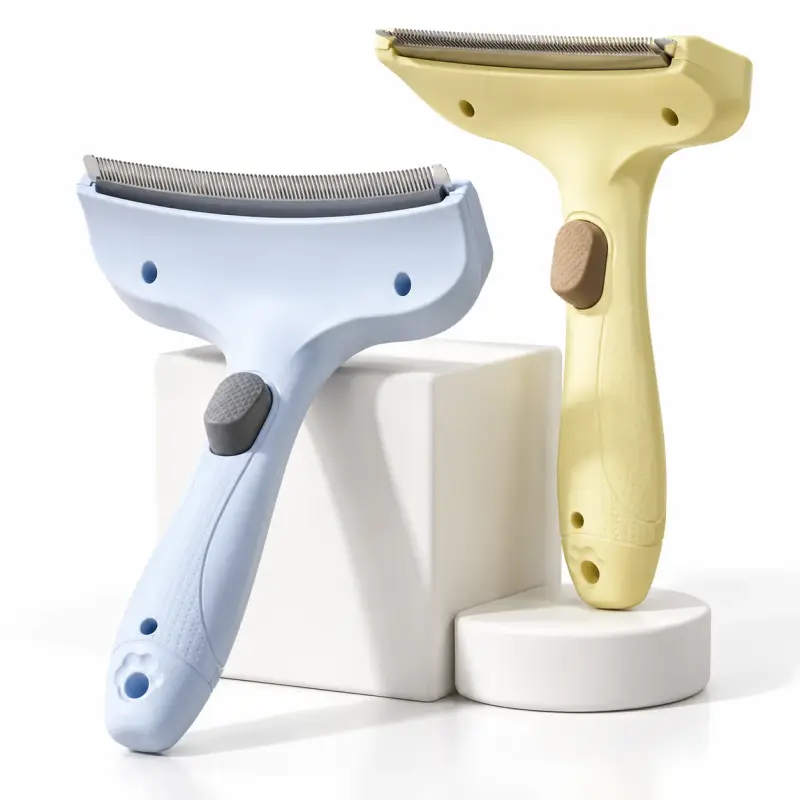
Different working-head shapes change the de-shedding format; compare head width, tooth or blade layout and grip.
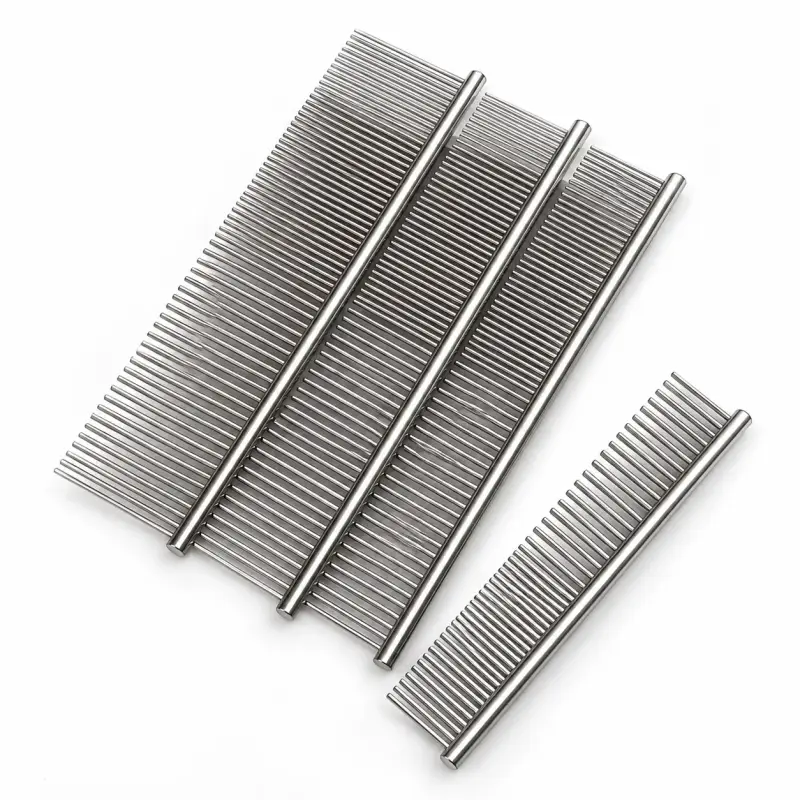
Fine and wider tooth sections give two spacing options in one comb; compare the usable length of each section.
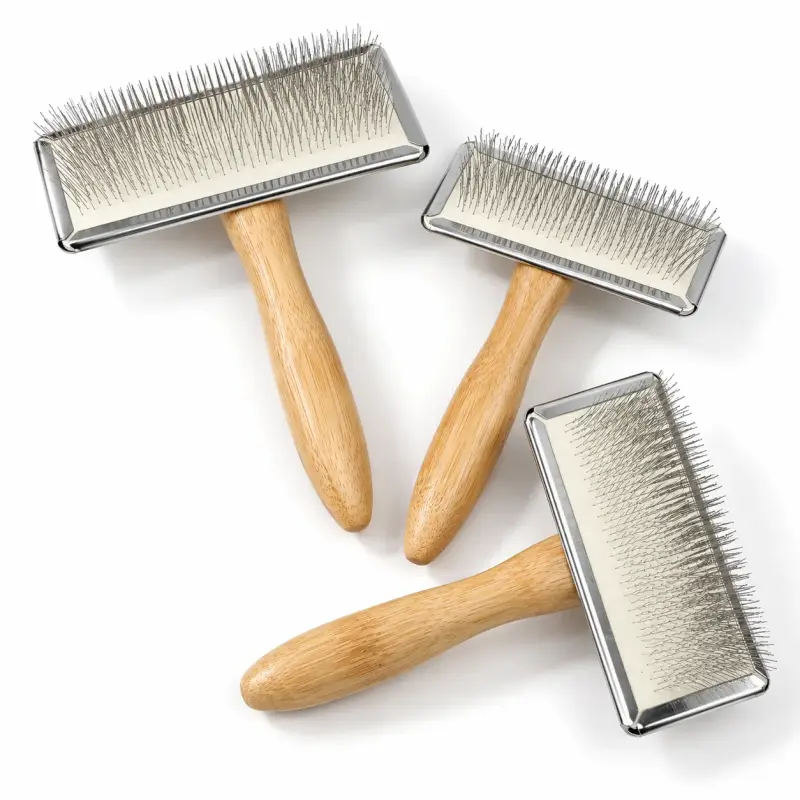
Rectangular pin-head combs with wood handles; compare pin layout, head size, working depth and handle balance.
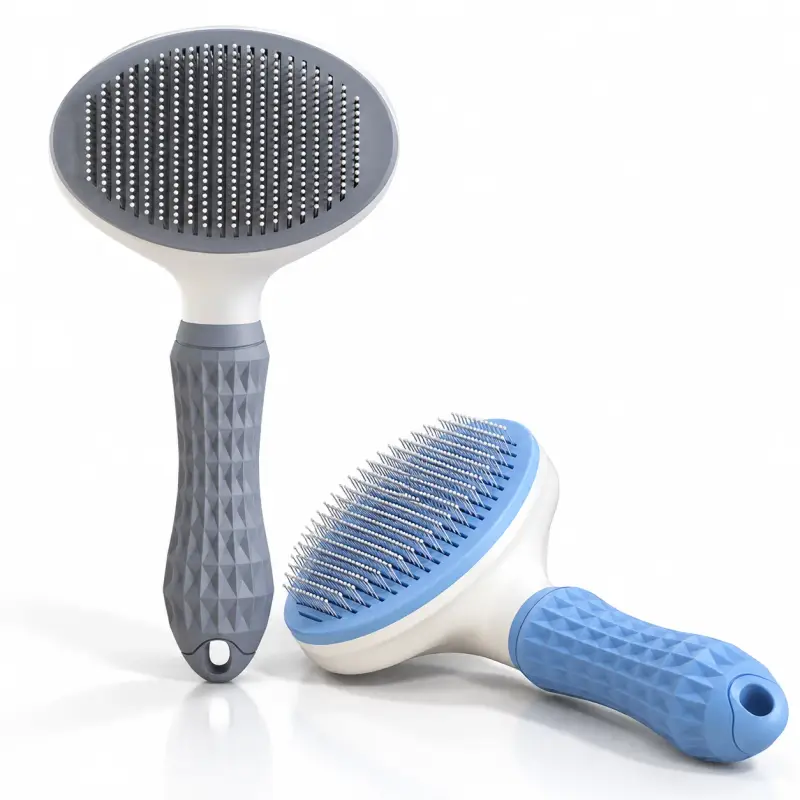
An oval pin-style comb format; compare pin length and spacing, pad size, head shape and grip before choosing a version.
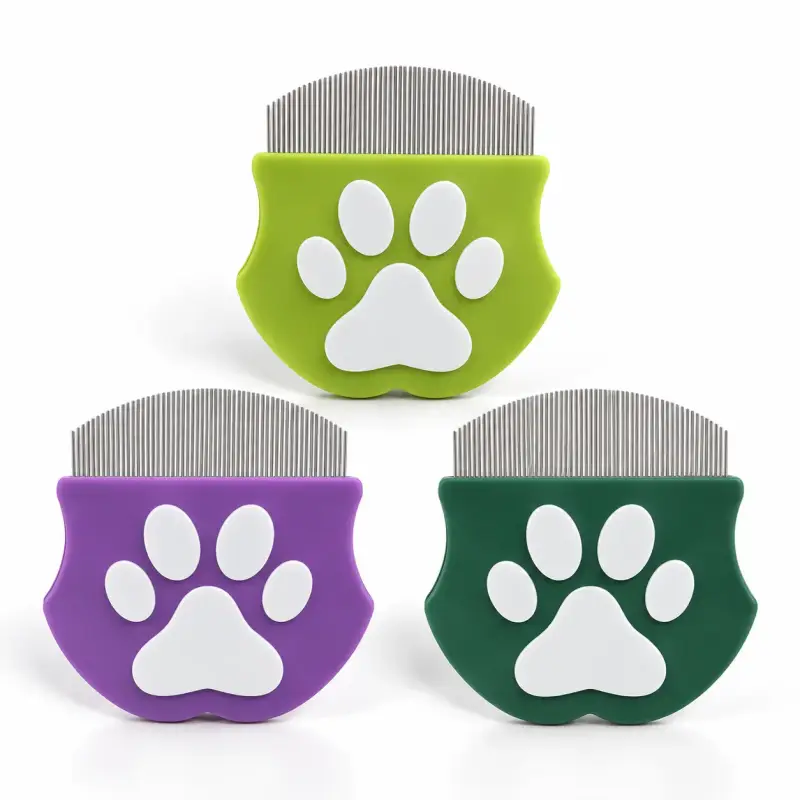
A compact comb format for smaller packs; compare usable combing width, tooth layout, grip area and pack format.
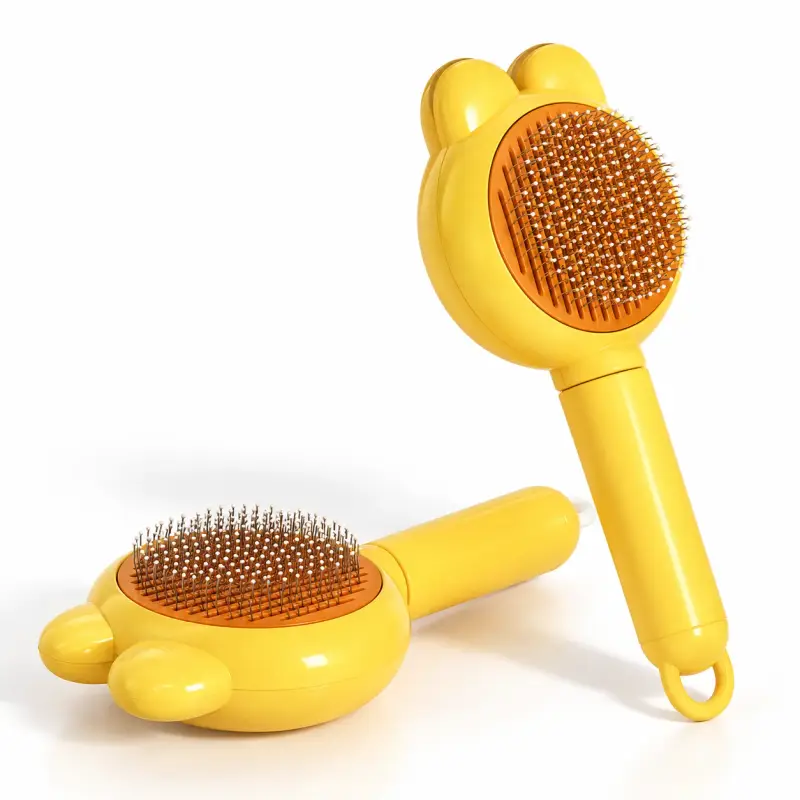
A small bear-shaped comb body; compare the working surface, grip area, overall size and retail-pack presentation.
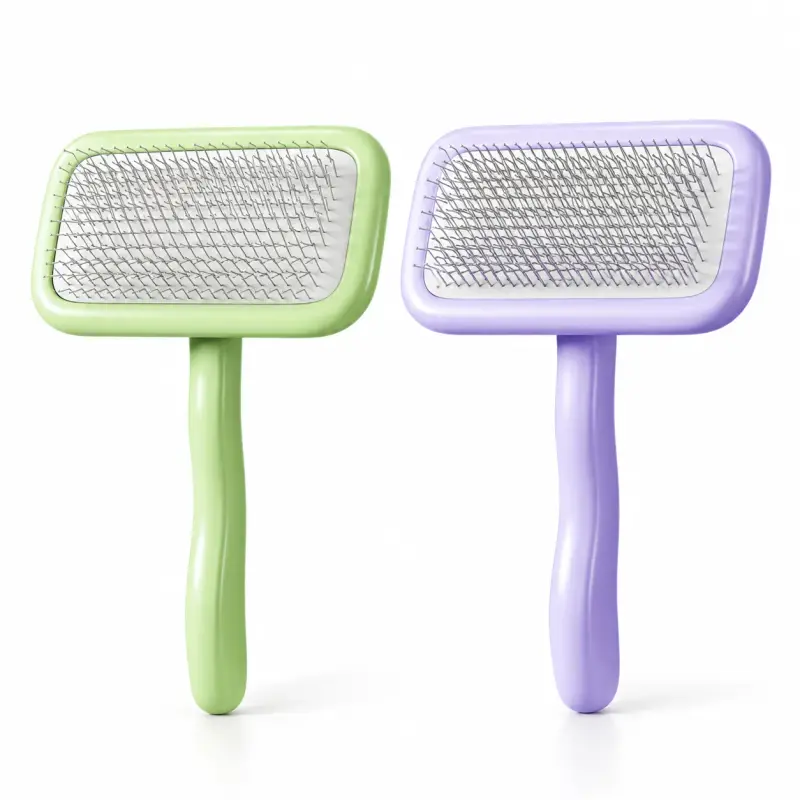
Two colour directions of a rectangular pin-head comb; compare head size, pin layout, working depth and handle shape.
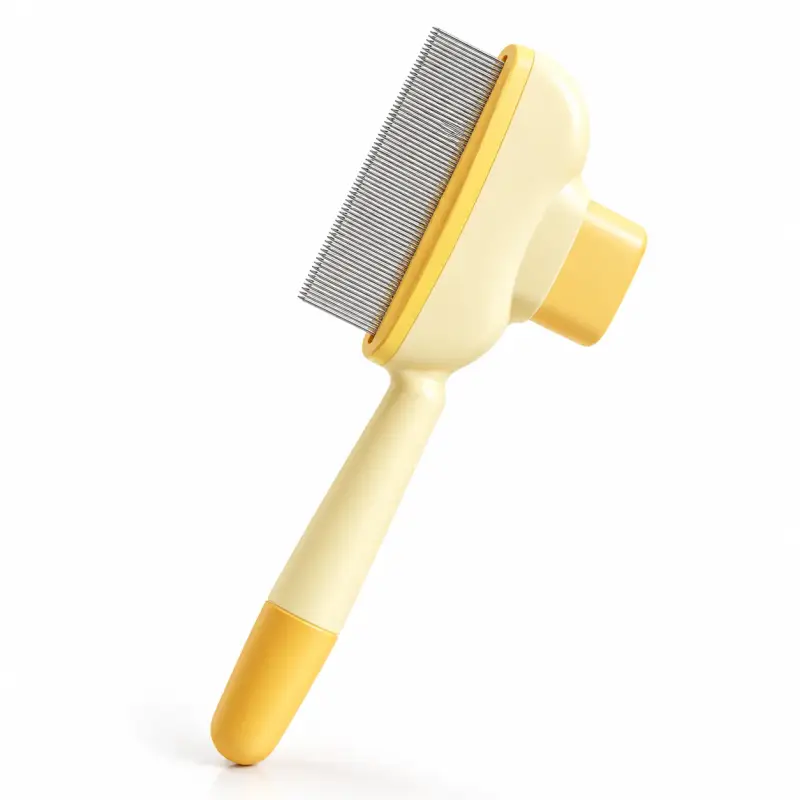
A handled fine-tooth comb; compare tooth spacing and length, working width and grip dimensions.
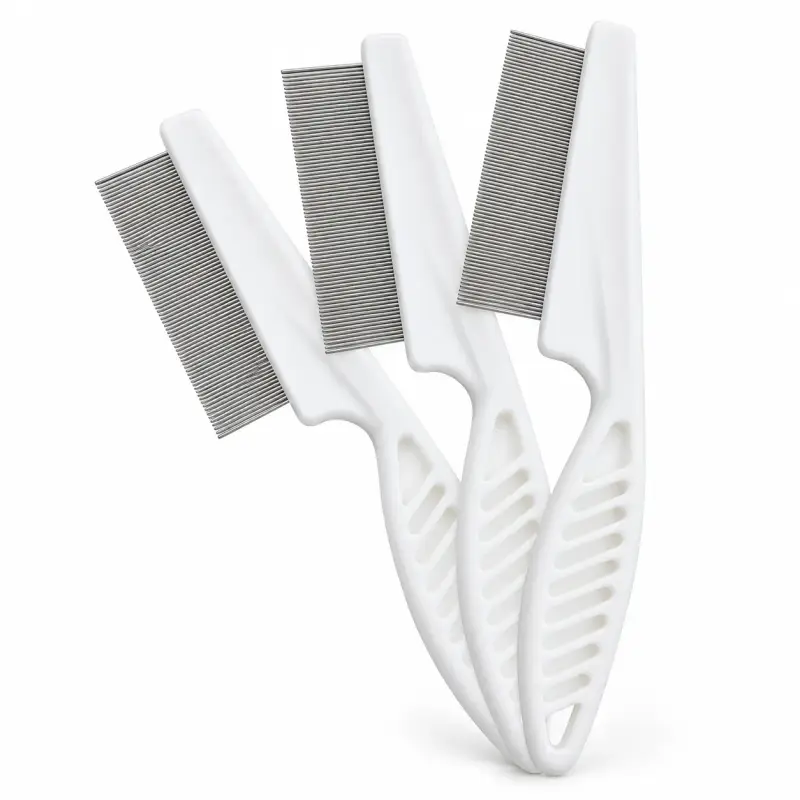
Fine-tooth combs with defined handles; compare working width, tooth alignment, grip shape and connection.
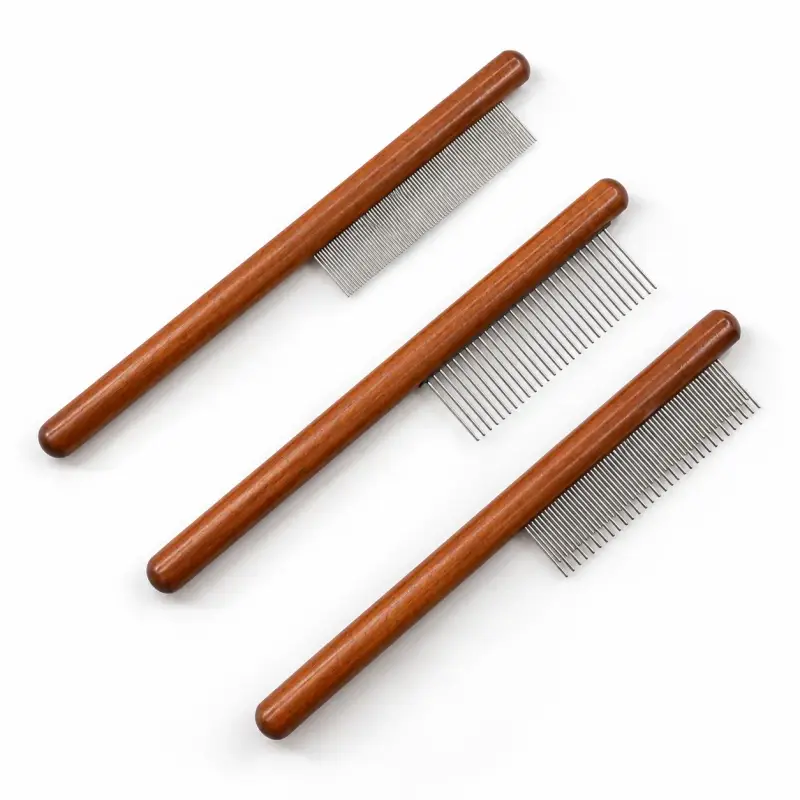
Wood-handled comb references; compare tooth layout, working width, handle dimensions and joining method.
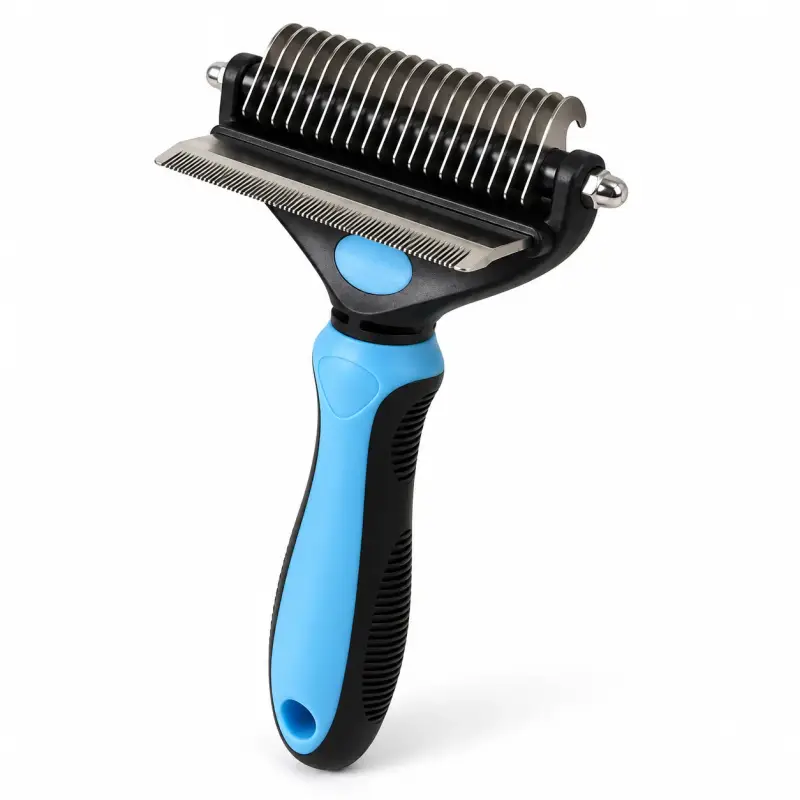
A curved-tooth pet comb format; compare tooth count and geometry, working width, handle angle and grip.
These 12 references show different pet grooming directions rather than the full range. A Ref. ID, your own image or a product link is enough to start discussing the next version.
Compare tooth spacing, tooth length, usable combing width and handle design when choosing pet grooming combs.
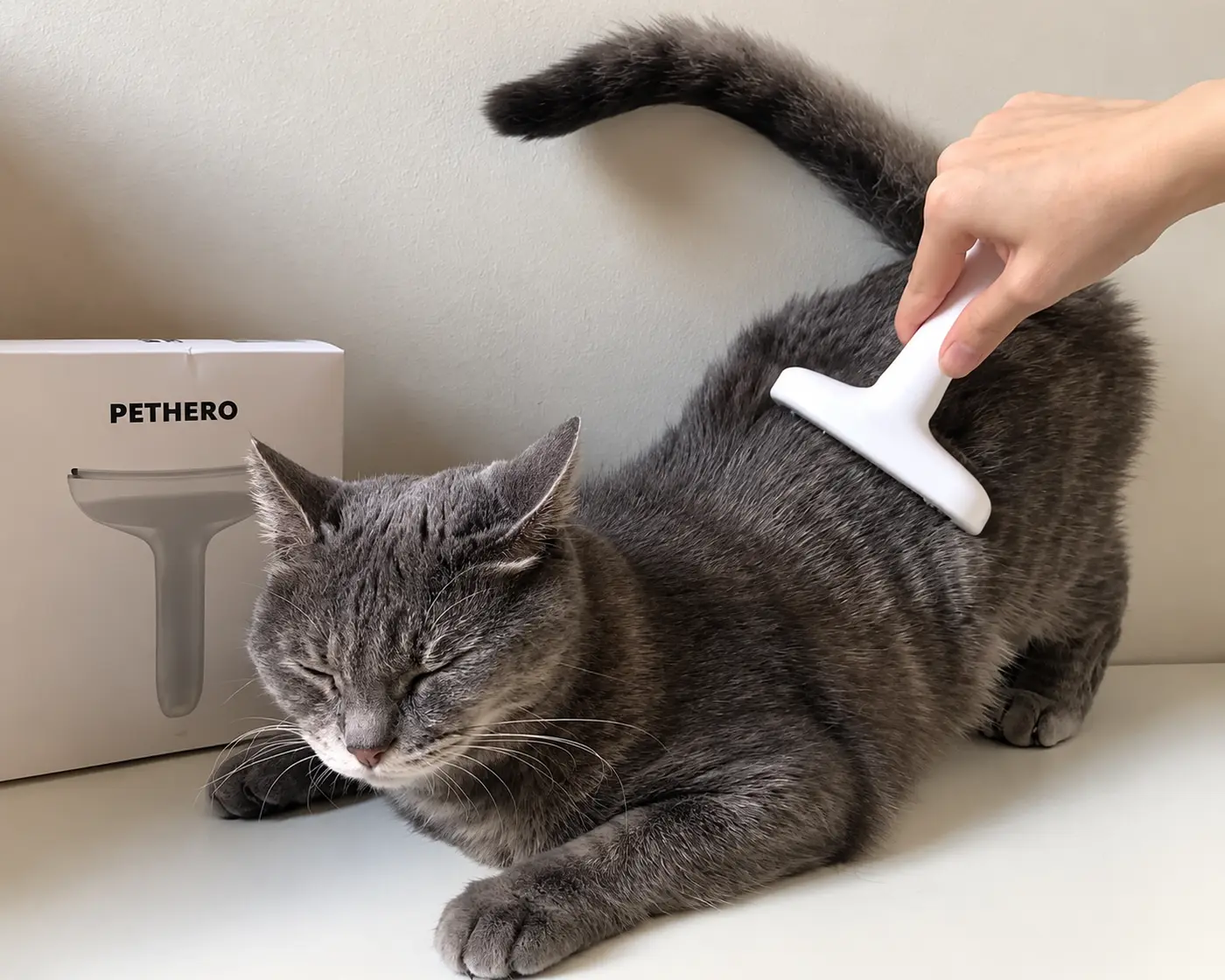
For close, detailed combing on a suitable coat. Check that the spacing and working length are clearly specified.
A wider section and a finer section offer different passes within one tool. Show both sections in the specification.
A handle changes reach and grip; a straight metal spine creates a different balance. Compare both in hand.
Start by choosing the tooth spacing and combing width for the intended coat-care task. Then compare tooth length, tip finish, overall dimensions and grip on the selected comb. Similar-looking combs can have different specifications, so confirm the actual sample before ordering.
Start with the coat-care task and working head, then compare dimensions, grip and construction. Dog or cat labelling can support merchandising, but it should not replace the actual product specification.
| Option | The useful difference | What to compare |
|---|---|---|
| Fine-tooth comb | Closely spaced teeth provide a finer combing option. | Tooth spacing, exposed tooth length, usable combing width and tip finish. |
| Mixed-spacing straight comb | Fine and wider tooth sections offer two spacing options on one comb. | The usable length, tooth spacing and tip finish of each section. |
| Wood-handled comb | A defined handle changes how the comb is held and how the working teeth are reached. | Tooth arrangement, working width, handle size, joining method and finish. |
| All-metal comb | A straight metal comb uses the spine as its grip instead of a separate handle. | Overall length, tooth spacing, usable width, edge and tip finish, and specified material. |
| Compact pet comb | A smaller comb body may suit space-conscious grooming or travel packs. | Usable tooth width, tooth spacing, grip area, overall size and packaging. |
Overall length alone does not describe a pet grooming comb. Record the dimensions that actually touch the coat, the handle or grip, and the connection between them so different pet comb styles can be compared on the same basis.
For straight pet combs, record tooth count or spacing, exposed length and usable width. For handled designs, also confirm the comb head dimensions and the connection to the grip.
Measure overall length, handle or grip dimensions and the balance of the assembled tool. A larger head can cover more area but also changes weight and control.
Inspect tooth alignment, tooth-tip finish and working edges on the physical comb sample. Do not infer comfort or coat suitability from a product photo alone.
Confirm how the comb teeth or metal spine connect to the handle or body, including any joints that affect assembly and cleaning.
Review how hair is removed from the working head, whether parts detach, and how the selected construction should be cleaned and dried before storage.
Confirm the actual working-part material, grade where relevant, dimensions and finish for the quoted version. A silver appearance does not establish stainless-steel grade or corrosion performance.
For compact and handled combs, confirm the body and handle materials, dimensions, surface finish and how the comb teeth are secured.
Wood-handled, molded and all-metal references use different joining and finishing details. Confirm handle material, grip dimensions, surface finish and the connection on the selected sample.
Once you have chosen a pet grooming comb style and confirmed its working head and dimensions, review which colour, handle and packaging changes are feasible for that exact tool. A change to tooth spacing, tooth length or handle geometry may require separate sample or tooling review. For the project-wide steps, see PETMERO's custom pet product process.
Discuss colour, grip details and surface finish for the selected comb style. A revised handle shape or tooth arrangement may require a separate feasibility or tooling review.
Choose a position on the handle, body or packaging that stays legible without interfering with the grip, moving parts or working surface.
Build a single-item pack or a defined set from approved references. List each comb and variant separately so differences in tooth spacing, size and handle are clear in the specification.
For pet grooming combs, start with the working-head type, tooth spacing, handle and grip. Discuss minimum quantities and sample work for that exact tool configuration.
A Ref. ID, image or product link is enough to begin. Add the tool type, working-head details, quantity, destination or branding requirements whenever you already know them.
For each pet grooming comb style, specify working-head type, tooth layout, handle construction, order quantity and pack. Quote sampling, production timing and freight for that tool.
Inspect tooth spacing, alignment, exposed length, tip finish and the connection between the comb and its handle or spine.
Review working width, grip, balance, hair-removal or cleaning access and how the selected tool behaves in the coat-care task it is meant to serve.
Confirm dimensions, materials, finish, colour, branding, pack contents and protection of the working head before production.
Start with the intended coat-care task. Compare fine-tooth, mixed-spacing, handled and compact combs by tooth spacing, exposed length, working width and grip. Check the physical sample before deciding which design fits the intended use.
A fine-tooth comb uses one close-spaced working row. A mixed-tooth comb combines finer and wider spacing in separate sections. For sourcing, record the usable length, spacing and tooth dimensions of each section instead of describing only the overall comb length.
Check the comb's working width, tooth spacing, exposed tooth length, grip dimensions and how the teeth connect to the handle. Confirm materials and finish on the selected reference.
Compact combs have a smaller body or grip area, but their tooth spacing and usable working width still need to suit the intended task. Compare dimensions, handling, tip finish and packing using the actual sample.
Confirm comb-tooth material and grade where relevant, tooth dimensions, handle or spine construction, joining method and surface finish. Do not infer stainless-steel grade, corrosion resistance or other performance claims from appearance alone.
Potentially, when the dimensions, working head and instructions are appropriate for the intended coat-care task. Use dog or cat wording for merchandising where it fits, but let the actual product specification define the quoted version instead of treating “dog” or “cat” as a complete specification.
Start with the approved reference, then review feasible colour, handle, logo and packaging changes for that construction. Structural changes to the working head or handle shape may require a separate feasibility or tooling review.
A Ref. ID, image or product link is enough to begin. If you already know the tool type, working-head size, quantity, destination, branding or packaging requirements, add them when convenient; a finished technical specification is not required for the first enquiry.