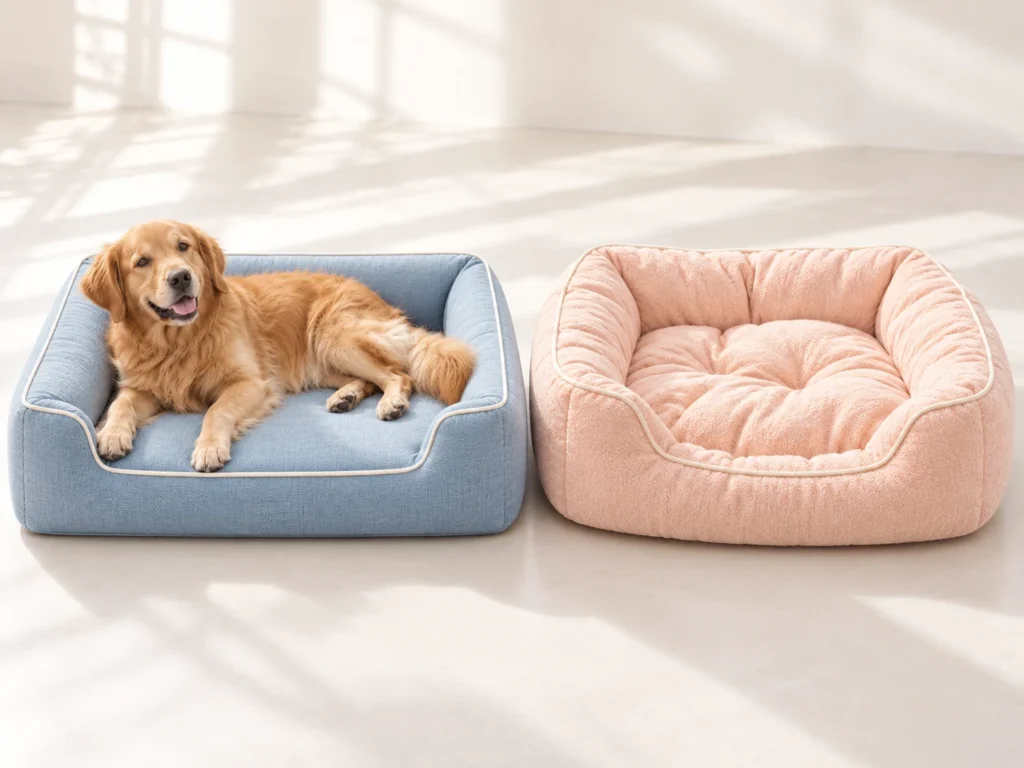
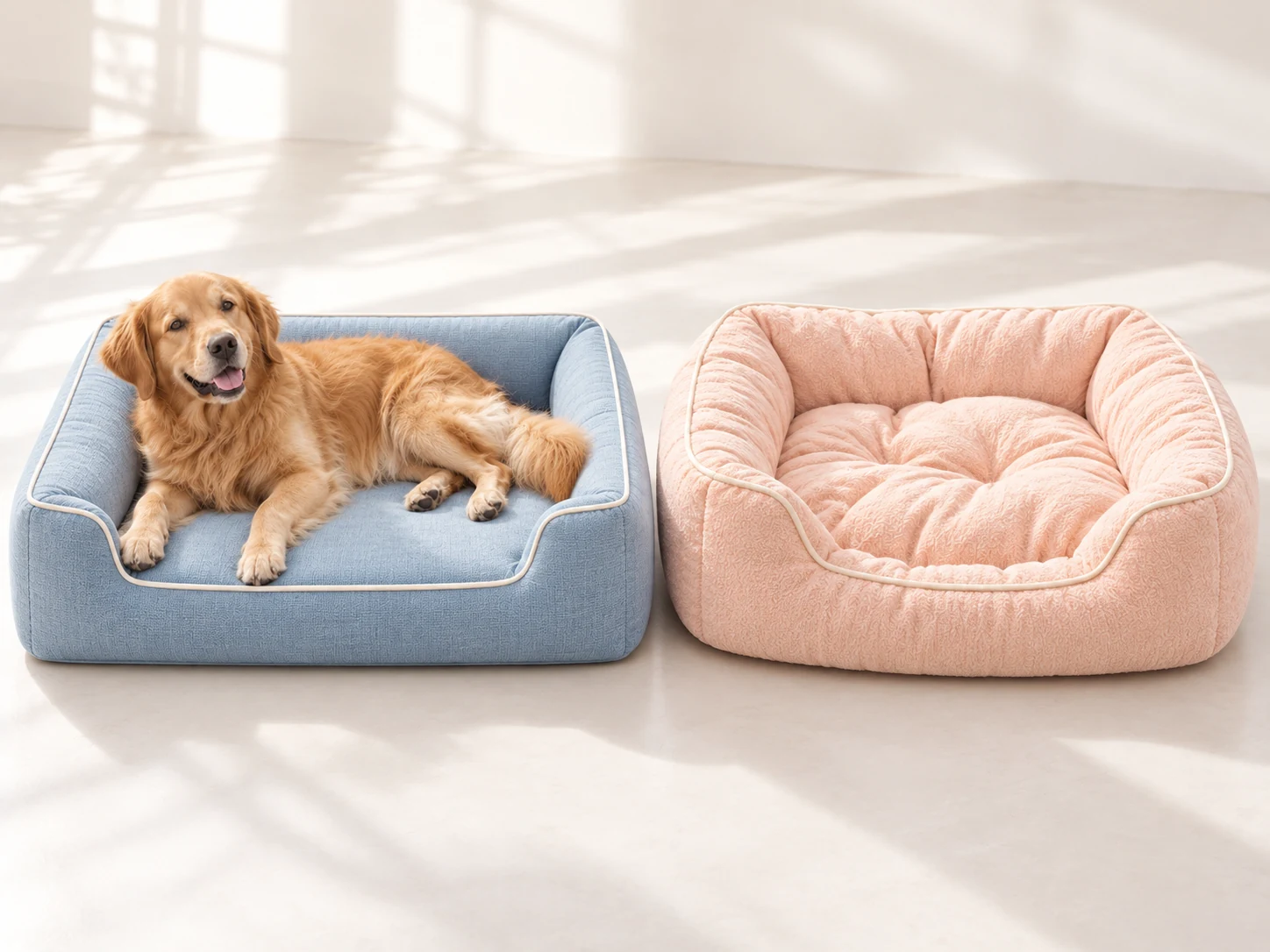
A dog bed can look thick and fluffy without necessarily feeling comfortable to lie on. Some beds feel soft at first but develop flat spots over time. Others may look less plush yet provide a more even sleeping surface.
These differences come down to more than the filling material. Where the filling is used, how much is added, and how the bed is constructed all play a part.
Memory foam is commonly used in mattress areas that need a continuous cushioning surface. Polyester fiberfill can create soft, fluffy cushions and bolsters. Both materials can also be used in different parts of the same dog bed.
So there is no need to decide which material is best straight away. It is more useful to understand how they differ, then choose based on the feel, construction and intended use of the bed.
What is the real difference between memory foam and polyester fiberfill?
Both materials can make a dog bed feel soft, but their internal structures are different. That affects how the bed responds when a dog lies on it.
Memory foam: a mattress surface that responds to pressure
Memory foam is a type of viscoelastic foam.
Under pressure, it gradually changes shape around the areas in contact with it. Once the pressure is removed, it usually returns to its original shape over time.
Memory foam is often used in the main sleeping area of a dog bed, but not all products labelled “memory foam” have the same construction.
For example, some beds have a layer of memory foam over a separate support-foam layer. That is different from using one type of foam throughout the mattress.
It is also worth distinguishing solid foam from shredded foam filling.
A solid or layered foam mattress forms a relatively continuous sleeping surface. Shredded foam is usually held inside a liner, where the pieces can move around. The two constructions should not be treated as equivalent in terms of pressure response, shape or filling method.
When a dog bed is labelled “memory foam,” the most useful question is what foam is actually inside the mattress and how the layers or pieces are arranged.
Polyester fiberfill: a soft, fluffy filling
Polyester fiberfill typically consists of loose polyester fibers that can be placed inside a dog bed’s mattress, inner liner or bolsters.
It creates a soft, fluffy filled area.
For example, a round dog bed or a bed with raised sides may use polyester fiberfill to create soft edges that a dog can lean against or rest its head on.
Even when two beds use polyester fiberfill, however, the finished results can be different.
Too little filling may leave a bed looking thin. Uneven filling can make some areas higher or lower than others.
In larger filled areas, fibers may also shift toward certain spots over time if there are no suitable internal partitions or securing points.
Divided inner liners or stitched sections can help limit that movement, although the final result still depends on the material and the finished construction.
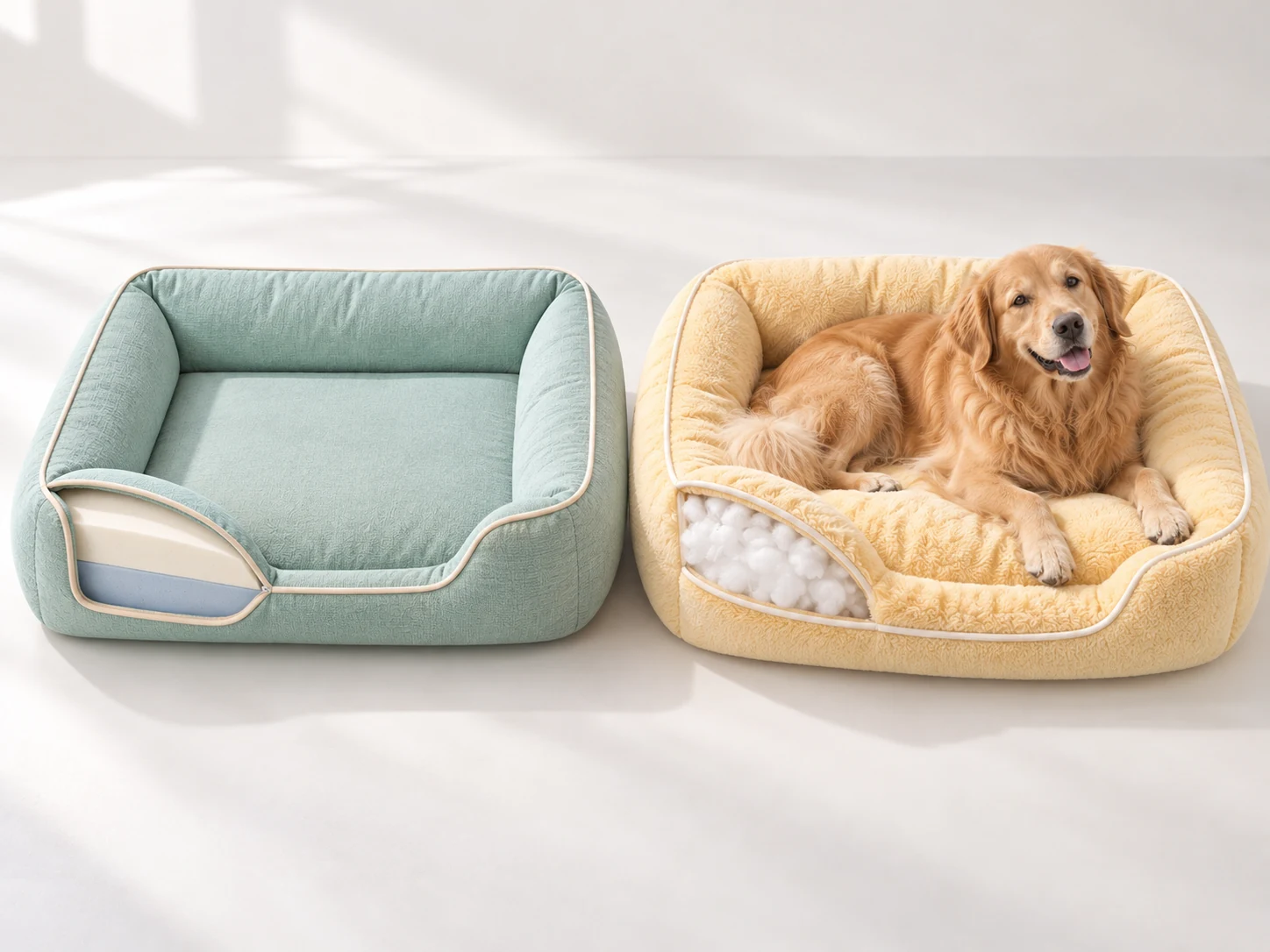
Memory foam vs polyester fiberfill
| What to compare | Memory foam | Polyester fiberfill |
|---|---|---|
| Typical construction | Solid, layered or other foam forms | Loose fibers or fiberfill held inside a liner |
| Main characteristic | Changes shape under pressure to provide cushioning | Creates soft, fluffy filled areas |
| Common locations | Main mattress, cushioning layer | Mattress, bolsters, soft cushions |
| What to check | Thickness, firmness and response under pressure | Fill amount, evenness and movement |
| Potential changes over time | Changes in shape or performance after prolonged use | Flat spots, shifting or clumping |
| Cleaning | Depends on the foam, cover and finished design | Depends on the fibers, liner and finished design |
Neither material is automatically better for every dog bed.
What matters is whether the finished bed provides the intended feel, usable resting space and shape retention.
Which filling works for different types of dog beds?
Start by thinking about how you want the dog bed to feel and function.
For a relatively flat sleeping surface with continuous cushioning
A solid or layered foam mattress is a good option to compare first.
This type of construction provides a continuous main sleeping area without relying on loose fiberfill to hold the mattress shape.
However, foam mattresses vary in thickness, firmness and layer combinations.
If the foam is too thin or sinks too much under pressure, it may not give the desired result—even if it is called memory foam.
Pay attention to the mattress under load, not just its thickness when nobody is lying on it.
For a soft, fluffy bed with a more enclosed feel
Polyester fiberfill is worth considering.
Fluffy round beds and soft bolsters, for example, can use fiberfill to create a fuller, more cushioned shape.
But more filling is not always better.
Too little may make it difficult to maintain the intended shape. Too much can make a bolster overly bulky, reducing the space available for resting.
The finished sample is the best way to judge whether the fill amount is appropriate.
For a different feel in the mattress and the bolsters
Foam and polyester fiberfill can be used together.
For example, a rectangular dog bed with a low front entrance could use a foam mattress in the centre and fiber-filled bolsters along the sides and back.
That lets the main sleeping area and the softer bolsters be designed separately instead of requiring the same filling throughout.
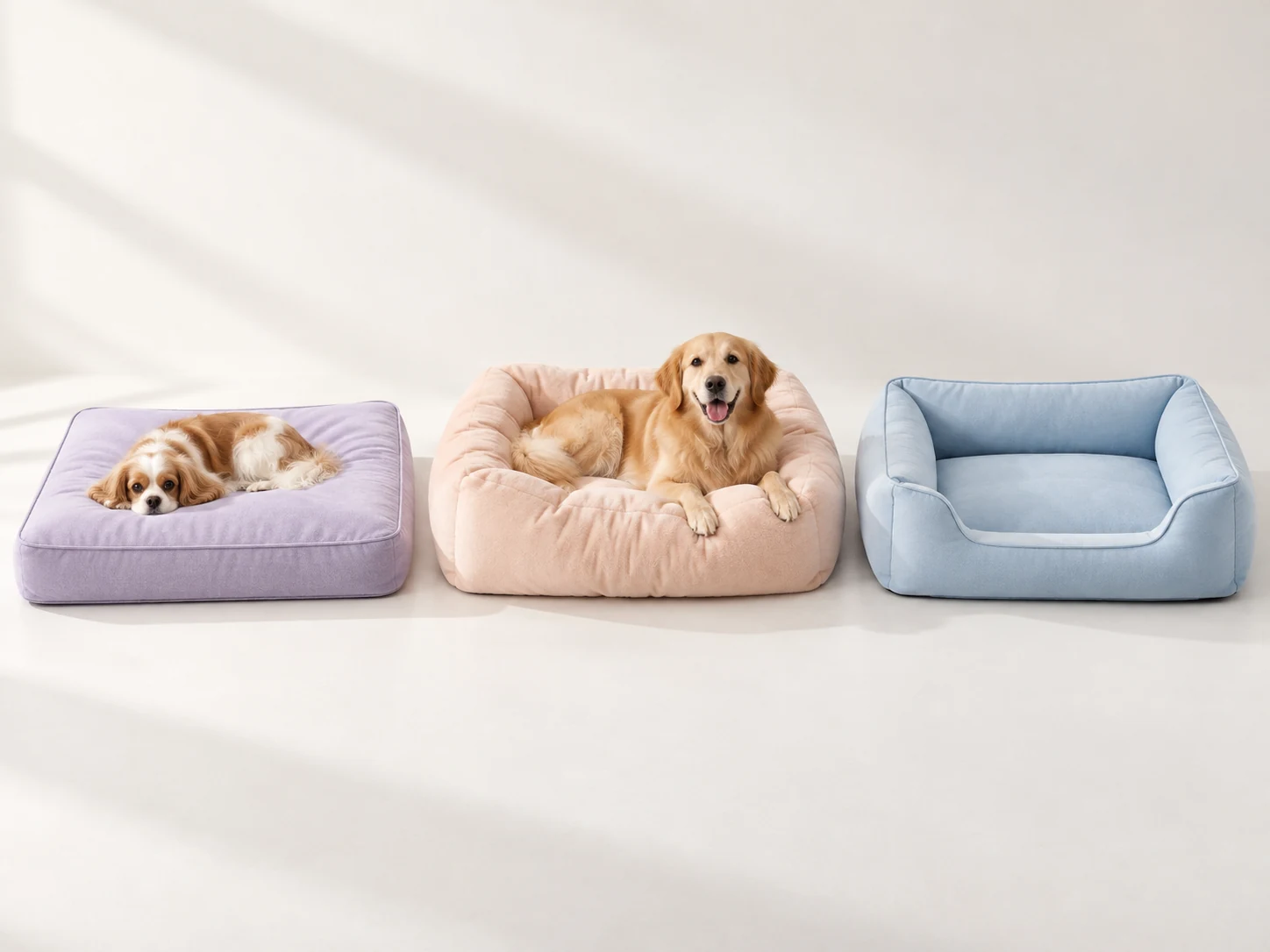
Choosing a filling for the result you want
| Desired feature | Filling structure to consider | What to confirm |
|---|---|---|
| A continuous, fairly even mattress surface | Solid or layered foam | Thickness and cushioning under pressure |
| A soft, fluffy mattress | Polyester fiberfill | Fill quantity and even distribution |
| Soft bolsters | Fiber-filled bolsters | Whether they keep the intended shape |
| Foam sleeping area with plush bolsters | Foam mattress with fiber-filled bolsters | Where each filling is used and how the parts are constructed |
| Easier cleaning | Removable cover with a suitable inner liner | Which parts can actually be washed |
For larger or older dogs, age or weight alone should not determine which filling to choose.
Also consider how far the mattress sinks under load, the height of the bed and whether the dog can get on and off easily. For dogs with joint or mobility concerns, ask a veterinarian rather than treating a particular filling material as a medical solution.
Explore dog bed options and what to do next
Once you know which filling structure you are considering, you can look at different dog bed designs, sizing advice and customization options.
Explore Dog Bed Options and Next Steps
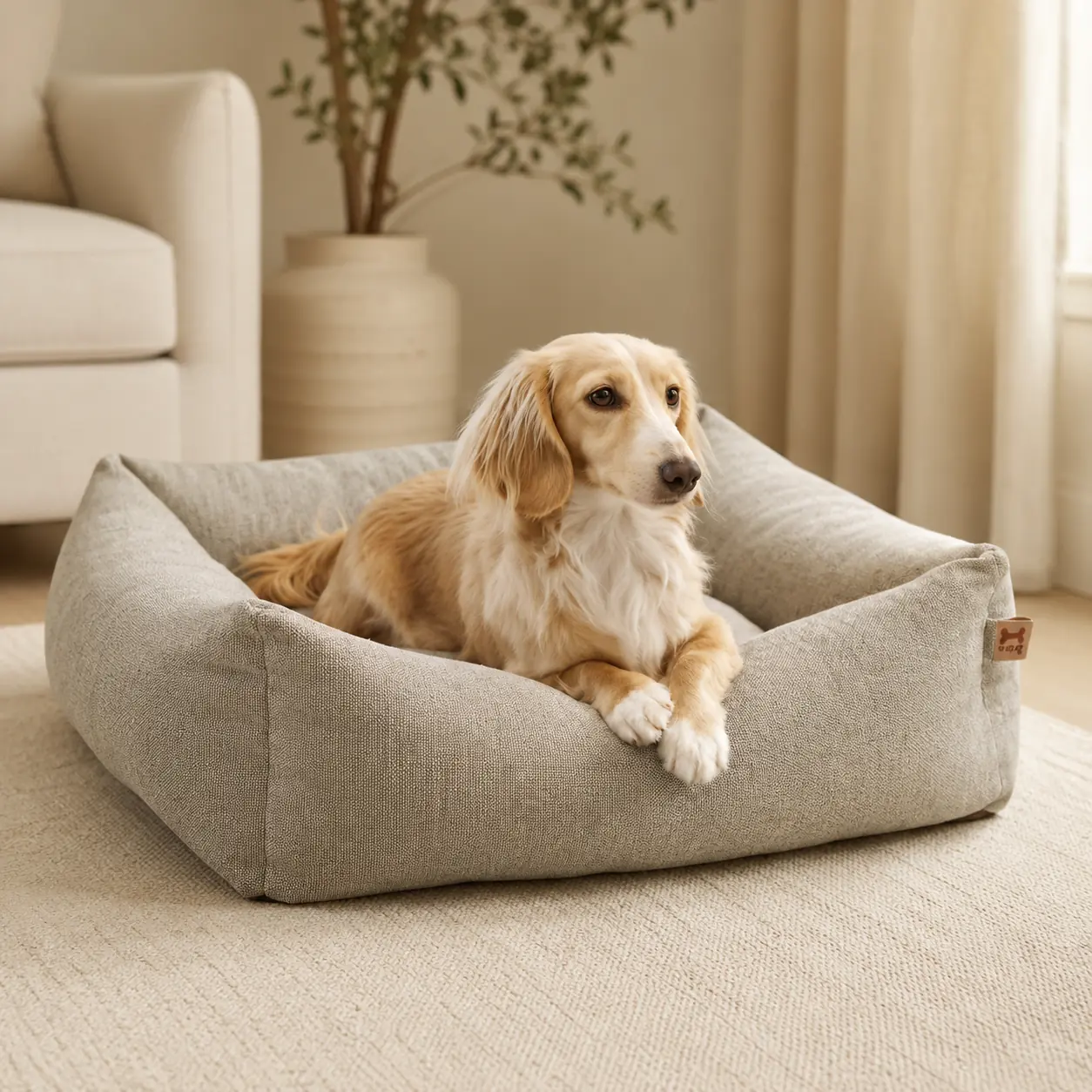
Dog Beds
Compare flat, round and bolster dog bed styles to find a suitable direction for your project.
View Dog Beds →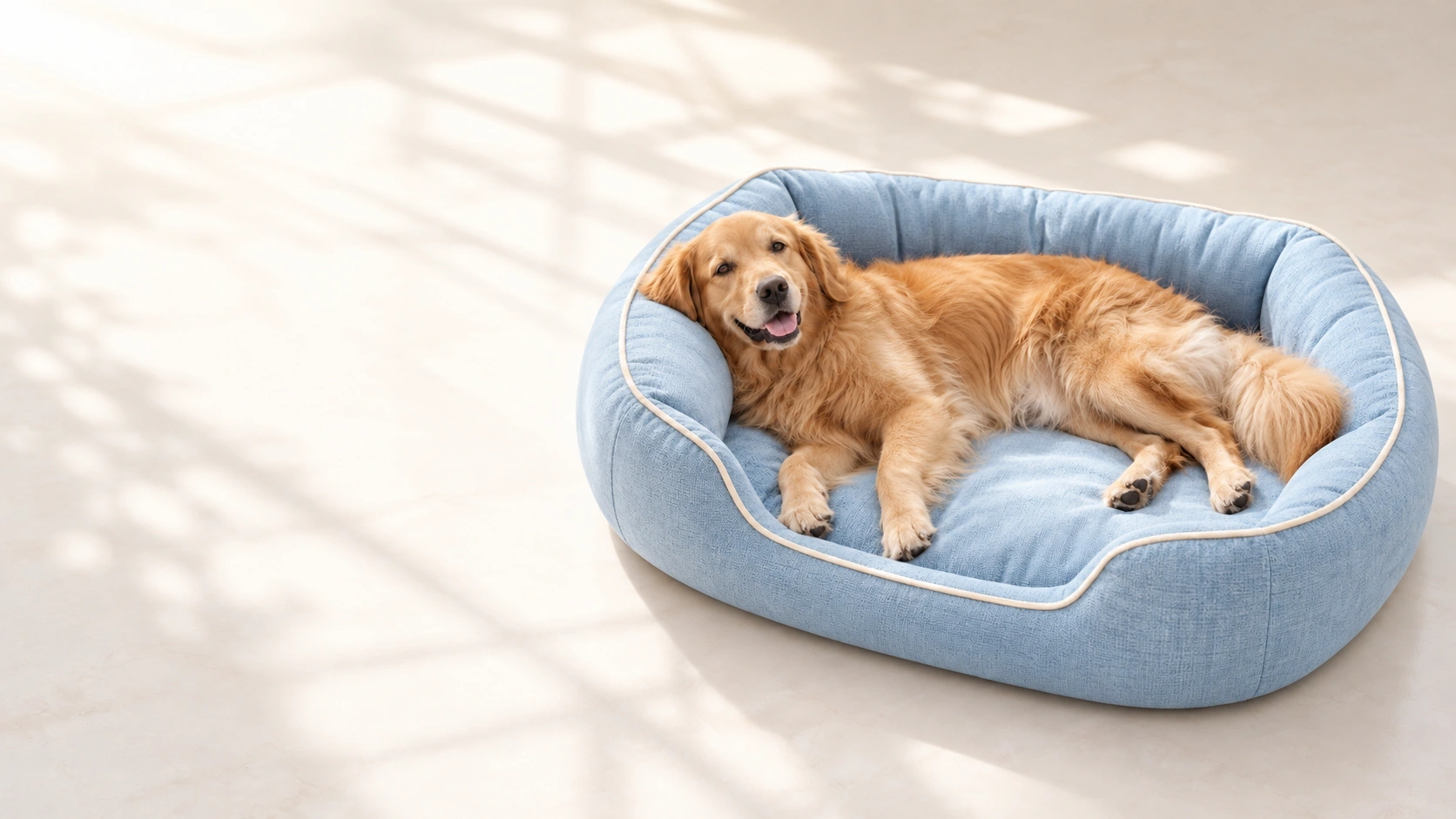
Dog Bed Size
Learn how to measure your dog’s sleeping space and compare the usable dimensions of different beds.
Read About Dog Bed Sizing →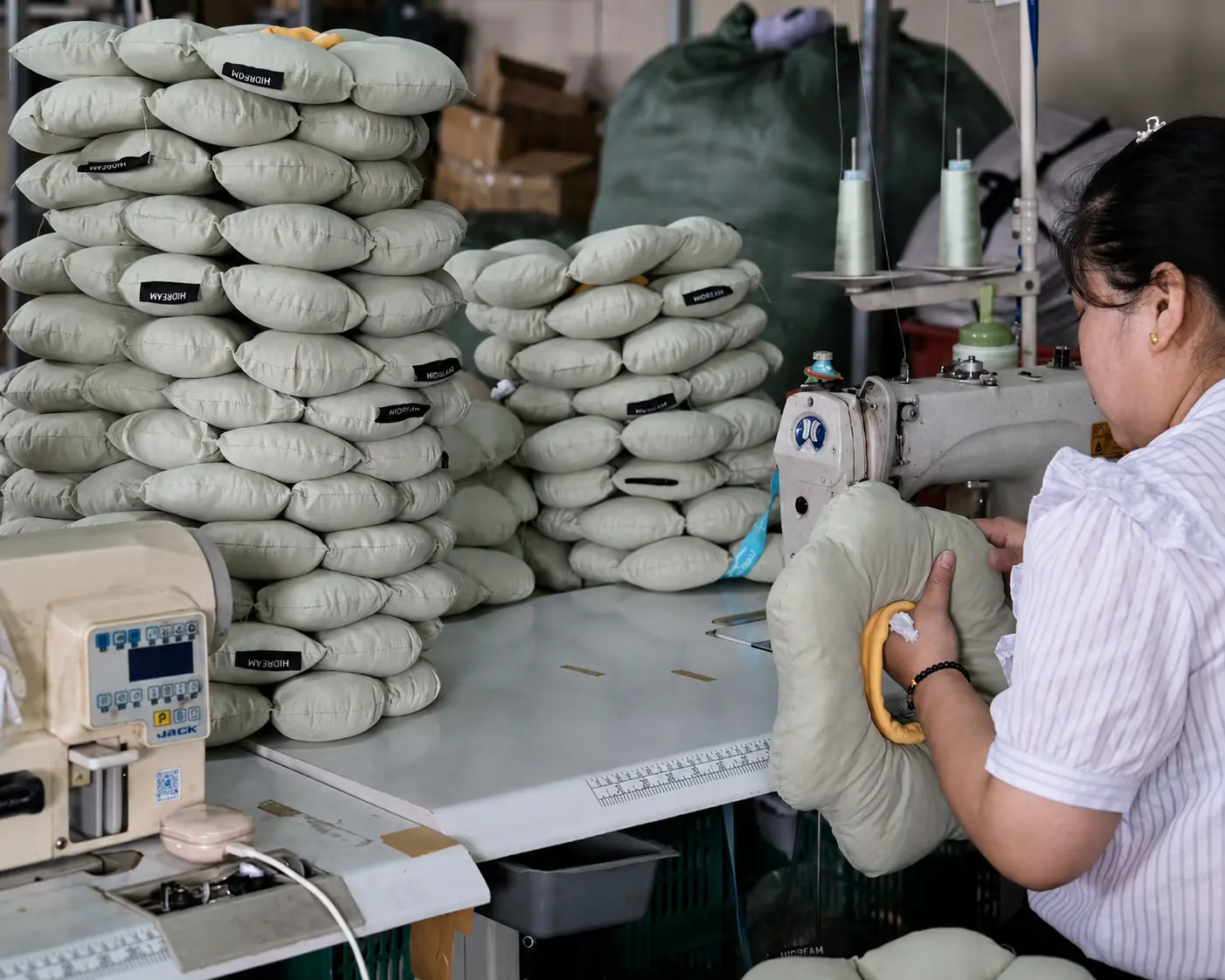
Customization
Once the bed style and filling are chosen, review materials, samples, colors, branding and packaging.
View Customization →Why do some dog beds flatten or become lumpy over time?
This is a practical issue worth considering when choosing a filling.
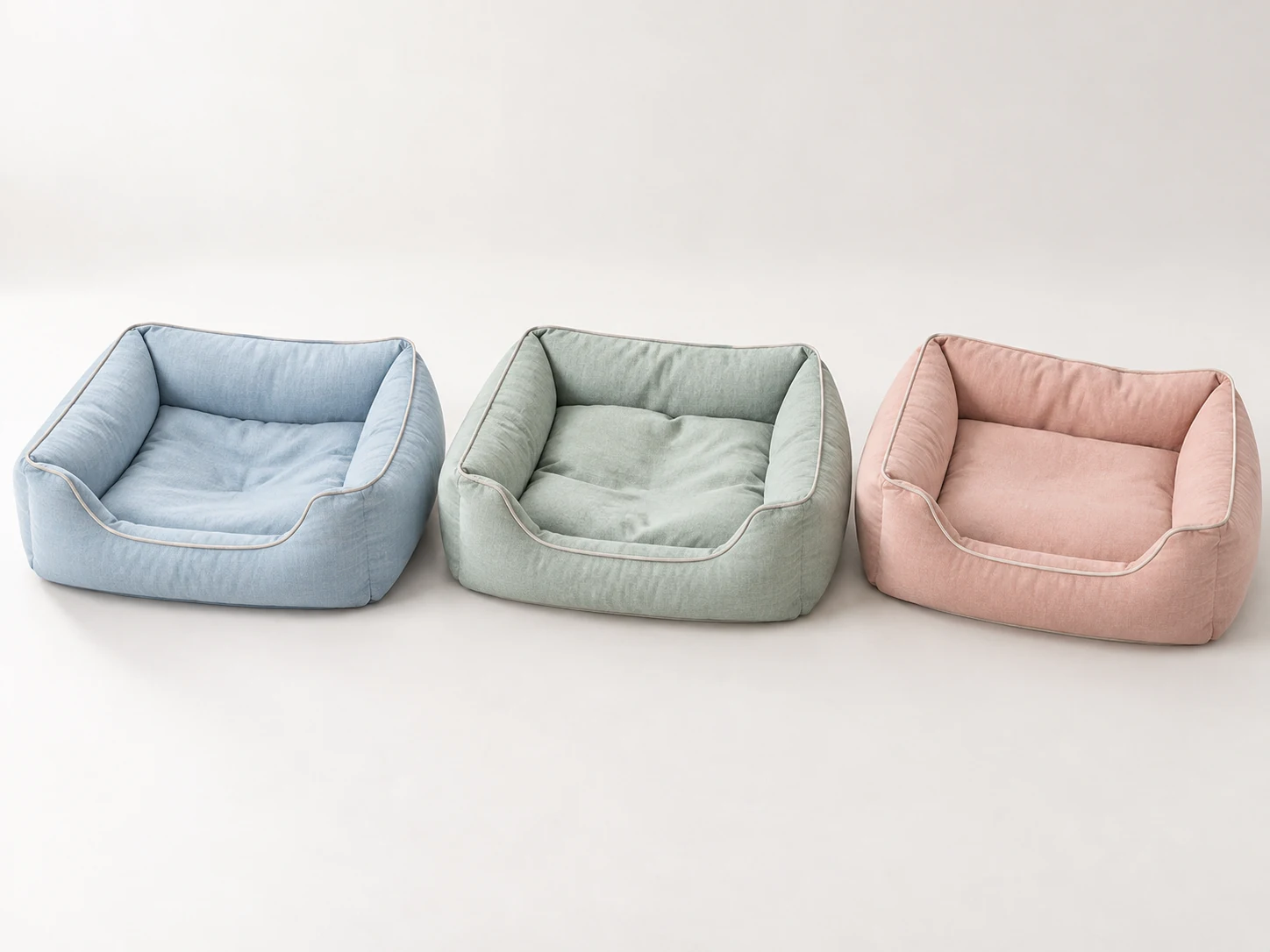
A bed may look fluffy when it first arrives, yet the centre or parts of the bolsters can gradually lose their shape with use.
A bed becoming flat does not always mean the wrong material was chosen. First look at where the change has happened and what may have caused it.
1. Fiberfill in the centre moves toward the edges
If a bed contains loose fiberfill, the area where a dog lies most often may be compressed repeatedly.
Some of the filling can shift outward, leaving a thinner centre and fuller areas around it.
Check whether the fill amount is appropriate and whether the liner has sections or other features that help limit movement.
2. Fiberfill gathers into lumps
If some spots feel like firm clumps while others feel almost empty, the filling may have gathered unevenly.
The fiber type, liner construction, usage and unsuitable cleaning methods can all affect this.
For a bed intended to keep a more even shape, compare different liner constructions rather than trying to solve everything simply by adding more filling.
3. A foam mattress stays noticeably thinner after pressure
Unlike loose fiberfill, foam does not shift around inside a liner in the same way.
But its thickness or original performance can still change with use.
Remember that memory foam normally recovers slowly when pressure is removed. A mattress that does not spring back immediately is not necessarily damaged.
It is worth examining the material and construction if a clear permanent indentation remains after the mattress has had sufficient time to recover, or if it performs very differently from the approved sample.
4. The bolsters gradually lose their shape
A bed with raised sides may also develop leaning bolsters, flattened spots or uneven filling.
Possible contributing factors include the fill amount, shape of the inner liner, stitching and repeated pressure.
So check the bolsters as well as the central mattress.
What should you check if the shape changes?
| What you notice | What to examine | Possible next step |
|---|---|---|
| The centre becomes thinner | Fill amount, fiber distribution and liner construction | Review the fill amount or divided liner design |
| Filling forms lumps | Fiber condition, liner and cleaning method | Compare filling material and internal construction |
| Foam has a clear permanent indentation | Foam specification, thickness and actual use conditions | Compare foam options and the complete mattress design |
| A bolster leans or changes shape | Bolster filling, liner shape and stitching | Adjust the bolster design and review another sample |
| The bed changes shape after washing | Washable components, washing conditions and drying method | Recheck the cleaning instructions |
These signs can help identify what to investigate, but appearance alone cannot establish a single definite cause.
For a brand sourcing project, compare the affected sample with the originally approved sample before deciding whether the filling or construction needs to change.
Can a dog bed use foam and fiberfill together?
Yes. There is a practical reason to combine the two materials in the same bed.
They can be used in different parts rather than mixed together as one filling.
Foam mattress with fiber-filled bolsters
Take a rectangular dog bed with U-shaped bolsters. It can be divided into three main parts:
Central mattress: Solid or layered foam forms the main sleeping area.
Side and rear bolsters: Polyester fiberfill creates soft raised sides that a dog can lean against.
Cover and inner liners: Enclose the central mattress and bolster filling as required by the materials and construction.
With this approach, the centre and the bolsters can be adjusted separately.
For example, if the central sleeping area needs a different cushioning feel, you can compare alternative foam constructions without also changing the bolster filling.
If the bolsters need to feel softer or fuller, their fill quantity and inner construction can be reviewed instead.
That makes it easier to give different parts of the bed different purposes.
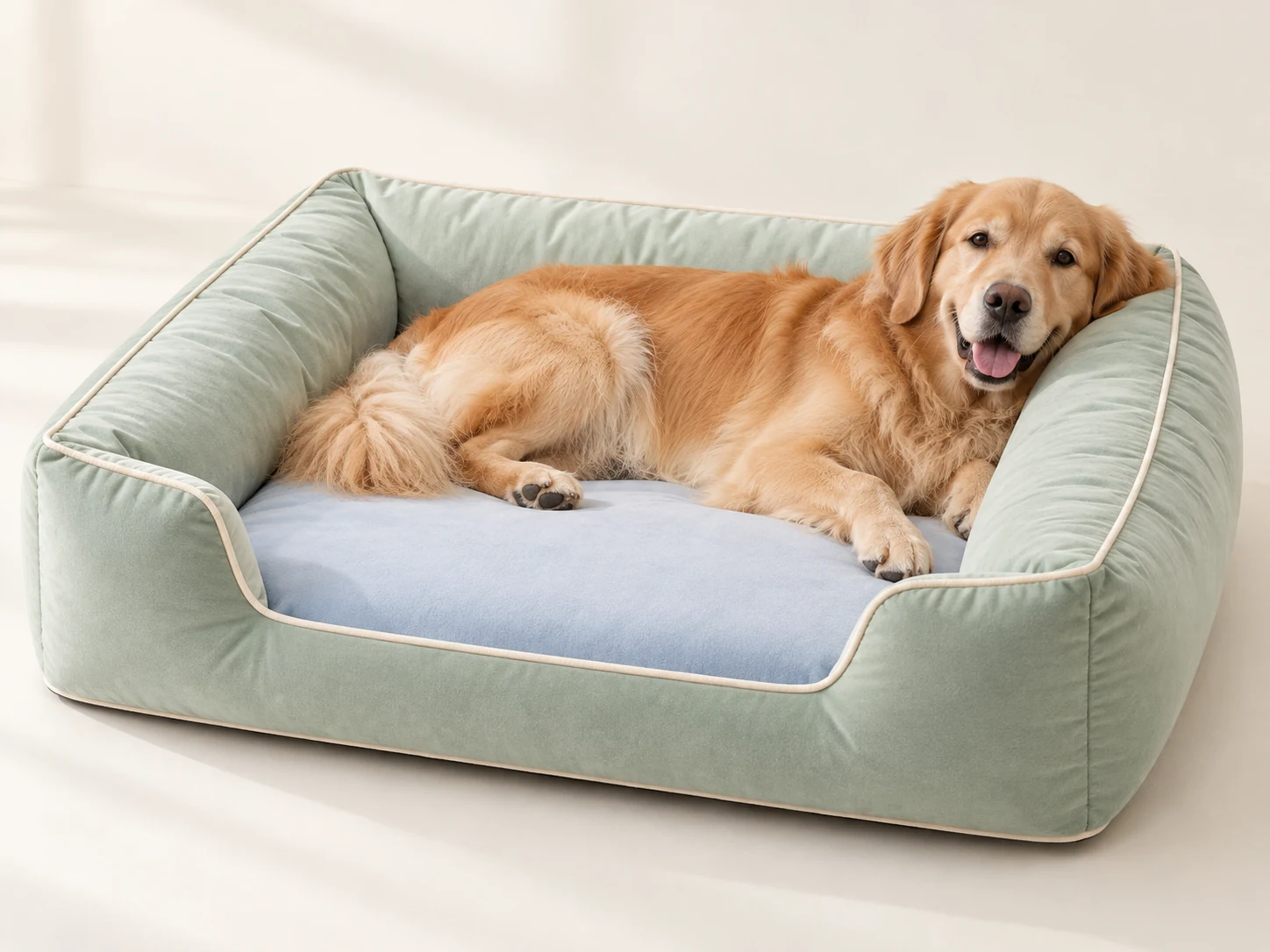
Two foam layers do not necessarily mean two layers of memory foam
Some dog beds use memory foam on top and a different support foam underneath.
The layers may serve different purposes, so it would be inaccurate to describe every foam layer as memory foam.
For these beds, confirm the material and thickness of each layer separately.
Knowing how the bed is built is often more useful than seeing only “Memory Foam Dog Bed” on its label.
How should brands compare dog bed filling options?
For wholesale buyers and pet brands, two beds both described as “memory foam” or “polyester fiberfill” may still have different internal constructions.
That means naming the material alone is usually not enough to explain a sourcing requirement.
For example, two beds with the same outside shape may feel and look different if the foam thickness or fiberfill quantity changes.
Compare the materials, construction, finished samples and quoted specifications together—not just product photos or a material name.
1. Confirm where each material is used
First, separate the outer cover, central mattress, bolsters and inner liners.
For a foam mattress, confirm the type of foam, whether several materials are layered, and approximately where each layer sits.
For polyester fiberfill, confirm whether it is used in the centre, the bolsters or both.
This helps prevent a buyer and supplier from using the same phrase, “memory foam dog bed,” while imagining different constructions.
2. Check foam thickness and firmness, not just density
Foam density is one useful material specification, but density is not the same as firmness.
Two foams with the same density can still respond differently under pressure.
So, alongside foam type and density, check thickness, firmness and how the complete mattress performs.
If more than one foam combination could meet the intended result, compare finished samples instead of deciding from one specification alone.
3. Check fiberfill distribution, not just how full the bed looks
For fiber-filled dog beds, the weight of the filling is a useful point to confirm.
But the same amount of filling may produce a different result in liners of different sizes or shapes.
For example, the same fiberfill weight may look and feel quite different in a rectangular flat cushion and a thick bolster.
Buyers should therefore confirm:
- what filling material is used in each area;
- how much filling goes into each size or section;
- whether the liner has divided sections or other securing features;
- how full, even and well-shaped the finished bed is.
If the fill amount changes, review the finished product again rather than changing only the weight figure.
4. How can you compare samples fairly?
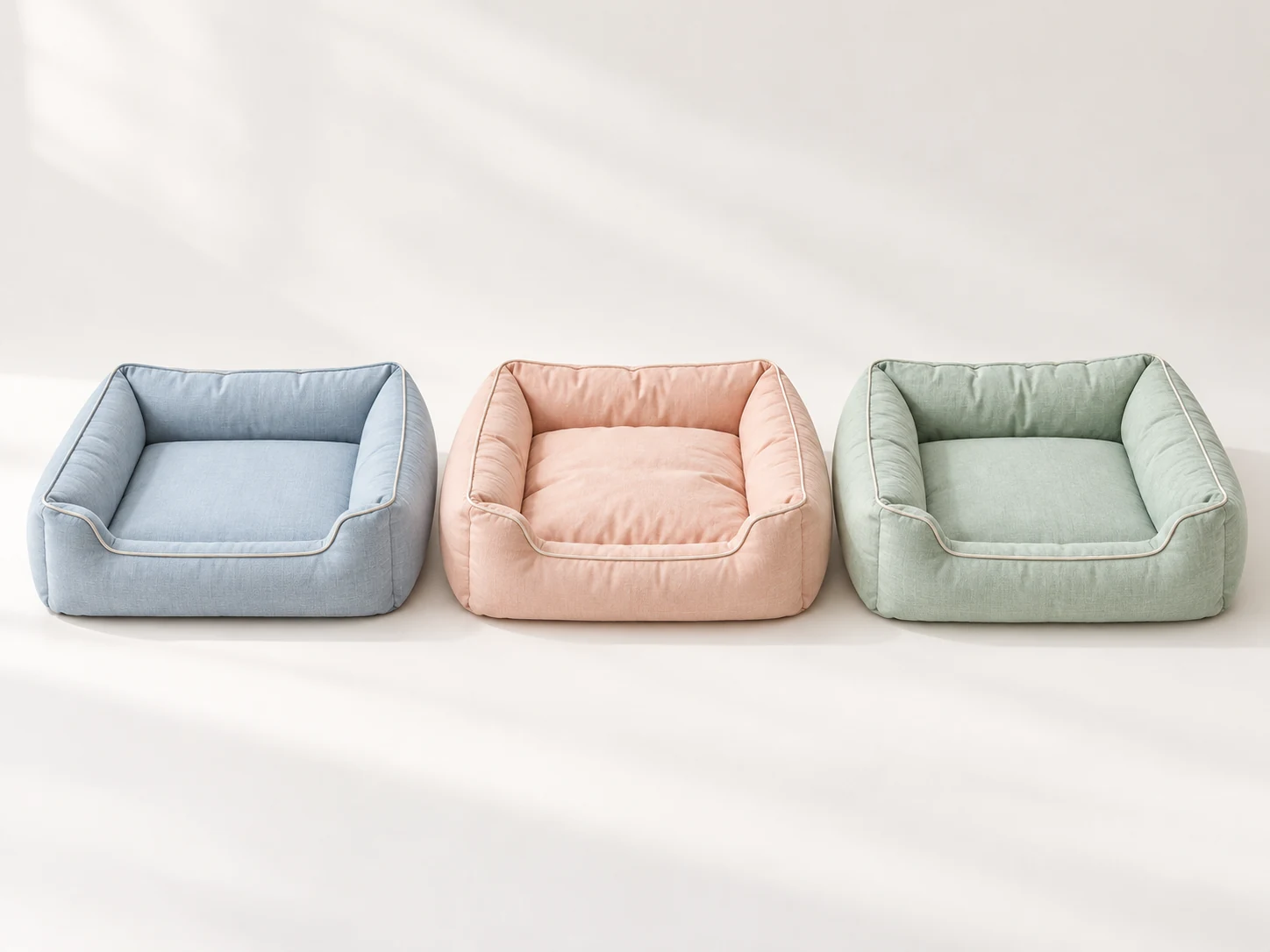
Imagine a pet brand developing a dog bed range and comparing three options:
- Option A: Foam as the main mattress material.
- Option B: Polyester fiberfill as the main mattress filling.
- Option C: Foam in the centre with fiber-filled bolsters.
Decide what each comparison is meant to show.
If the aim is to compare how the mattress feels under pressure, keep the size, cover and overall shape as similar as possible, and focus on the mattress filling.
If the aim is to see which bolsters hold their shape better, keep the central mattress the same and examine the bolster construction instead.
It is not useful to change the bed size, cover fabric, filling material and bolster height all at once, then try to decide which filling is better.
With several changes at the same time, it is hard to tell what caused the difference.
5. Filling construction also affects quotes and packaging
Filling choices can affect sourcing costs, but one material is not always more or less expensive than another.
The quote can also depend on material grade, foam thickness and quantity, fiberfill weight, divided liners, sewing details and packaging requirements.
For example, two fiber-filled beds may have different cost structures if one uses more internal sections and more complex stitching.
Likewise, two memory foam dog beds can be quoted differently because the foam specifications and thicknesses differ.
If compression packaging is planned, confirm that the packaging method suits the chosen construction and that the bed reaches the agreed finished condition after unpacking.
When comparing quotes, make sure suppliers are working from the same understanding of the materials and construction.
6. Check cleaning methods and whether the filling stays enclosed
Whether a dog bed can be machine-washed cannot be determined by the filling name alone.
For example, some foam beds have a removable, machine-washable cover, while the foam inside should not be washed the same way.
A bed containing polyester fiberfill is not automatically machine-washable as a whole.
Confirm the cleaning requirements for the cover, inner liner and filling separately.
Also consider whether the cover and liner will stay intact if a dog tends to scratch or chew its bed.
If the filling becomes exposed, dogs should not be allowed to play with or swallow the loose material. No ordinary filling material can guarantee that a dog bed is chew-proof simply because of its name.
7. Confirm requirements with a complete finished sample
After agreeing on the filling materials, the full bed still needs to be checked as a finished sample.
Changing the fiberfill weight, foam thickness or liner construction can alter the shape and feel of the bed.
Before production, confirm the materials and construction used in the final sample, and use the jointly approved sample and agreed specifications as the basis for subsequent checks.
Dog bed filling and sample checklist
| What to confirm | How to check or compare | Why it matters for purchasing |
|---|---|---|
| Filling materials | Identify the material in the mattress, bolsters and other filled areas | Prevents confusion between the different parts of the bed |
| Foam construction | Confirm foam type, thickness, firmness and layers | Defines the actual mattress option |
| Fiberfill | Confirm fill amount, evenness and divided liner design for each area | Reduces differences between the approved sample and finished construction |
| Under pressure | Compare complete samples under the same agreed conditions | Shows whether the intended mattress feel is achieved |
| Shape retention | Check the shape under pressure and after normal recovery | Helps identify clear changes or uneven areas |
| Cleaning | Confirm how the cover, liner and filling are each cleaned | Avoids incorrect care instructions |
| Quotation basis | Confirm the materials, specifications, construction and packaging covered by the quote | Avoids comparing prices for different configurations |
| Final sample | Compare the agreed materials and construction with the approved sample | Gives production a clear reference |
If a brand is comparing several filling options, it helps to share the target bed style, size, desired feel and the sample differences that matter most.
That makes discussions clearer than repeatedly asking for a bed to be “a little softer” or to “add more filling.”
Common questions about dog bed filling
Is a memory foam dog bed always more durable than a polyester fiberfill bed?
Not necessarily. Durability also depends on the material specifications, mattress construction, filling method and actual use conditions.
You cannot predict how many years a bed will last just from the words “memory foam” or “polyester fiberfill.”
What is the difference between memory foam and regular foam?
Memory foam is viscoelastic, so it changes shape and recovers more gradually under and after pressure.
Other flexible polyurethane foams come in a range of firmness and support characteristics. They should not automatically be treated as the same material.
Confirm the actual foam type rather than assuming all foam is memory foam.
Is higher-density memory foam always firmer?
No. Density and firmness are different material properties.
To judge whether a dog bed has the feel you want, consider the foam specifications, thickness and finished mattress—not density alone.
Does polyester fiberfill in dog beds tend to clump?
Some fiber-filled beds can develop shifting, clumps or flat spots through use or unsuitable cleaning.
The filling material, fill amount, liner sections and how the bed is used all affect the result.
If this is a concern, pay particular attention to how the filling is distributed and whether the finished bed keeps its shape.
Can a dog bed contain both memory foam and polyester fiberfill?
Yes. For example, the central mattress can use foam while the side and rear bolsters contain polyester fiberfill.
That allows each area to have a different feel, provided the finished bed is checked against the intended result.
Which dog bed filling is easier to clean?
You cannot tell from the filling name alone.
Check the cover and inner liner construction and which parts can actually be removed, washed and dried.
If frequent cleaning matters, look at the confirmed care instructions rather than assuming every fiber-filled or foam bed can be machine-washed as a whole.
Choosing or customizing dog beds for your brand?
Memory foam, polyester fiberfill and a combination of the two can all be used in different dog bed constructions.
What matters is deciding how you want the mattress and bolsters to feel and work, then choosing a filling option to suit.
Pet brands developing wholesale or custom dog bed ranges can send PETMERO their reference style, target sizes, preferred filling direction and sample requirements to discuss materials, construction and sample approval.