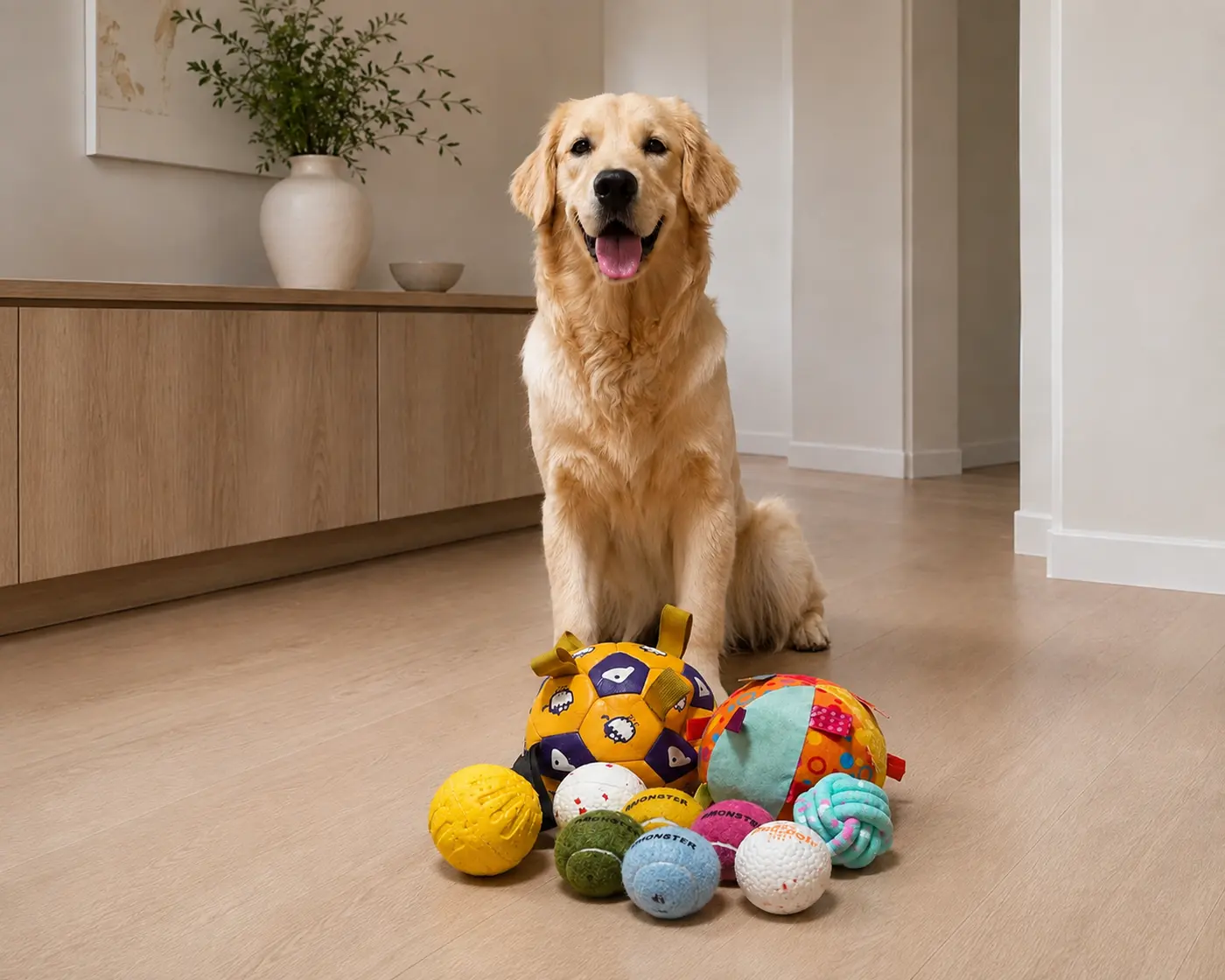
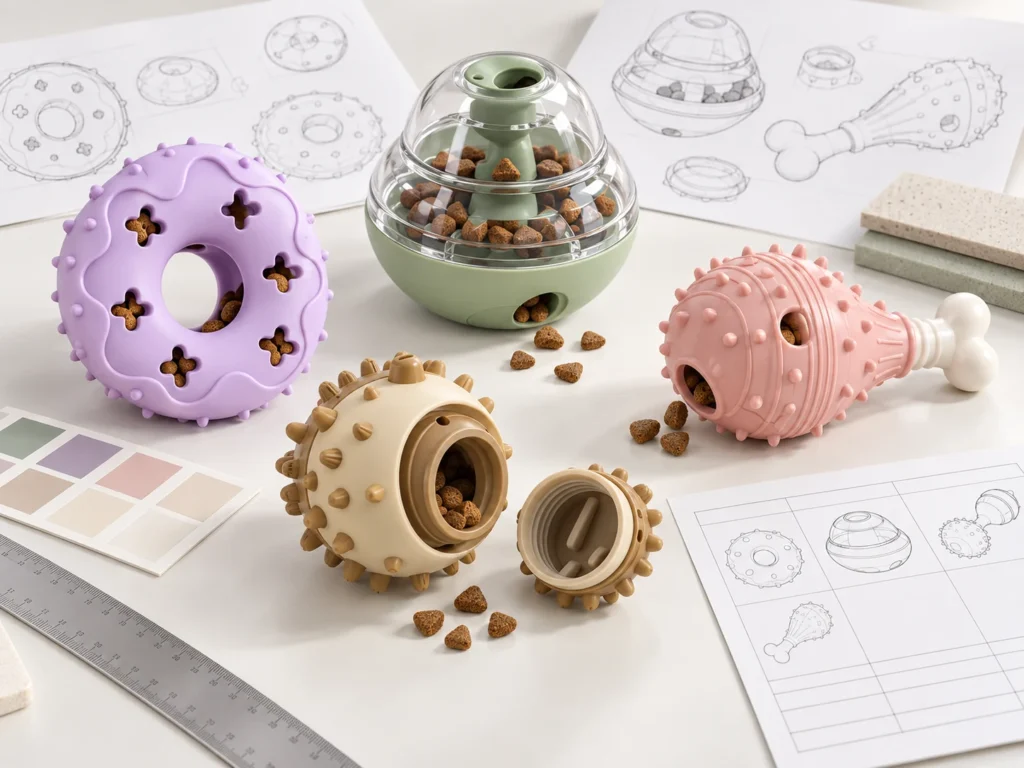
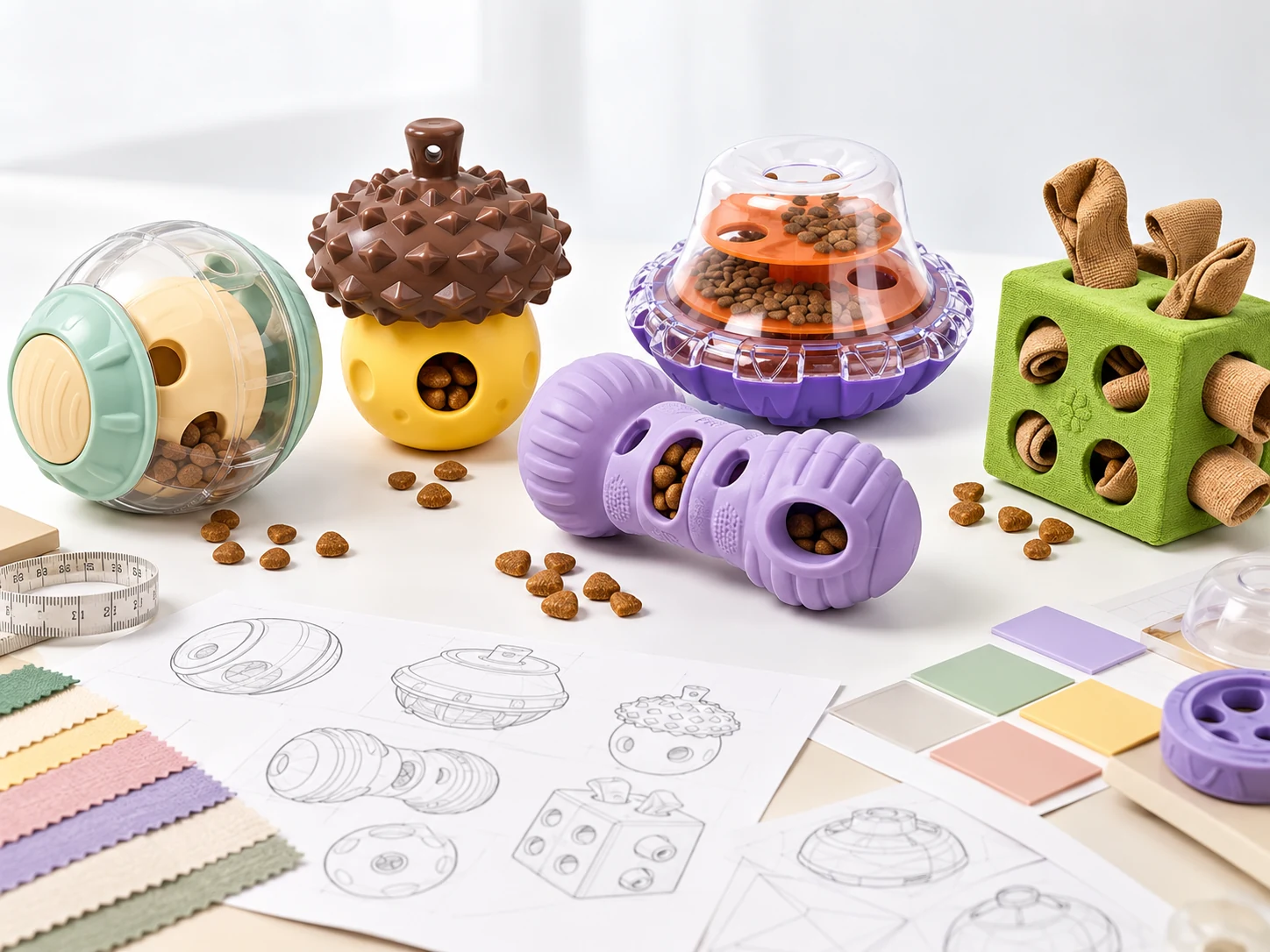
A treat-dispensing dog toy can look simple: put kibble or treats inside, then let the dog gradually reach the food by pushing, rolling, wobbling, licking, or chewing the toy.
What makes the toy work well, however, is not simply whether it has a release hole. The same toy can release food very differently when the food size changes. The same opening can also behave differently when the internal path, product weight, or movement changes. Material adds another layer by changing whether a design rolls, wobbles, flexes, or works better as a soft treat-hiding structure.
For product development, it is more useful to review the complete use cycle than to judge one feature in isolation.
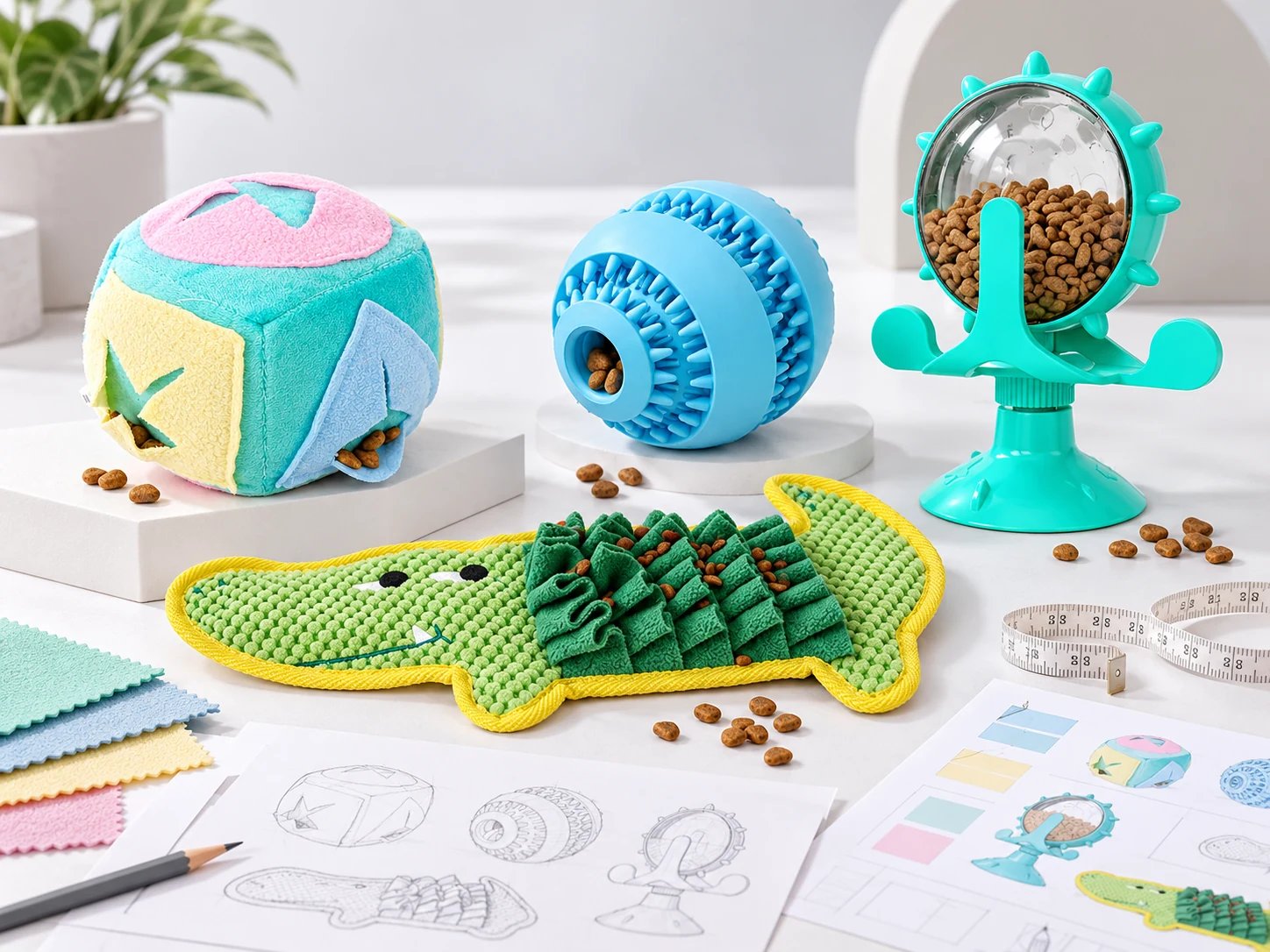
For a Plush / Fabric Treat-Hiding Toy, food may not come through a fixed outlet at all. It can be hidden in pockets, folds, rolled fabric, or other soft areas, so the important design questions shift toward hiding positions, search paths, cleaning, and drying.
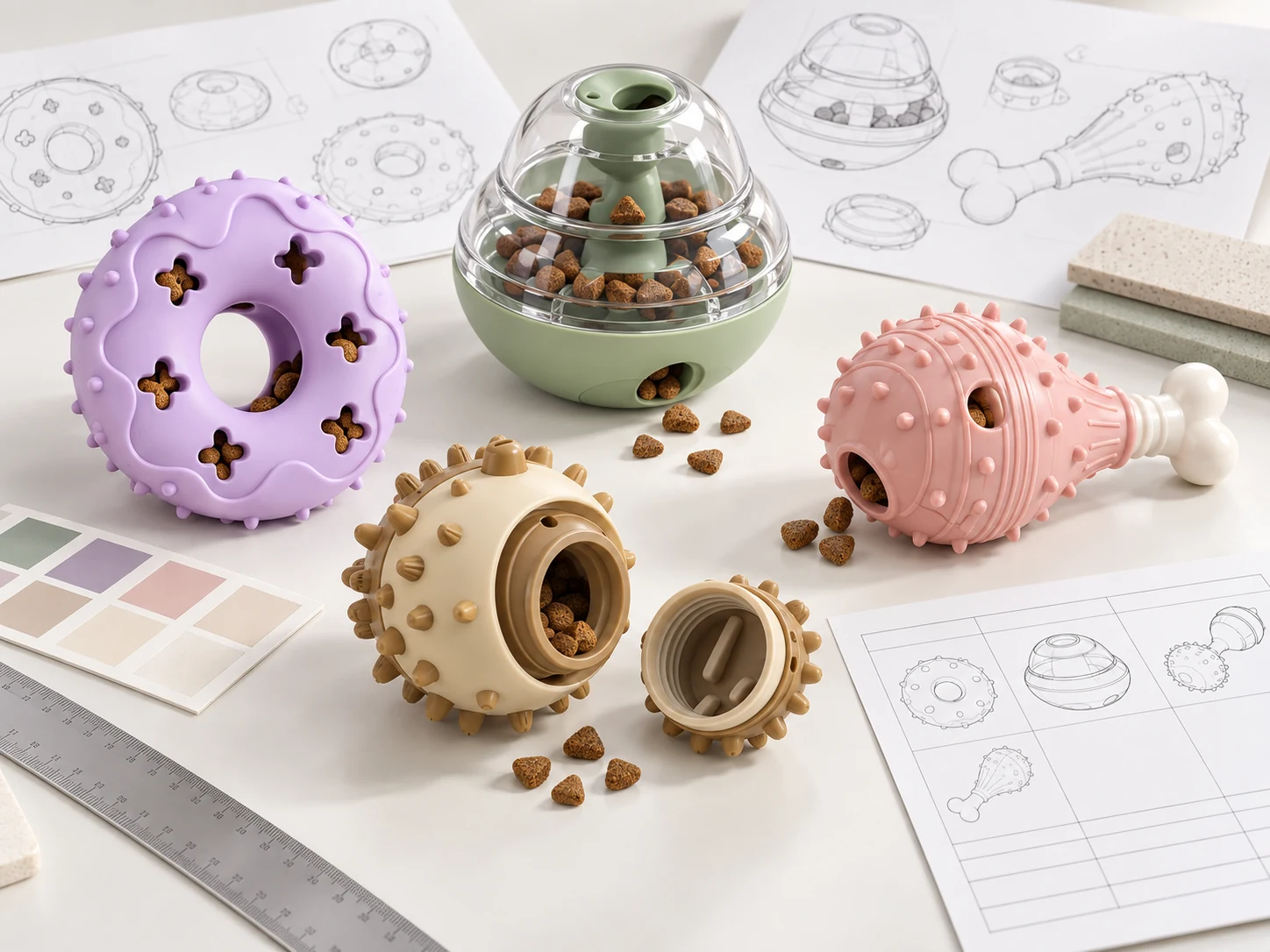
Decide what will go inside before deciding how the toy should work
One of the easiest ways to make product development harder than it needs to be is to choose an attractive shape first and only later decide what food will go inside.
Dry kibble, small treats, and softer fillings do not need the same opening, internal space, or interaction. A rolling product for dry food needs enough room for the pieces to move and eventually reach the outlet. A softer filling puts more emphasis on whether the customer can add it easily, the dog can reach it during use, and the product can be cleaned afterwards.
A Plush / Fabric Treat-Hiding structure needs a different check again. The food may sit in a pocket, fold, rolled strip, soft tube, or hidden layer. The question is no longer only whether food can pass through a hole, but whether the dog can find it, reach it, and whether crumbs can be removed after use.
That makes two questions useful at the start of a project: what will go inside, and how should the dog get it out? Once those are clear, the opening, internal path, material, and overall structure have a much clearer design direction.
For rigid and flexible dispensers, release is not only a hole-size question
A common question is how large the release opening should be. In real use, however, the result comes from several factors working together.
| Factor | What it can change |
|---|---|
| Food Size | Whether the pieces can pass through the outlet |
| Opening Size | How much food may come out at one time |
| Opening Shape | Whether different pieces are more likely to pass or catch |
| Internal Path | How much movement is needed before food reaches the outlet |
| Toy Movement | When food has a chance to move toward the outlet |
For example, two products can have outlets of a similar size but behave differently if one food chamber leads directly to the opening while the other includes turns, barriers, or changes in height.
That is why the sample review should not stop at measuring the outlet. Put the intended food into the complete sample and watch how it moves during normal pushing, rolling, or wobbling.
For plush treat-hiding designs, the same idea needs to be checked in a different way: after food is hidden, is there a reasonable scent and search path, or are the pockets so deep that food is difficult to reach, or so shallow that there is almost no search process?
Rolling, wobble, stuffable and treat-hiding designs create different play experiences
Treat-based dog toys do not all need to move in the same way.
Rolling
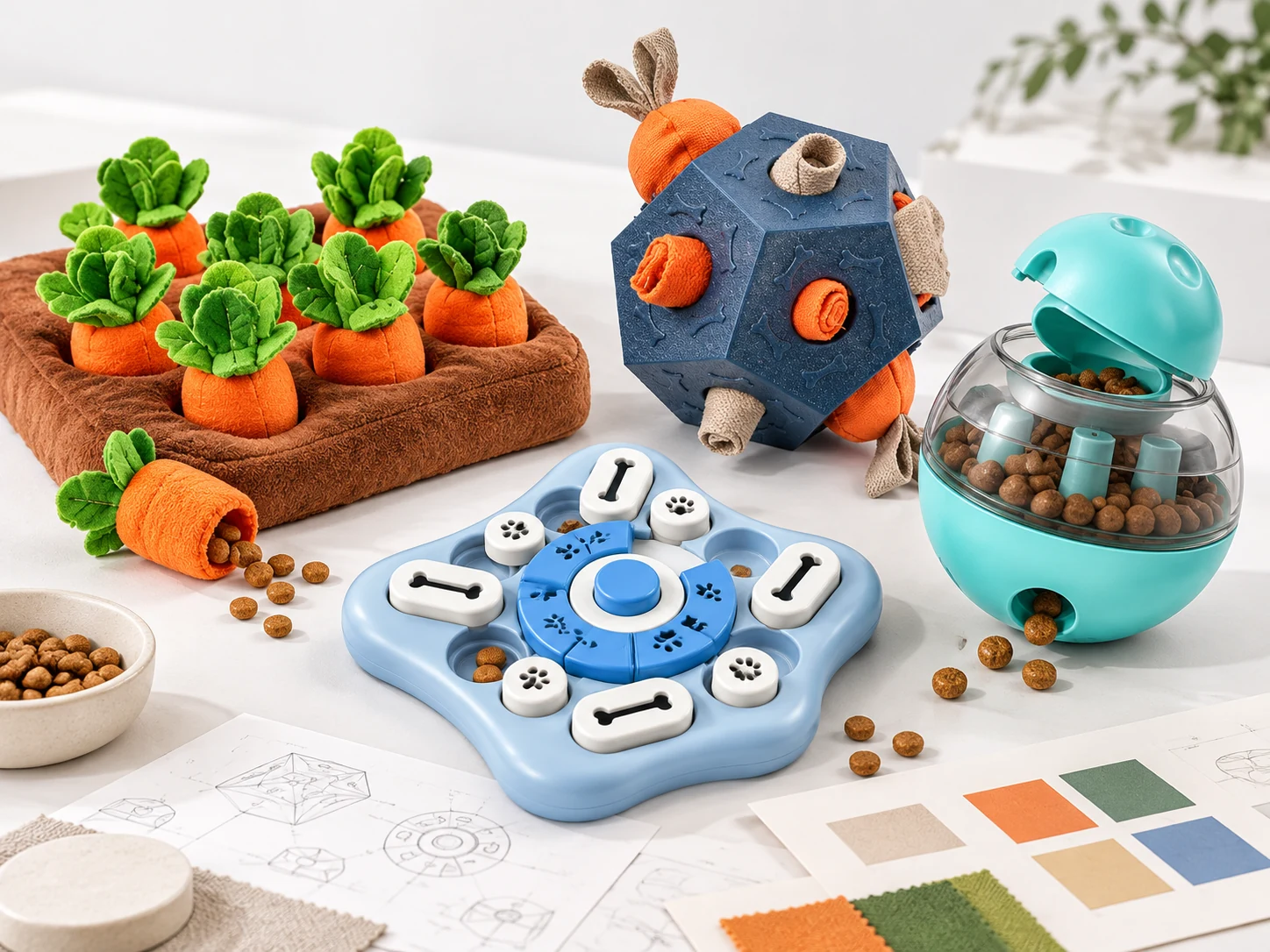
Round, ball-like, or wheel-shaped products move across the floor as the dog pushes them. Here, the rolling path, outlet position, internal food movement, and whether the toy is likely to roll under furniture all matter.
The basic interaction is usually push → roll → gradual food release. A product that is too light may move too quickly, while one that is too heavy may be difficult for a smaller dog to move.
Wobble
A weighted base can make the product rock, turn, and return toward a more stable position after it is pushed. It can create continued movement in a smaller area instead of travelling across the room like a ball.
The key checks are not only the outlet but also balance, self-righting, wobble range, and the total weight after food is added.
Stuffable / Flexible
Flexible rubber, TPE, or similar structures can rely more on licking, squeezing, chewing interaction, or turning the toy to reach food inside. The main question may be less about how far the toy travels and more about how the opening, internal cavity, and material flexibility control access.
Plush / Fabric Treat-Hiding
Plush and fabric products can use pockets, folds, rolled fabric, soft tubes, or hidden areas to hold small amounts of food. The dog sniffs, searches, pulls, or unfolds the structure to find the reward.
Here, the key questions shift from outlet size and release speed to hiding depth, pocket size, access points, stitching, washing, and drying.
Before choosing the product format, it helps to decide whether the dog should chase the toy, push it in a smaller area, lick or squeeze it, or search through soft material for the food. The interaction itself should guide the structure.
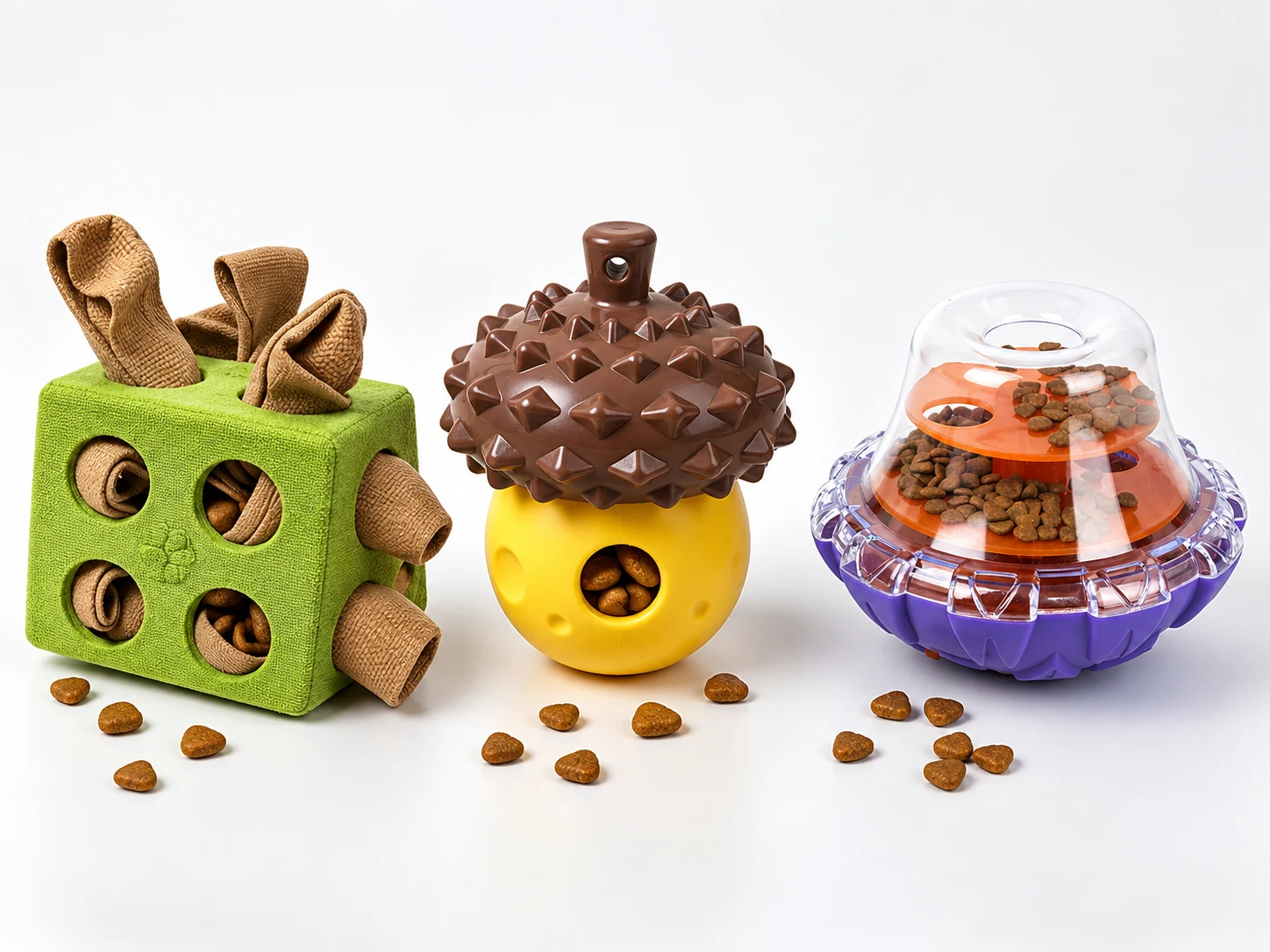
Material changes the way the product works, not just how it looks
Customers often start by asking whether plastic, rubber, TPE, silicone, or fabric is better. There is no single material that is best for every treat-based toy.
Rigid Plastic
Rigid plastic is useful when the product needs a stable food chamber, a defined internal path, an adjustment part, a transparent viewing area, or a wobble base. Its main advantage is that the structure can hold a predictable shape.
Hard products may also make more noticeable noise when they roll or hit a hard floor. Whether they are suitable for repeated chewing depends on the actual material, wall thickness, and structure; it should not be assumed simply because the product is a dog toy.
Rubber / TPE
Flexible materials can support deformable openings, squeezing, elastic surfaces, and flexible food paths. They can also suit some licking or chewing-based interaction.
But the words “rubber” or “TPE” alone do not describe real performance. Hardness, wall thickness, size, and structure all change how the finished product behaves.
Silicone
Silicone can support soft, flexible food-contact structures, but it should not automatically be described as more chew-resistant, freezer-safe, or dishwasher-safe. Those claims should be confirmed against the actual material and complete product.
Plush / Fabric
Plush and fabric are better suited to hiding, folding, rolled fabric, pockets, and scent-based search structures. The main checks include whether hiding areas are too deep, whether food can fall into layers that are hard to reach, whether stitching can trap crumbs, whether the product is easy to wash, whether layered fabric can dry fully, and whether the shape returns properly after washing.
For a plush treat-hiding toy, the material decision should therefore consider hiding structure, stitching, washing, and drying, not only softness.
Mixed-Material Design
Some projects can give different materials different jobs. A rigid body can hold the internal food path while a flexible outer area changes floor contact, grip, or feel.
The more useful rule is not to choose a material first and then search for a function. Decide how the dog should interact with the product, then choose materials that can support that use reliably.
Look beyond toy size and check how heavy the product becomes after filling
External size alone does not tell the whole story, especially for rolling and wobble designs. Food adds weight to the finished product.
| What to check | Why it matters |
|---|---|
| Toy Size | Whether the dog can reach, hold, or move the product comfortably |
| Empty Weight | How easily the product starts to roll or wobble |
| Loaded Weight | How the product behaves after food is added |
A product may look suitable for a smaller dog but become difficult to move once it is filled. A very light product used by a larger dog may move much faster or be easier to pick up than intended.
That is why the sample should not be tested only when it is empty.
Slower release does not automatically mean a better design
It is easy to reduce the goal of a treat-dispensing toy to one idea: make the dog play for as long as possible.
But duration is not the only useful measure. If food falls out almost immediately, the interaction may end too quickly. If normal movement produces no reward for a long time, the dog may also lose interest.
A better target is a feedback rhythm the dog can understand. Early in use, normal interaction should have a reasonable chance of producing food so the dog can learn that pushing, rolling, or working with the toy leads to a result. Once the product is familiar, food size, the opening, the internal path, or an adjustment mechanism can change the release pattern.
The goal is not simply to make food come out as slowly as possible. It is to create a release pattern that does not end immediately but also does not become so difficult that there is almost no feedback.
Compare Interactive Dog Toys, review the wider Dog Toys range, or continue to Customization once the structure is clear.
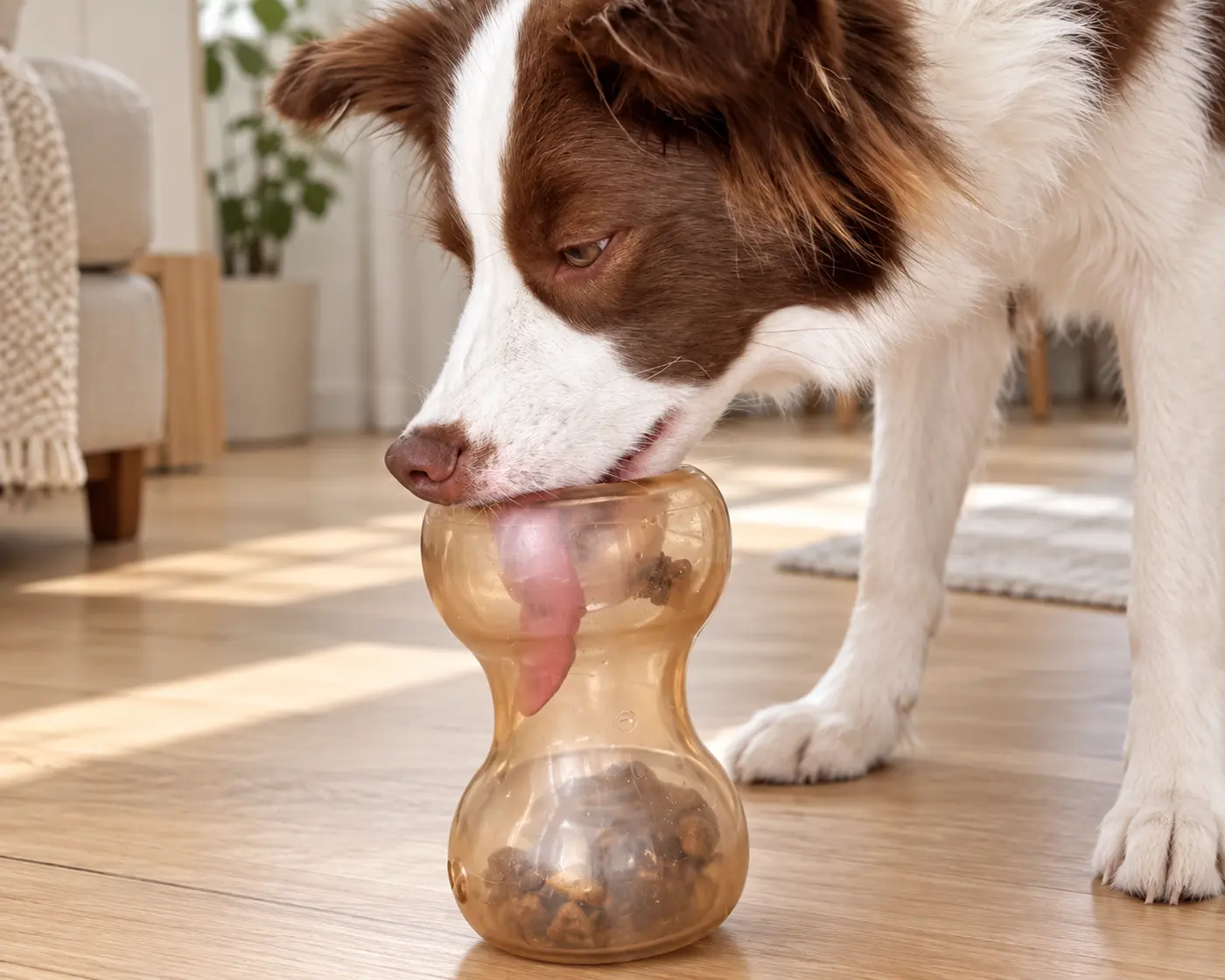
Interactive Dog Toys
Compare rolling, wobble, puzzle, treat-hiding, and other non-electric interactive structures before narrowing the play direction.
View Interactive Dog Toys →
Dog Toys
If the project needs a broader dog toy range, continue comparing plush, chew, rope, fetch, and other play directions.
View Dog Toys →
Customization
Once the structure is clear, continue with size, color, logo, packaging, and other brand requirements.
View Customization →Capacity is more useful when it is judged at realistic fill levels
Capacity matters, but a larger food chamber is not automatically better. Product development should also look at how the toy behaves at the amount a customer is likely to use.
- How much food is expected in one use?
- Is there enough internal space for the pieces to move?
- Does filling the product too full reduce the release?
- Does the product still work with only a small amount inside?
- Are the final few pieces likely to remain trapped?
For rolling or wobble products, food packed too tightly may have little room to move. With only a few pieces left, the internal shape may make it harder for the final pieces to reach the outlet.
That is why sample review should not use only Full Capacity. It should also look at realistic fill levels.
For Plush / Fabric Treat-Hiding designs, the same principle applies in a different way. Different amounts of food should still leave a sensible search space inside pockets, folds, or rolled fabric instead of placing every piece in one obvious location.
Capacity should support real use rather than exist only as a larger number on a specification sheet.
Cleaning should be part of the structure, not an afterthought
A food-contact toy needs more cleaning consideration than an ordinary toy because residue can remain inside the areas that hold or move food.
For rigid designs, pay particular attention to deep holes, narrow channels, internal corners, threads, adjustment parts, and removable connections.
For Plush / Fabric Treat-Hiding designs, check the bottoms of pockets, folded layers, rolled fabric, and multi-layer seams. Crumbs should not disappear into areas the customer cannot reach, and the product should be able to dry properly after washing.
A simple question is useful here: if food can reach an area, is there a practical way to clean it?
For fabric products, add one more question: after washing, is there also a practical way for that area to dry?
Removable parts should solve a real use problem
Threads, clips, lids, or split-body structures can make filling and cleaning easier, but being removable does not automatically make a product more convenient.
On the sample, check:
- whether it is obvious where and how to open the product;
- whether opening or closing needs excessive force;
- whether the parts are easy to reassemble after washing;
- whether repeated opening and closing keeps the connection working normally;
- whether small removable parts are easy to lose.
There is no need to add more parts simply to make a product look more complex. If a simple one-piece structure can be filled, cleaned, dried, and reused properly, extra components need a clear reason to exist.
Build the range around different play methods, not just different colors
If a brand plans several SKUs, using the same dispenser in three colors and three sizes can create variants, but it does not necessarily create different play experiences.
A more useful product line can separate products by how the dog interacts with the food.
| Product direction | Main interaction | What to check |
|---|---|---|
| Rolling Dispenser | Push, chase, and roll | Movement path, weight, and release rhythm |
| Wobble Dispenser | Push, rock, rotate, and self-right | Balance, self-righting, and release |
| Flexible Stuffable Toy | Lick, squeeze, and chew-based interaction | Flexible opening, internal space, and material |
| Plush / Fabric Treat-Hiding Toy | Sniff, search, unfold, and retrieve | Pockets, folds, stitching, washing, and drying |
| Adjustable Dispenser | Change the release setting | Whether the adjustment creates a meaningful difference |
This gives each SKU a clear use case and makes it easier to explain why the range needs different structures instead of only different appearances.
Test the complete sample with the food the product is actually meant to hold
A render can show appearance, but it cannot confirm whether a food-interaction toy really works. The final sample should be checked through the complete use cycle:
| Check | What to confirm |
|---|---|
| Food Fit | The intended kibble or treat works with the product |
| Fill / Hiding Area | Food can be added or hidden without unnecessary difficulty |
| Release / Access | Food is not released too quickly, too slowly, or trapped too easily |
| Movement | Rolling, wobble, squeezing, or searching works as intended |
| Loaded Weight | The product remains practical after food is added |
| Capacity | Different fill levels still work reasonably |
| Material & Structure | The construction supports the intended interaction |
| Opening / Assembly | Removable structures can be opened, closed, and reused clearly |
| Cleaning | Food-contact areas can be reached and cleaned |
| Drying | Rigid, flexible, or fabric areas can dry properly |
| Wear Check | Moving parts and connections remain normal after use |
The point is not only to ask whether food can go inside. The full process—from filling, to play, to release or finding, to cleaning and drying—should work as a complete product experience.
Treat-Dispensing Dog Toy FAQs
How large should the release opening be on a treat-dispensing dog toy?
There is no single size that works for every design. The opening needs to be checked with the intended food size, shape, internal path, and movement of the complete product.
Is a slower release always better?
No. A release that is too fast can end the interaction quickly, while one that is too slow can give very little feedback. The goal is a release pattern that fits the intended food and play method.
Is rolling or wobble better?
Neither is automatically better. Rolling places more emphasis on chasing and movement across the floor, while wobble designs can keep the interaction in a smaller area through rocking and self-righting. The better choice depends on the intended play experience.
Can plush or fabric toys also be used for treat-hiding?
Yes. Pockets, folds, rolled fabric, and other soft hidden areas can create sniffing, searching, and retrieval play. These products need extra attention to pocket depth, stitching, washing, and drying.
Does a treat-dispensing toy have to come apart for cleaning?
No. A one-piece design can still work well if food-contact areas can be cleaned properly and there are no difficult-to-reach areas where residue is likely to remain. Removable parts should be added when they solve a real filling or cleaning need.
Are all treat-dispensing toys suitable for repeated chewing?
No. Chewing suitability depends on the actual material, wall thickness, size, and structure. A treat-dispensing toy should not automatically be treated as a chew toy.
Is a treat-dispensing toy the same as a dog puzzle?
They can overlap, but the emphasis is different. Treat-dispensing and treat-hiding toys focus on how food is added, hidden, released, or found. A dog puzzle focuses more on the actions and step sequence the dog needs to work through.
Prepare Your Treat-Dispensing Dog Toy Project
If you already have a reference product, prepare the product image, intended food type, target dog size range, preferred interaction, target capacity, and expected quantity.
If the structure is still open, start with Food → Opening / Hiding Area → Movement → Release / Access → Material → Cleaning.
Make sure the complete use process works before finalizing the shape, colors, and number of products in the range.