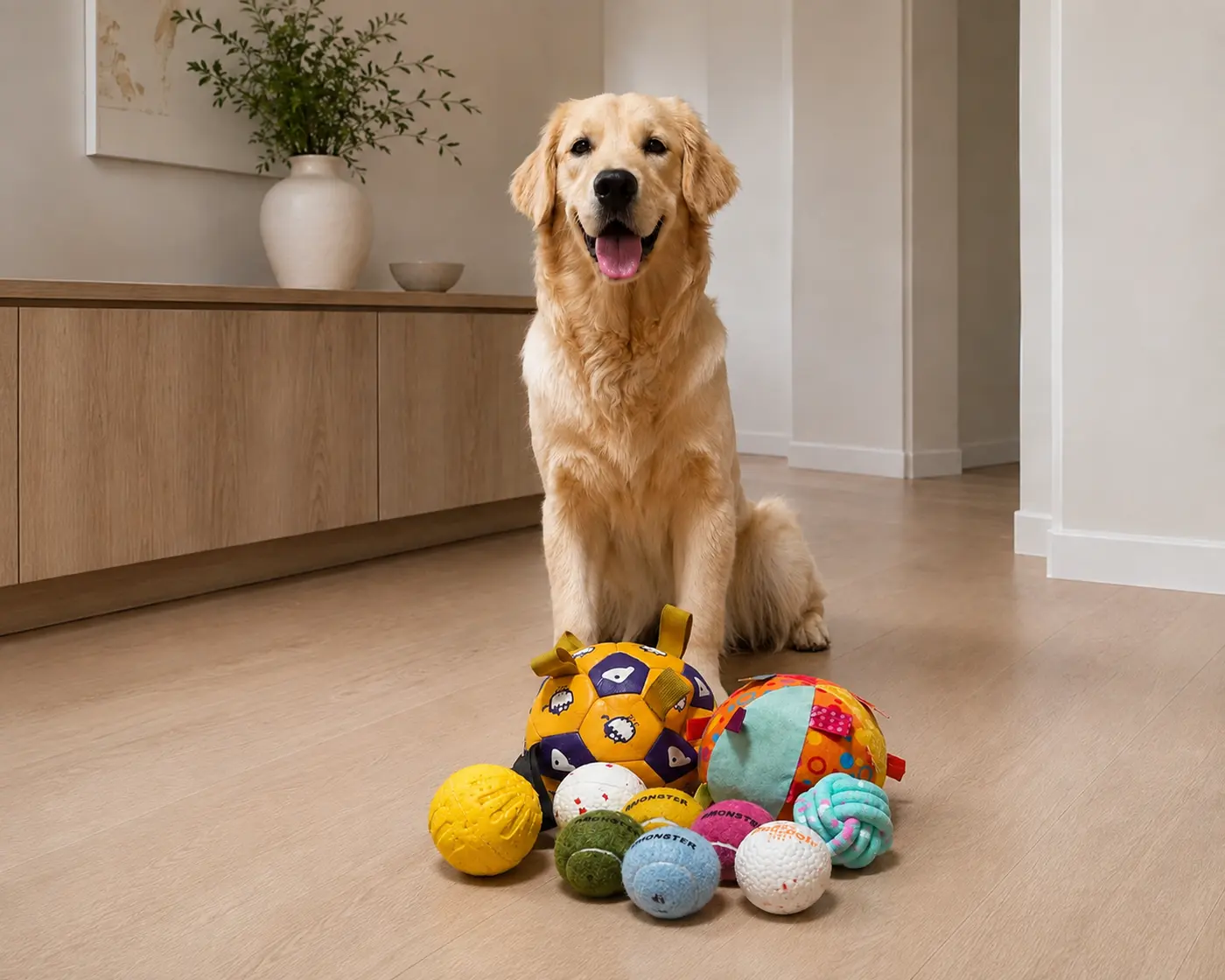
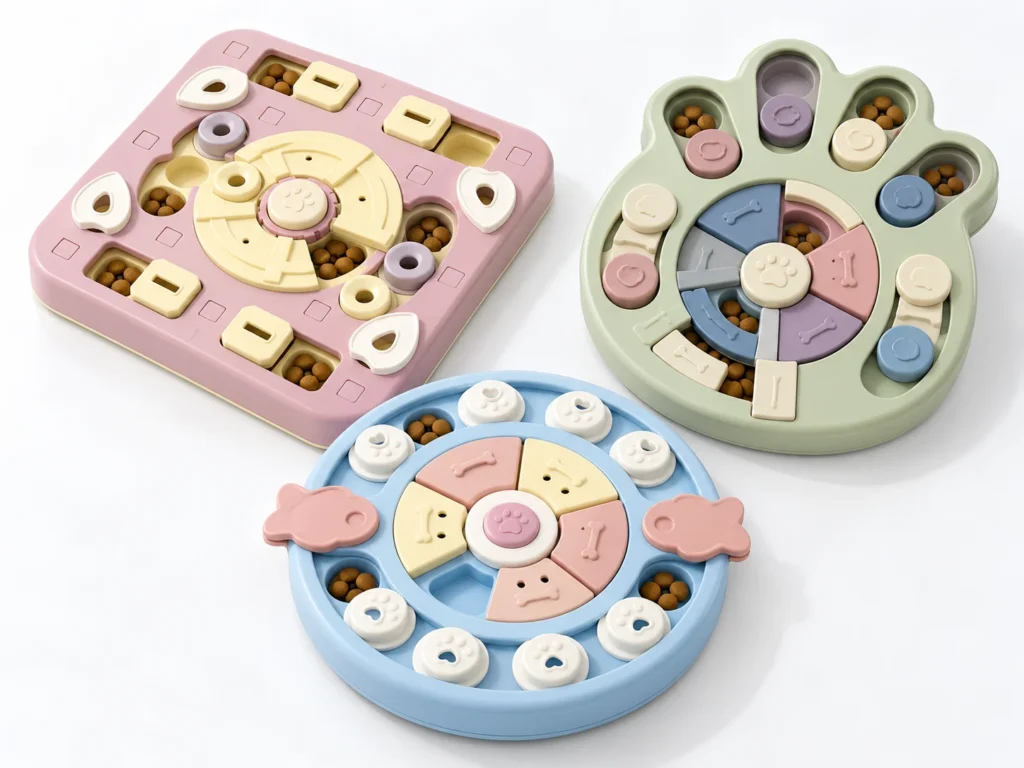
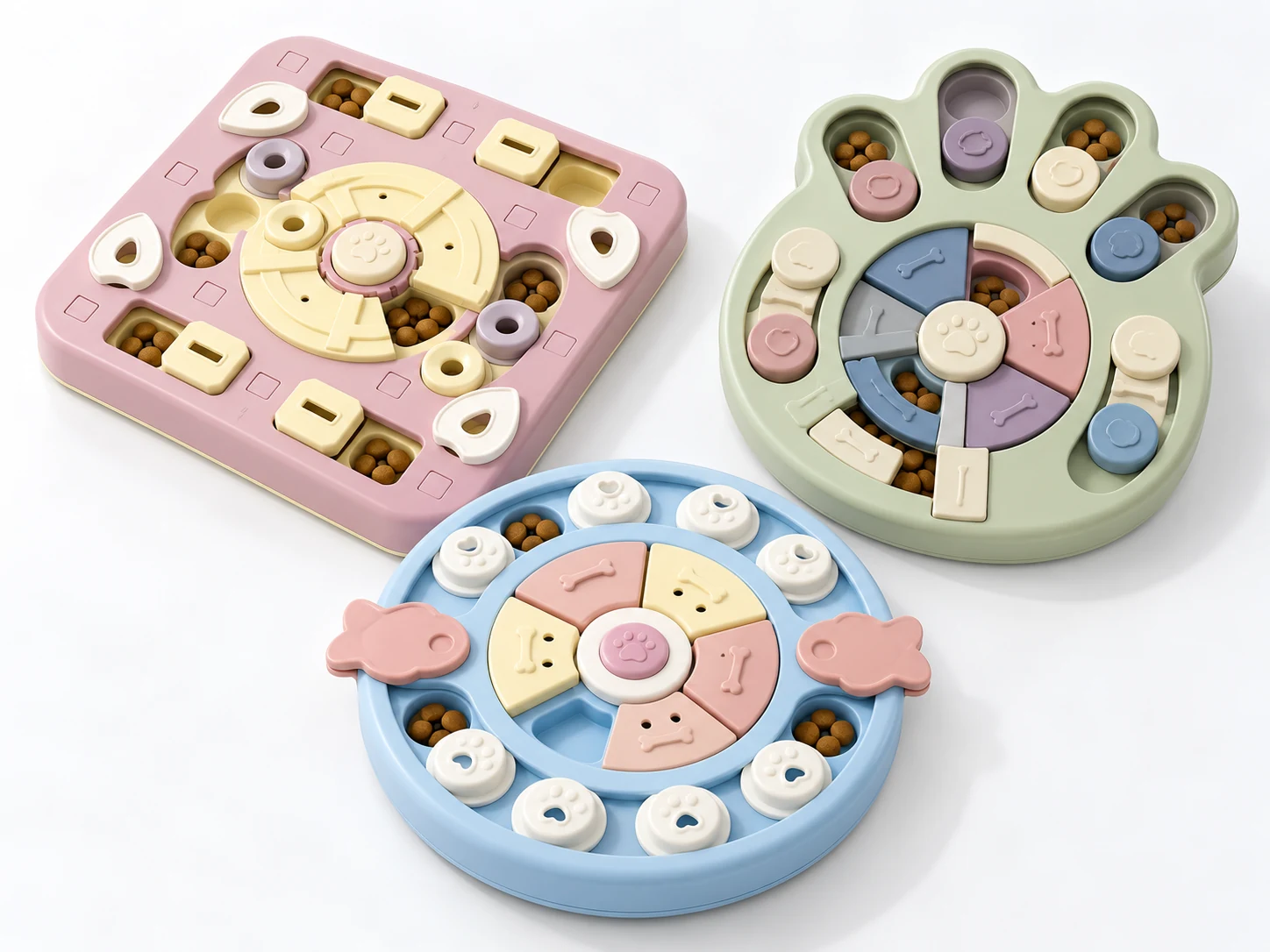
When a brand develops a dog puzzle toy range, the hard part is not putting Beginner, Intermediate, and Advanced on the packaging. The harder part is making those levels feel genuinely different to the dog, easy for the customer to understand, and clear enough for the brand to explain.
If three products only add more compartments, change colours, or make a slider harder to move, the labels may change without the play experience really progressing.
For sourcing and product development, three questions are more useful: Why would the dog want to start? What actions does the toy ask the dog to complete? What new challenge does the next level add?
Difficulty should grow from that sequence, rather than starting with a level name and looking for a reason to justify it.
Difficulty starts with giving the dog a reason to start exploring
A puzzle can have several mechanisms, but if the dog has little reason to approach it, the difficulty design has limited practical value. The toy first needs to give the dog a clear reason to explore.
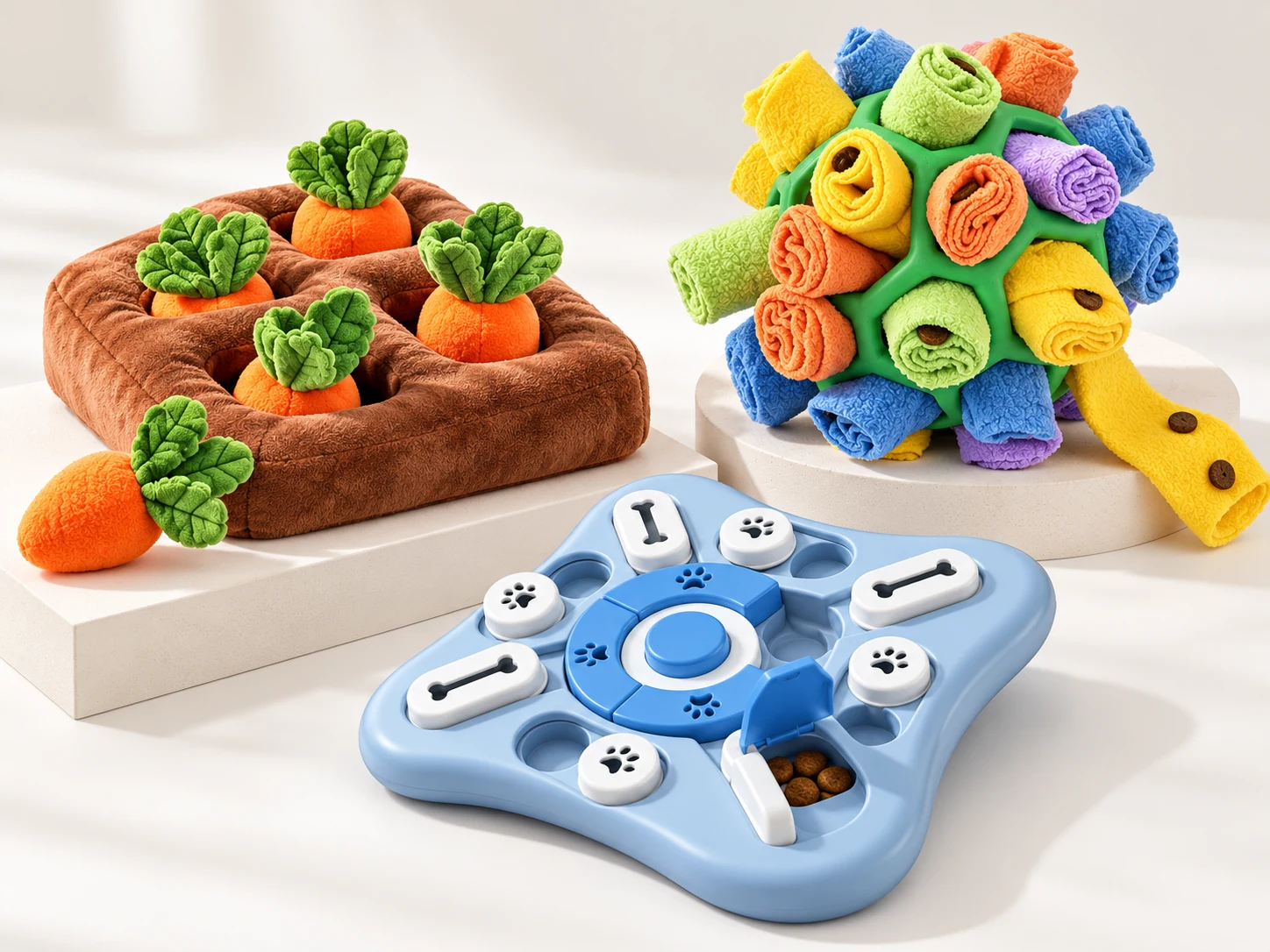
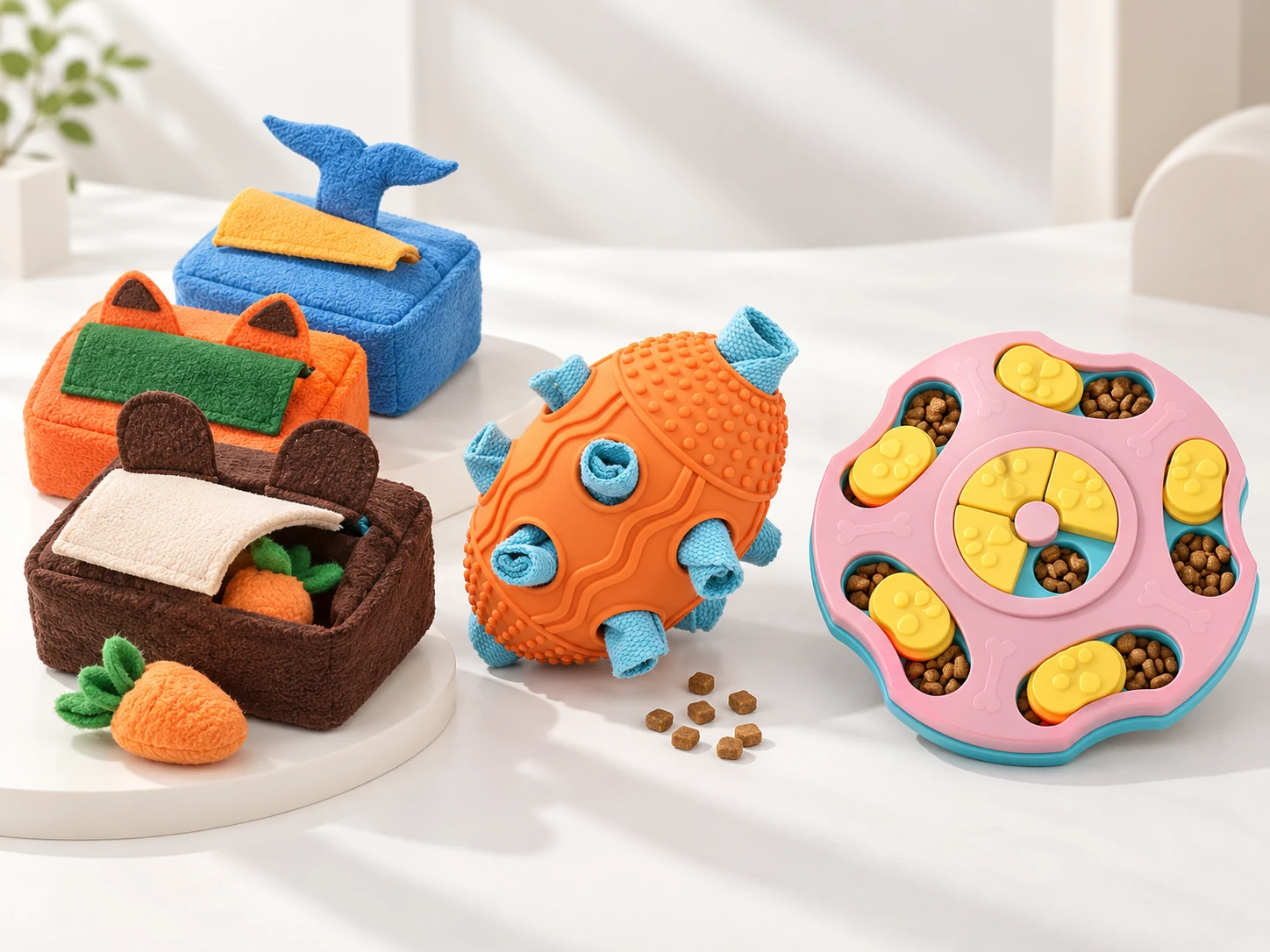
That reason can come from a food reward, a squeaker, crinkle material, a hide-and-seek setup, a moving part, or a visible change that happens after the dog interacts with the toy. Food is one easy-to-understand form of feedback because scent and reward can help connect an action with a result. A plush hide-and-seek toy can create a similar reason to continue through hidden toys, sound, and the act of pulling something out.
The important point is not that every puzzle should use the same reward. It is whether the dog receives clear enough feedback after an action to make another attempt worthwhile.
If engagement and feedback are weak, adding more mechanisms can make a product more complicated without making the play experience better.
Real difficulty comes from the actions and how they relate to each other
A puzzle with ten lids is not automatically harder than one with three moving parts. If every lid works the same way—lift, then find the target—the dog is mainly repeating one action.
Another toy may have only three moving parts but require the dog to rotate one part, unlock another, slide it, and then reach the target. In that case, the challenge comes from more than the number of pieces; it also comes from the relationship between the actions.
| What to compare | Relatively simple | As difficulty increases |
|---|---|---|
| How obvious the next action is | The dog can quickly tell what to interact with | The next action takes more exploration to find |
| Number of actions | One action can complete the task | Several actions are needed |
| Types of actions | The same action is repeated | Push, slide, rotate, lift or other actions are combined |
| Step relationship | Each mechanism works independently | One step affects or unlocks the next step |
| How quickly feedback appears | The result or feedback appears immediately | The dog completes more than one step before reaching the result or feedback |
Harder to move does not automatically mean harder to solve. If a slider is difficult only because the fit is too tight or friction is too high, that adds physical resistance rather than useful puzzle difficulty.
Meaningful difficulty comes from asking the dog to understand more actions, or to understand how one action leads to another.
Beginner, Intermediate and Advanced should add different kinds of challenge
If a brand plans three difficulty levels, each one should be able to answer a simple question: what does this level add that the previous one did not?
Beginner
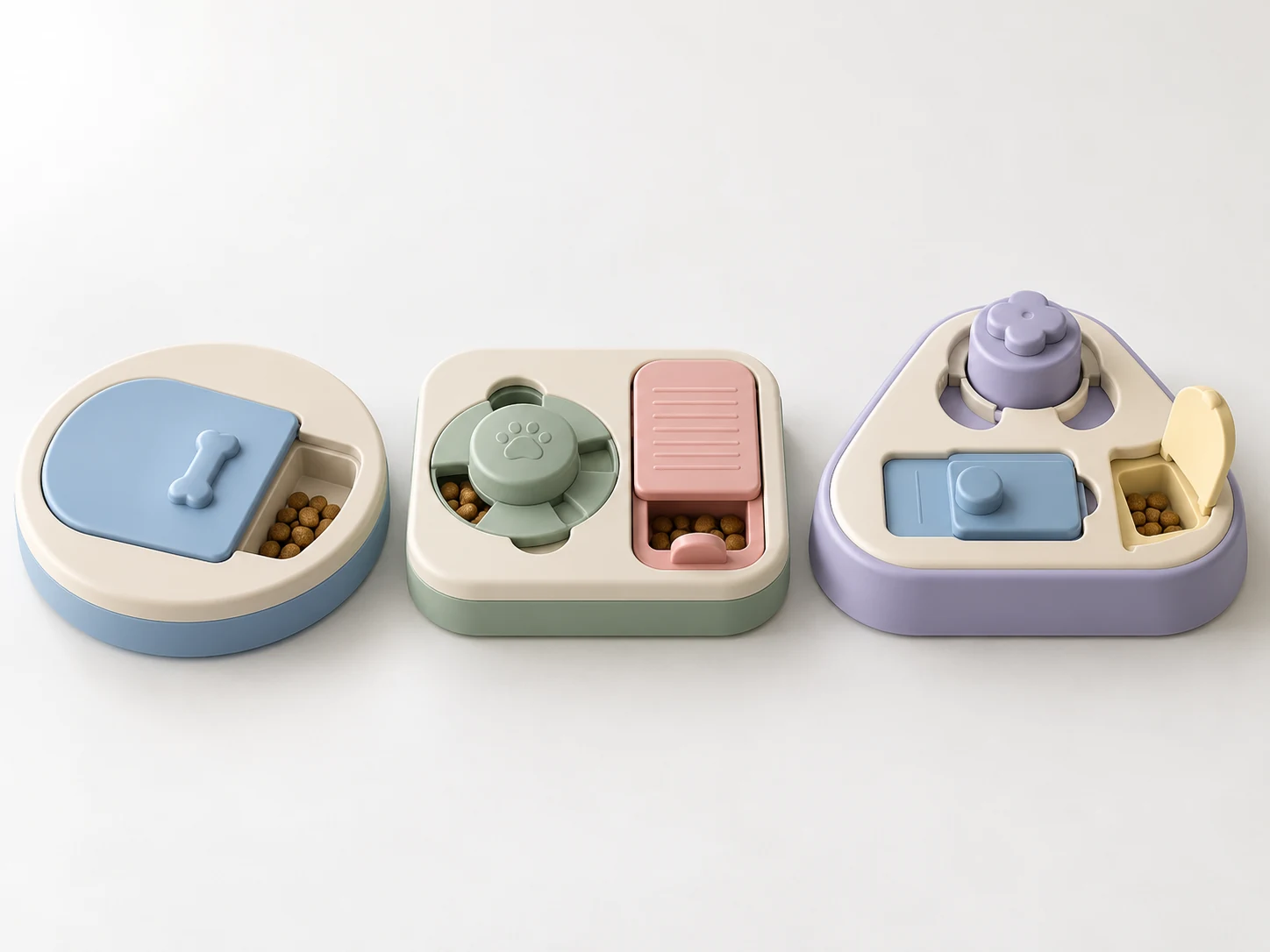
A beginner puzzle does not need to be “as easy as possible.” Its job is to help the dog understand the basic play logic quickly. A larger lift piece, a clear slider, or an independent hidden area can work well when one action leads to an immediate result.
At this stage, the most useful qualities are a clear action and direct feedback.
Intermediate
An intermediate puzzle can introduce another type of action. For example, a toy may combine lift + slide or rotate + lift.
The progression is no longer just “more compartments.” The dog starts switching between different ways of interacting with the toy. The added challenge comes from using different types of actions.
Advanced
An advanced puzzle can go one step further by making the steps depend on one another. One part may need to move before another slider becomes available, or one action may reveal the next active area.
In other words: Action A → Unlock B → Complete C. The dog is no longer dealing with separate actions one by one; it is working through a short sequence.
A clear progression can therefore be understood as one action → several types of action → actions with sequence and dependency. This is easier to explain in product development, on packaging, and at the point of purchase than three similar products carrying different level numbers.
Material should support the play idea, not dictate it
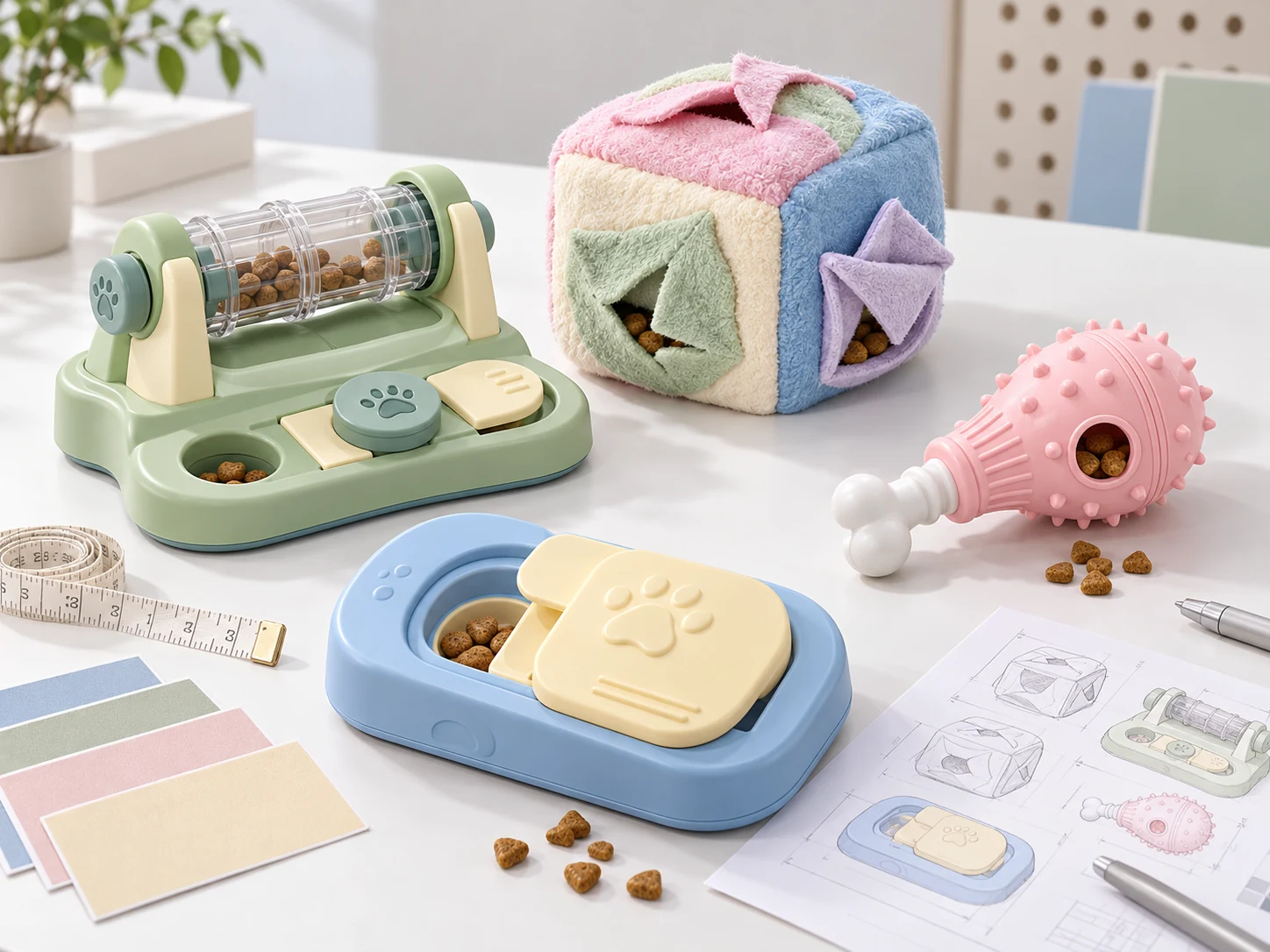
Dog puzzles are not limited to rigid plastic boards. Different materials can support very different ways of playing, but the material itself does not define the difficulty level.
Plush / Fabric
Plush and fabric structures are well suited to hide-and-seek play, pulling out smaller toys, sound feedback, and softer forms of exploration. Difficulty can come from the position of the openings, how deeply the targets are hidden, the path needed to remove them, and the number of items to find. Squeakers or crinkle inserts can add another layer of interest and feedback.
Flexible Rubber / TPE / Silicone
Flexible materials can support squeezing, elastic movement, grooves, openings, and structures that can also hold a reward. Their behaviour cannot be judged from the material name alone; hardness, wall thickness, product size, hollow or solid construction, and opening design all change how the toy feels and works.
Rigid Plastic
Rigid plastic is better suited to sliders, rotating parts, lift pieces, lock-and-unlock actions, and sequential mechanisms that depend on stable dimensions and predictable movement between parts.
The more useful development sequence is therefore: decide how the dog should play first, then choose a material and structure that can deliver that play reliably.
Compare the wider Interactive Dog Toys range, review other Dog Toys, or continue to Customization once the play structure and difficulty range are clear.
Interactive Dog Toys
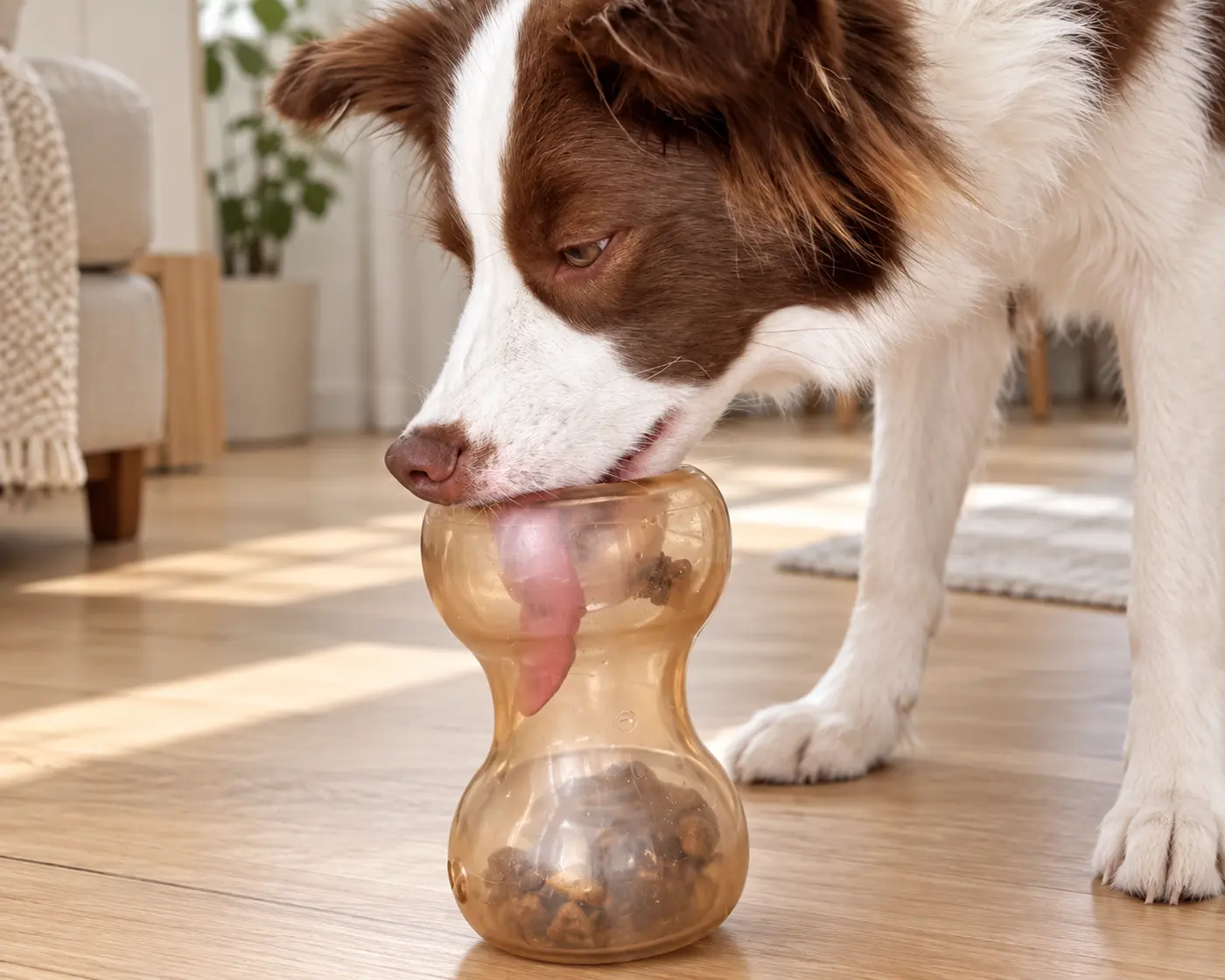
Compare puzzle, treat-based and other non-electric interactive structures before narrowing the play direction for the range.
View Interactive Dog Toys →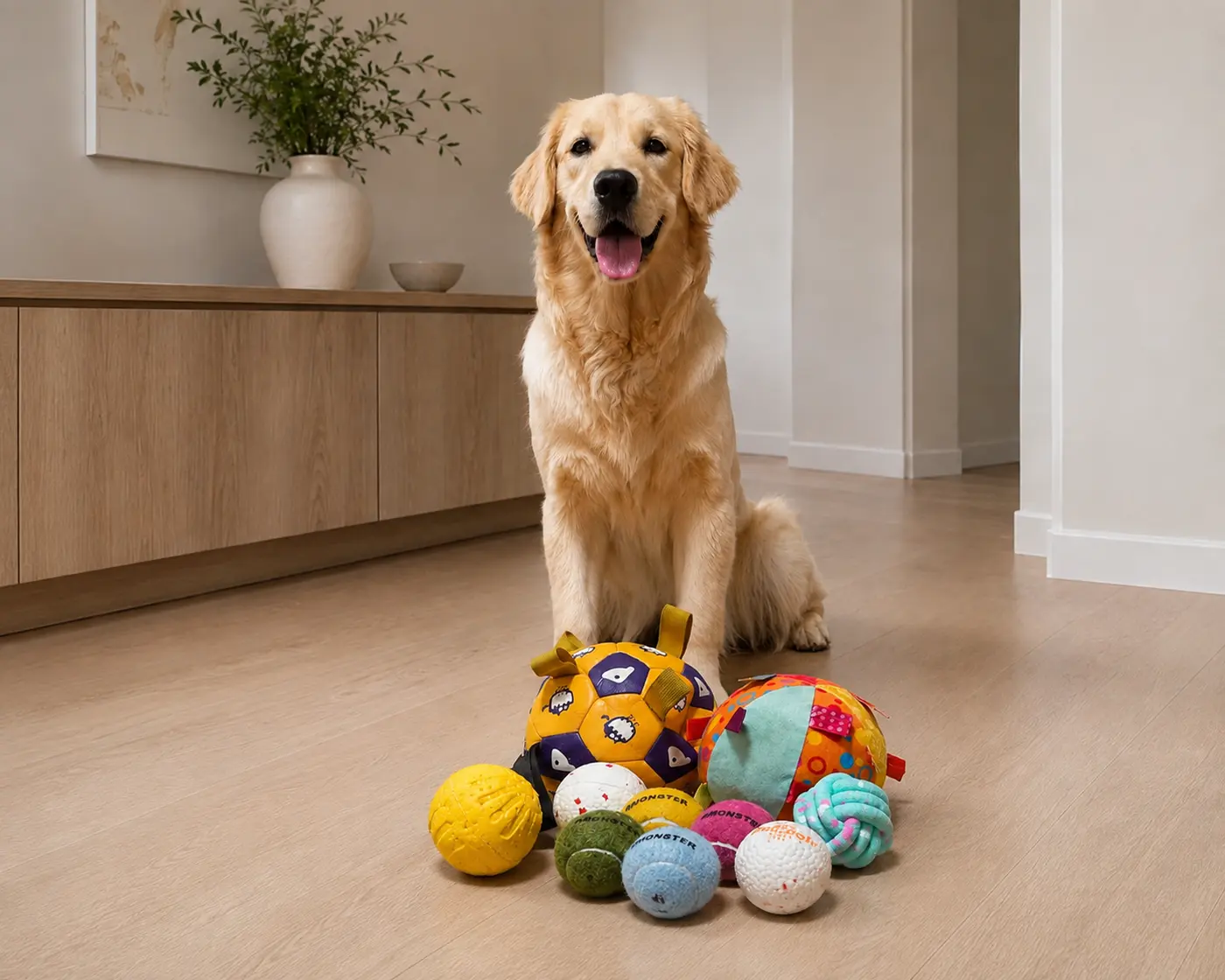
Dog Toys
If the project goes beyond puzzles, review plush, chew, rope and fetch directions for the wider dog toy range.
View Dog Toys →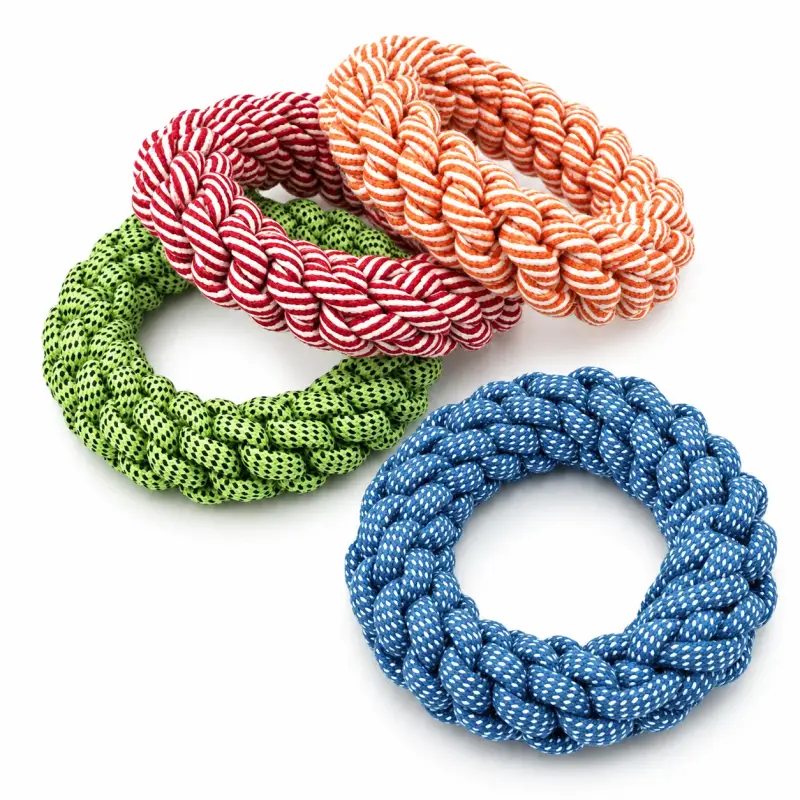
Customization
Once the play structure and difficulty range are clear, continue with colors, logo, packaging and other brand details.
View Customization →A difficult puzzle and a difficult-to-use product are not the same thing
This difference is especially important during sample review. A toy can look “very difficult” because a slider is too tight, a rotating part catches, an active piece is too small, an opening is poorly placed, or the target sits where the dog cannot reach it easily.
Those issues can make the task harder to complete, but they do not necessarily represent better difficulty design. They may be usability problems.
It helps to separate two checks. First, can the dog understand the task? Look at whether the active area is clear, whether an action creates feedback, and whether the next step can be discovered. Second, does the mechanism itself work smoothly? Check whether parts slide and rotate properly, whether pieces stay where they should, whether the target can be reached, and whether the toy is easy to reset.
A good advanced puzzle should require more understanding, not more force.
A strong range gives customers a clear reason to move up a level
For a brand, the goal is not to own three difficulty labels. It is to offer three products whose differences are easy to understand.
If Beginner, Intermediate, and Advanced use almost the same actions, mechanisms, and path to the target, adding a few more compartments may make the range feel repetitive rather than progressive.
| Level | Core task | What the next level should add |
|---|---|---|
| Beginner | Learn one clear action | Introduce another way to interact |
| Intermediate | Switch between different actions | Add a relationship between steps |
| Advanced | Work through several actions in order | Build a more involved sequence |
A useful check is simple: if the level labels disappeared, could a customer still see why the three products are different just by looking at how they work?
If not, the difficulty progression may need a clearer product-level difference.
Final difficulty needs to be checked on complete samples
CAD drawings, reference images, and specifications can help during development, but the final difficulty still needs to be checked on complete samples. Many problems only become visible once the moving parts are made and used together.
| Check | What to confirm | Why it matters |
|---|---|---|
| Action Sequence | How many steps are needed to reach one target | Shows the real puzzle progression |
| Action Variety | Whether the toy truly uses different actions | Helps separate adjacent difficulty levels |
| Step Dependency | Whether one step genuinely controls or unlocks the next | Confirms the advanced sequence works as intended |
| Part Movement | Whether sliding, rotating, lifting and other movement is smooth | Separates mechanism quality from puzzle difficulty |
| Result / Reward Access | Whether the dog can reach the intended result after the correct action | Keeps feedback clear |
| Part Size | Whether the active parts are practical for nose or paw interaction | Affects the real play experience |
| Cleaning | Whether hidden areas and gaps can be cleaned as intended | Matters for repeated use |
| Reset | Whether the toy can be prepared again without unnecessary effort | Affects repeated play and daily use |
The aim is not to prove that Advanced is “extremely hard.” It is to confirm that Beginner, Intermediate, and Advanced have clear differences that can be explained and repeated in production.
Difficulty labels should explain the difference, not just name a level
If a package only says Advanced, the customer still does not know what makes the toy more challenging. A short description can make the difference easier to understand.
Beginner — Simple one-step puzzle
One clear action leads to the intended result.
Intermediate — Multiple action types
The dog needs to use more than one type of interaction.
Advanced — Multi-step sequential puzzle
Several actions need to be completed in a meaningful order.
This turns the difficulty label into useful product information rather than a marketing name.
It is also better to avoid phrases such as “only for smart dogs.” A dog’s experience with the same puzzle can change with previous play experience, interest in the reward, preference for using the nose or paw, product size, and familiarity with similar mechanisms.
Difficulty should describe what the toy asks the dog to do, not make a judgement about how smart the dog is.
Dog Puzzle Difficulty FAQs
Do Level 1, Level 2 and Level 3 mean the same thing across every dog puzzle range?
Not necessarily. It is more useful to compare the actual actions, number of steps, and whether one step depends on another than to assume two brands use the same scale.
What type of puzzle is easier for a dog that is new to puzzle toys?
A clearer first step is usually a toy with fewer actions, an easy-to-find active area, and quick feedback after the correct action. The goal is to help the dog understand how the play works before adding more challenge.
Does adding more mechanisms always make a dog puzzle harder?
No. Several independent mechanisms may still repeat the same simple action. Difficulty changes more when the toy adds different actions or meaningful relationships between steps.
Does every dog puzzle need to use food?
No. Food is one way to create interest and feedback, but sound, hide-and-seek play, moving parts, and pull-out toys can also create an interactive puzzle experience.
Should an advanced dog puzzle be made harder to push or move?
No. Physical resistance and puzzle difficulty are different. A more advanced puzzle should come from the actions and sequence the dog needs to understand, not from parts that are unnecessarily tight.
How can you tell whether a puzzle is genuinely difficult or simply hard to use?
Look at where the difficulty comes from. If the dog needs to understand more actions or a sequence of steps, that is puzzle difficulty. If the main problem is a tight slider, a sticking part, or a target that cannot be reached properly, that is more likely a usability issue.
Prepare your dog puzzle toy project
If you already have a reference product, share the product image, intended play style, moving-part types, the difficulty range you want to cover, and the number of SKUs you are planning.
If the range is still open, start with Engagement → Action → Sequence → Feedback. Give each level one new challenge that can be explained clearly before deciding whether it belongs in Beginner, Intermediate, or Advanced.