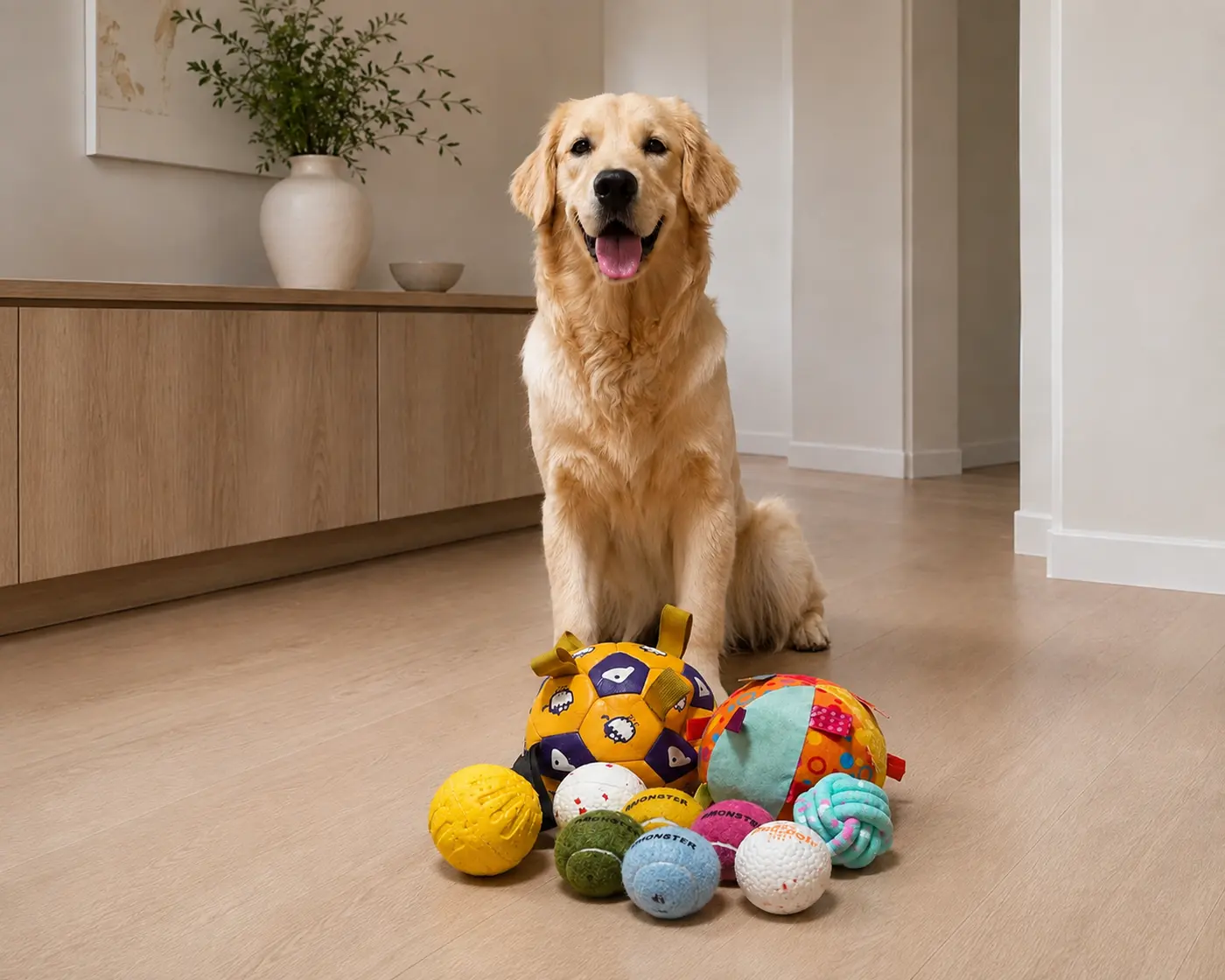
When developing a custom plush dog toy, a reference image usually shows only the general appearance. It does not fully explain how full or flat the toy should feel, where sound should come from, whether crinkle material should be added, or how the ears, tail, and other parts should be attached.
That is why products with a similar appearance can still differ in feel, construction, and price.
A more practical approach is to break the request into parts that can be confirmed step by step: appearance, size, stuffing, sound components, attachment methods, and packaging.
You do not need to finalize every detail in the first inquiry, but the key conditions that affect the pattern, construction, and quote should be made as clear as possible.
On this page
01 — Play before structure 02 — Stuffing options 03 — Squeaker & crinkle 04 — Stitching locations 05 — Reference images 06 — Quote differences 07 — Inquiry vs sample 08 — Sample review 09 — Version records 10 — Accurate claims Prepare your inquiry FAQDecide the play purpose before discussing construction
Plush dog toys can be designed for carrying, light tossing and interactive play, soft comfort, or sound-based interaction.
If the product is intended to include tug play, the grip area and the main load-bearing points also need to be considered.
A toy should not be treated as a tug toy simply because it includes a piece of rope.
Likewise, a soft outer fabric, an inner lining, or reinforced stitching alone does not establish that the product is suitable for sustained heavy chewing.
Before requesting a quote, it helps to clarify:
- the target toy size;
- the main play purpose;
- the intended use.
For dimensions, it is better to explain how the toy is measured.
For example, “body length: 28 cm, excluding the tail” is usually easier to understand accurately than simply writing “Medium Size.”
Stuffing is more than “more, less, or none”
The amount of stuffing can affect:
- the product silhouette;
- the tactile feel;
- how naturally the body drapes;
- the available internal space;
- the layout of sound components.
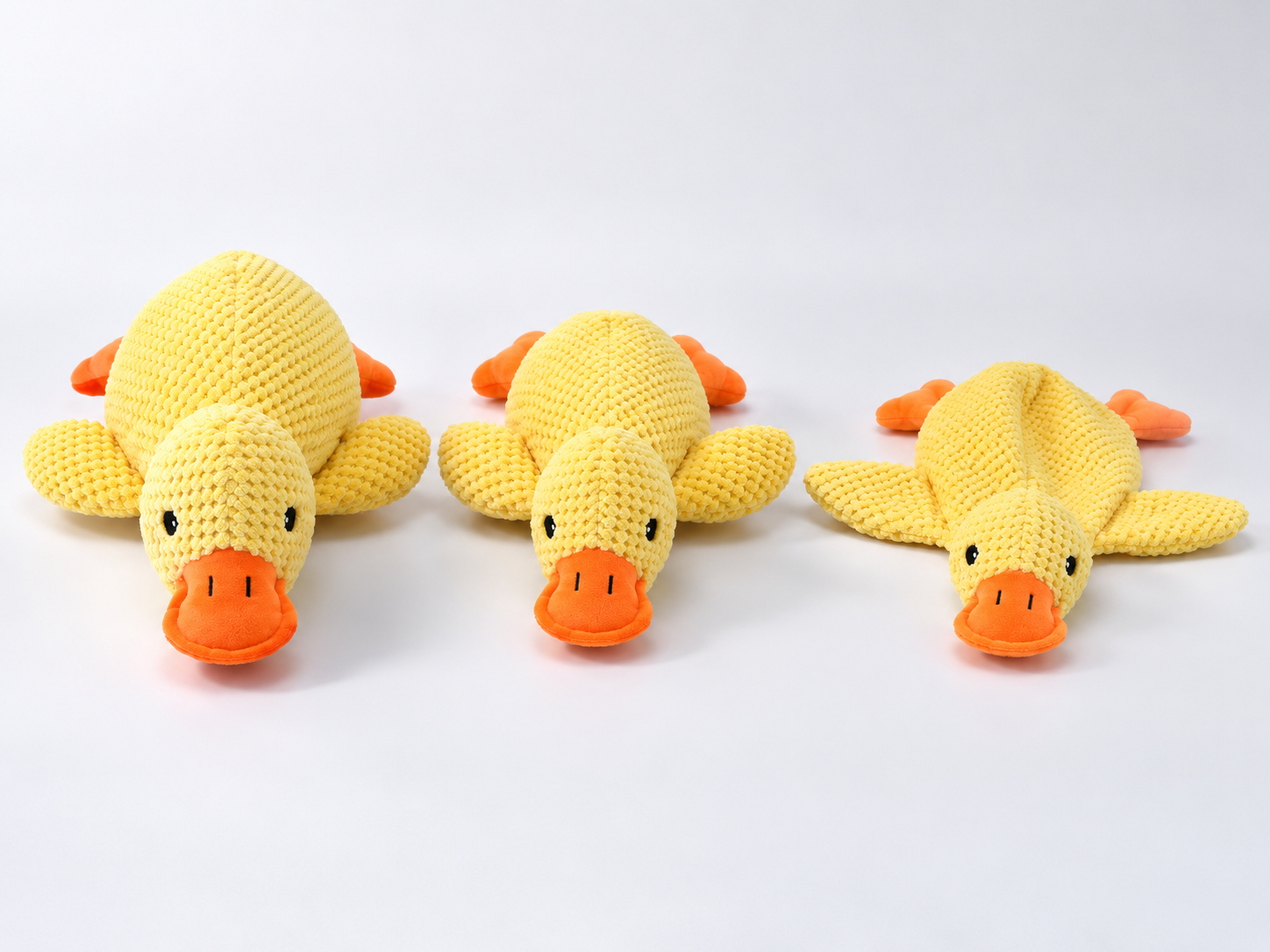
Standard stuffing is generally better suited to a fuller, more three-dimensional shape.
Reduced stuffing can keep some areas dimensional while making the body softer or flatter.
A design without conventional loose stuffing can create a lighter, flatter structure.
One point is important:
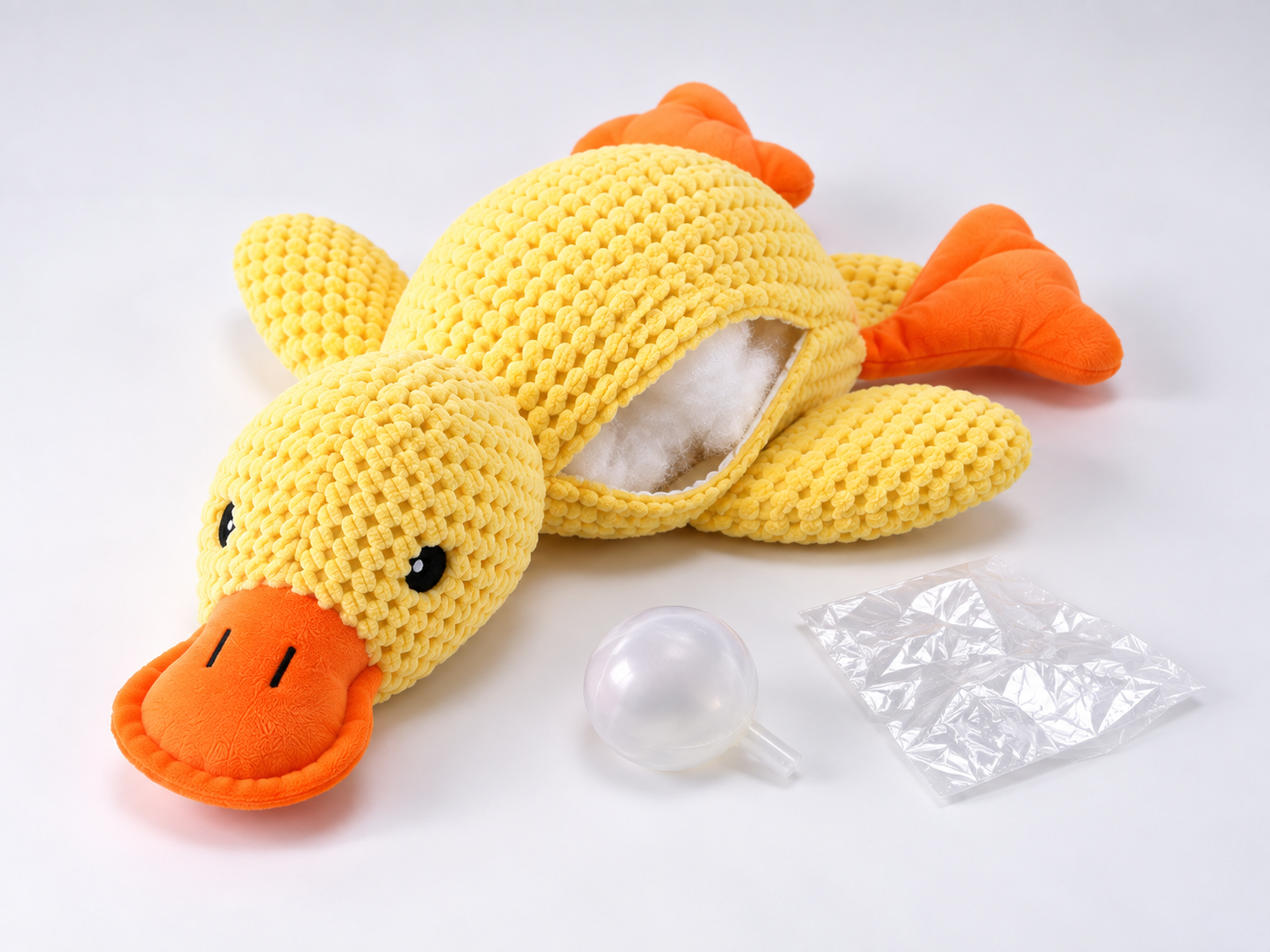
“No Stuffing” usually means there is no conventional loose filling. It does not necessarily mean the inside of the toy is completely empty.
The toy may still contain a squeaker, crinkle insert, lining, or other internal components.
| Stuffing direction | Typical result | What to explain in the inquiry | What to confirm in the sample |
|---|---|---|---|
| Standard stuffing | Fuller, more dimensional | Which areas are filled and the target feel | Silhouette, firmness, and whether any areas feel hollow |
| Reduced stuffing | Some dimensional areas with a softer body | Which areas should use less stuffing | Drape and feel across different areas |
| No conventional stuffing | Flatter and lighter | Whether squeakers, crinkle inserts, or lining are still needed | Internal component placement and overall feel |
Instead of writing only “Less Stuffing,” a clearer instruction could be:
“Keep the head dimensional, keep the body softer and flatter, and confirm the final stuffing level with the approved sample.”
Dimensions can usually be measured directly, while requests such as “softer,” “flatter,” or “not too full” are more subjective. For that reason, the final feel is better confirmed with a physical sample.
Squeakers and crinkle inserts create different sound feedback
A squeaker usually produces sound when it is compressed.
A crinkle insert mainly produces a rustling sound when it is bent or handled.
The two can be used separately or together.
| Configuration | Typical design direction | What to confirm in the sample |
|---|---|---|
| Squeaker only | Sound when a specific area is pressed | Position, ease of activation, and sound performance |
| Crinkle only | Rustling sound when the body or an attached section is moved | Coverage area, feel, and whether it changes the shape |
| Squeaker + crinkle | Different sound feedback from different areas | Whether both components are easy to activate separately |
| No sound component | Greater focus on shape and soft hand feel | Material, stuffing, and the overall product feel |
More squeakers are not automatically better
Adding more squeakers takes up internal space and can also change the stuffing layout and feel.
For a smaller toy, one well-positioned squeaker that is easy to activate may be more practical than several poorly positioned squeakers.
It is more useful to confirm:
- toy size;
- squeaker size;
- actual placement;
- how easily it can be activated;
- whether it affects other internal components.
If sound is an important selling point, the physical sample and a matching video reference can be kept together.
This is easier to review later than relying only on subjective descriptions such as “Loud” or “Soft.”
When reviewing stitching, look at the specific location
Terms such as “Double Stitching” and “Reinforced Stitching” are common in pet toy descriptions.
For purchasing, the more useful question is:
Which construction is used at which location?
A plush dog toy may include:
- main body seams;
- ear attachments;
- tail attachments;
- limb attachments;
- rope entry points;
- the final closing seam.
These areas do not all experience force in the same way.
Instead of asking broadly for “double stitching everywhere,” it is more useful to discuss which areas deserve closer attention for the specific design.
Double stitching, lining, and double-layer fabric are all only parts of the overall construction. None of them alone represents the final durability of the product.
Facial details are also part of the construction
Eyes, noses, and graphic details can be made with:
- embroidery;
- printing;
- fabric appliqué;
- separate decorative parts.
If the goal is to reduce separate small parts, embroidery, printing, or fabric-based details can be discussed first.
However, no single method should be expanded into an absolute safety or durability claim.
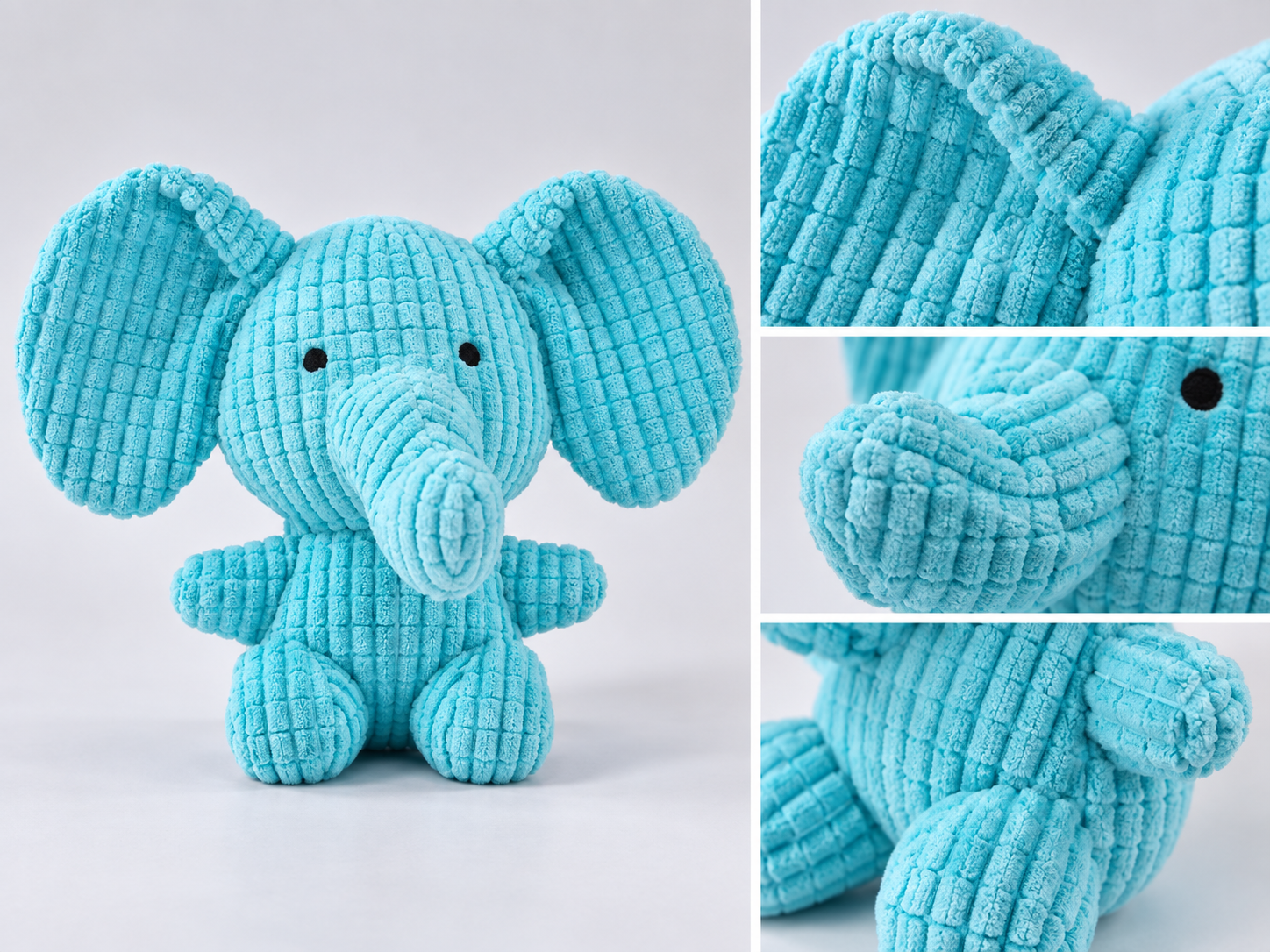
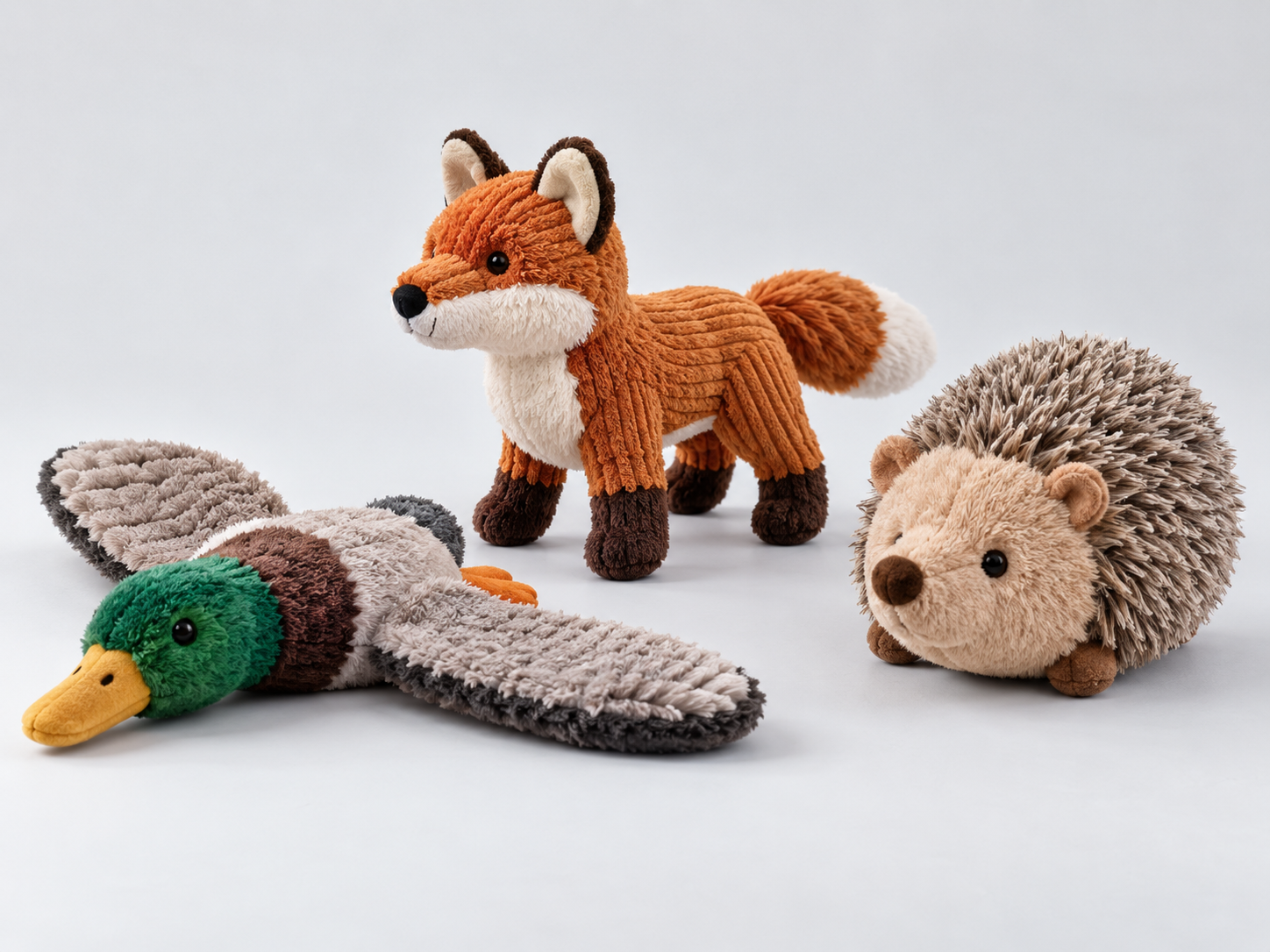
A reference image is a starting point, not something that must be copied exactly
The most useful role of a reference image is to help both sides understand the product direction quickly.
If you have a reference image, you can first explain which parts matter most to the project, for example:
- overall shape;
- body proportions;
- ear or tail shape;
- approximate size;
- colour direction.
Other details, such as:
- fabric;
- stuffing level;
- squeaker;
- crinkle insert;
- logo;
- packaging;
can then be adjusted according to the actual project requirements.
This is easier for both sides to understand than simply saying, “I want something like this.”
Use the dog toy product pages to compare real directions, or continue to the customization process when the project requirements are clearer.
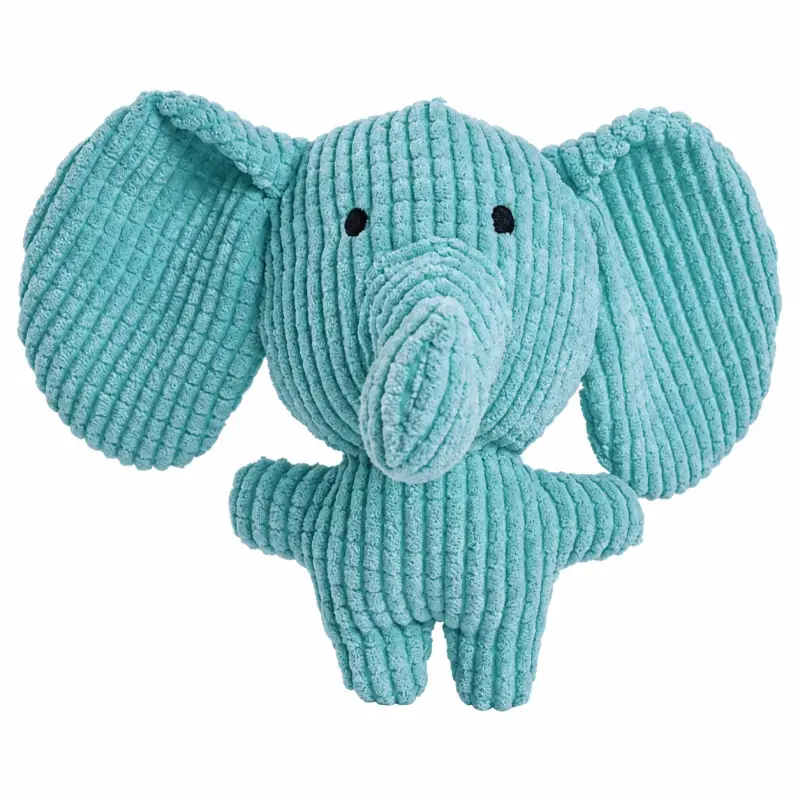
Plush Dog Toys
Compare plush toy directions before discussing stuffing, sound components, packaging, and branding.
View Plush Dog Toys →
Dog Toys
See broader play directions when a collection includes more than plush toy designs.
View Dog Toys →
Customization
See how requirements, sample confirmation, and production details can be organized before bulk production.
View Customization →Why the same reference image can lead to different quotes
A reference image usually cannot fully show:
- fabric;
- stuffing level;
- whether a lining is included;
- the number of squeakers;
- crinkle placement;
- logo method;
- seam construction;
- packaging;
- quantity allocation by style.
If these conditions differ, the quote can differ as well.
| Quote item | Useful information to provide |
|---|---|
| Appearance & size | Reference image, length, width, thickness, and measurement method |
| Fabric & stuffing | Target feel and stuffing direction for different areas |
| Sound components | Whether squeakers or crinkle inserts are needed, quantity, and approximate placement |
| Attachment points | Key areas such as ears, tails, limbs, or rope sections |
| Logo | Embroidery, printing, or label direction |
| Quantity | Total quantity and allocation by style or colour |
| Packaging | Single-item, set, and retail-packaging direction |
| Market | Main destination countries and any existing buyer requirements |
When comparing quotes, first confirm whether the different options are based on the same specification.
Otherwise, a price difference may come from different materials, construction, packaging, or other configurations rather than the unit price alone.
Which details should be decided before the inquiry, and which are better confirmed with a sample?
The first inquiry does not need to lock every detail.
A clearer approach is to confirm the project in stages.
| Better to clarify before the inquiry | Better to refine during sampling |
|---|---|
| Approximate size | Final stuffing feel |
| Main play purpose | Actual squeaker response |
| Whether a squeaker or crinkle insert is needed | Fine adjustment of sound-component placement |
| General material direction | Actual fabric feel |
| Logo method | Final logo size and position |
| Estimated quantity | Local construction details |
| Packaging direction | How the product sits in the actual packaging |
| Target market | Final production specification |
If a detail has not been decided yet, it can simply be marked as “to be confirmed with the sample.”
This is clearer than fixing a requirement too early when it is not yet certain.
A sample is not only for checking appearance
A useful sample should help both sides turn subjective descriptions into specifications that can be reviewed later.
At minimum, the following groups of details are worth checking.
Appearance & feel
- dimensions;
- proportions;
- colour;
- fabric;
- stuffing;
- logo position.
Sound & construction
- squeaker position;
- crinkle position;
- activation response;
- seams;
- ear, tail, and other attached-part connections.
Cleaning method
If the finished product is intended to carry a particular cleaning instruction, it should be confirmed according to the actual materials, construction, and sample condition.
A product should not be assumed to be machine washable simply because the surface is made from fabric.
Actual retail packaging
After the product itself is confirmed, it is also useful to place it in the actual packaging and check:
- whether the product is noticeably compressed;
- whether key visual areas are blocked;
- whether ears or tails are easily deformed;
- whether the barcode, size, and style information match.
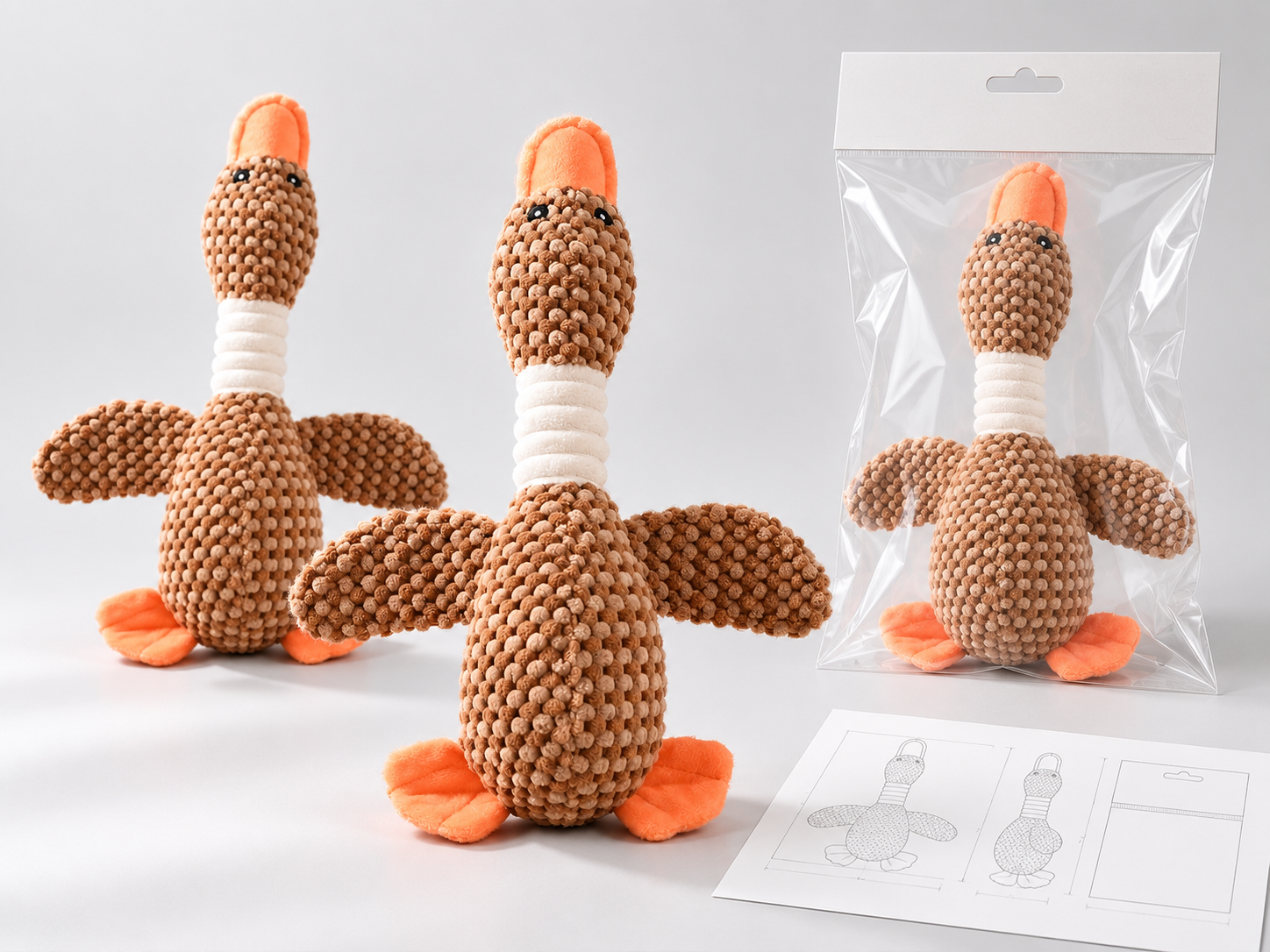
Sample approval is clearer when the version is recorded
Replying only with “Looks good.” does not fully record what the buyer has approved.
A clearer approach is to keep:
If the sample goes through several rounds of changes, a simple version record can also be kept.
V1: Adjust squeaker position
V2: Reduce body stuffing
V3: Final approval
This is clearer for later production and inspection than relying on a message such as “make it like the previous sample.”
Keep product claims aligned with the actual construction
For example:
“No Stuffing” does not mean “there are no internal components.”
“Reinforced Stitching” does not mean “the product cannot be damaged.”
“Soft Plush” alone also does not establish that the product is suitable for sustained heavy chewing.
Product descriptions are more accurate when they match the actual materials, construction, and intended use.
If the product becomes clearly damaged, use should be stopped and the product-specific instructions should be followed.
For projects that require particular testing or documents, it is also important to confirm whether the information applies to:
- the current model;
- the actual materials;
- the actual construction;
- the relevant test scope.
If key materials or construction change, the existing documentation should also be reviewed to confirm whether it still applies.
Prepare a clearer plush dog toy inquiry
If you are preparing a plush dog toy project, you can start by providing the details below, or send your inquiry directly when you are ready:
- a reference image or design drawing;
- approximate size;
- estimated quantity;
- main destination market;
- the shape details you want to keep;
- the stuffing feel you want;
- whether a squeaker or crinkle insert is needed;
- logo and packaging direction.
Internal details that have not yet been decided can continue to be confirmed through sampling.
A clear inquiry does not need to contain every answer from the beginning, but both sides should know what has already been decided and what still needs to be confirmed.
Common questions about custom plush dog toy development
Can a no-stuffing plush dog toy still contain a squeaker?
Yes. No conventional stuffing does not mean the inside is completely empty. The toy may still contain a squeaker, crinkle insert, or other internal components.
What is the difference between a squeaker and a crinkle insert?
A squeaker mainly produces sound when pressed, while a crinkle insert mainly produces a rustling sound when bent or handled. They can also be used together.
Do I need to finalize the stuffing level before the first inquiry?
Not necessarily. You can first describe the overall feel and shape you want, then confirm the final stuffing level with a sample.
Why can two suppliers quote differently from the same reference image?
A reference image cannot fully show the fabric, stuffing, sound components, logo method, internal construction, or packaging. Quotes are easier to compare when the core specifications are aligned.
What should be kept after a sample is approved?
It is useful to keep the final sample, specification sheet, approved artwork, and packaging version as references for later production and inspection.