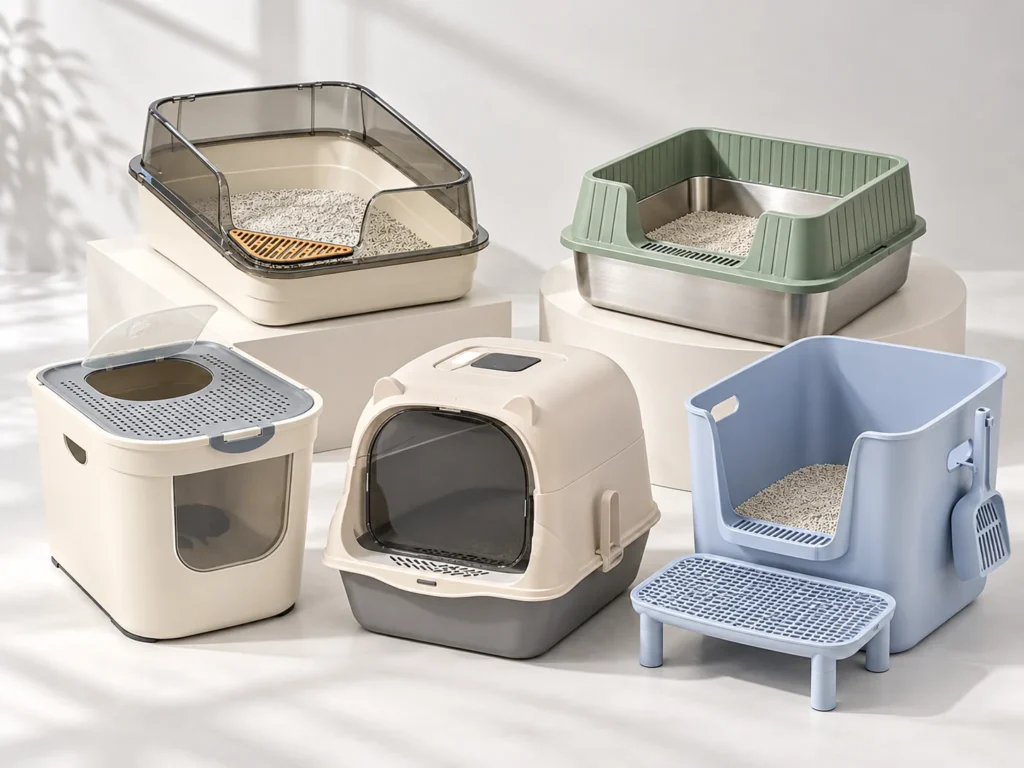
When adding cat litter boxes to a product range, the challenge is rarely a lack of designs. It is deciding which designs belong together. Open trays, high-sided pans, hooded boxes, top-entry models, manual sifting systems and stainless steel pans offer plenty of choice. Some answer different customer needs; others are variations of much the same idea.
For pet brands, importers and wholesalers, a useful range should be easy for customers to understand—and each style should be straightforward to specify, sample and source.
Start with three questions: What distinct choices does your sales channel need? How does each design meet that need? And which differences will affect samples, quotes and the product you actually receive?
Look at the design, not just the product name
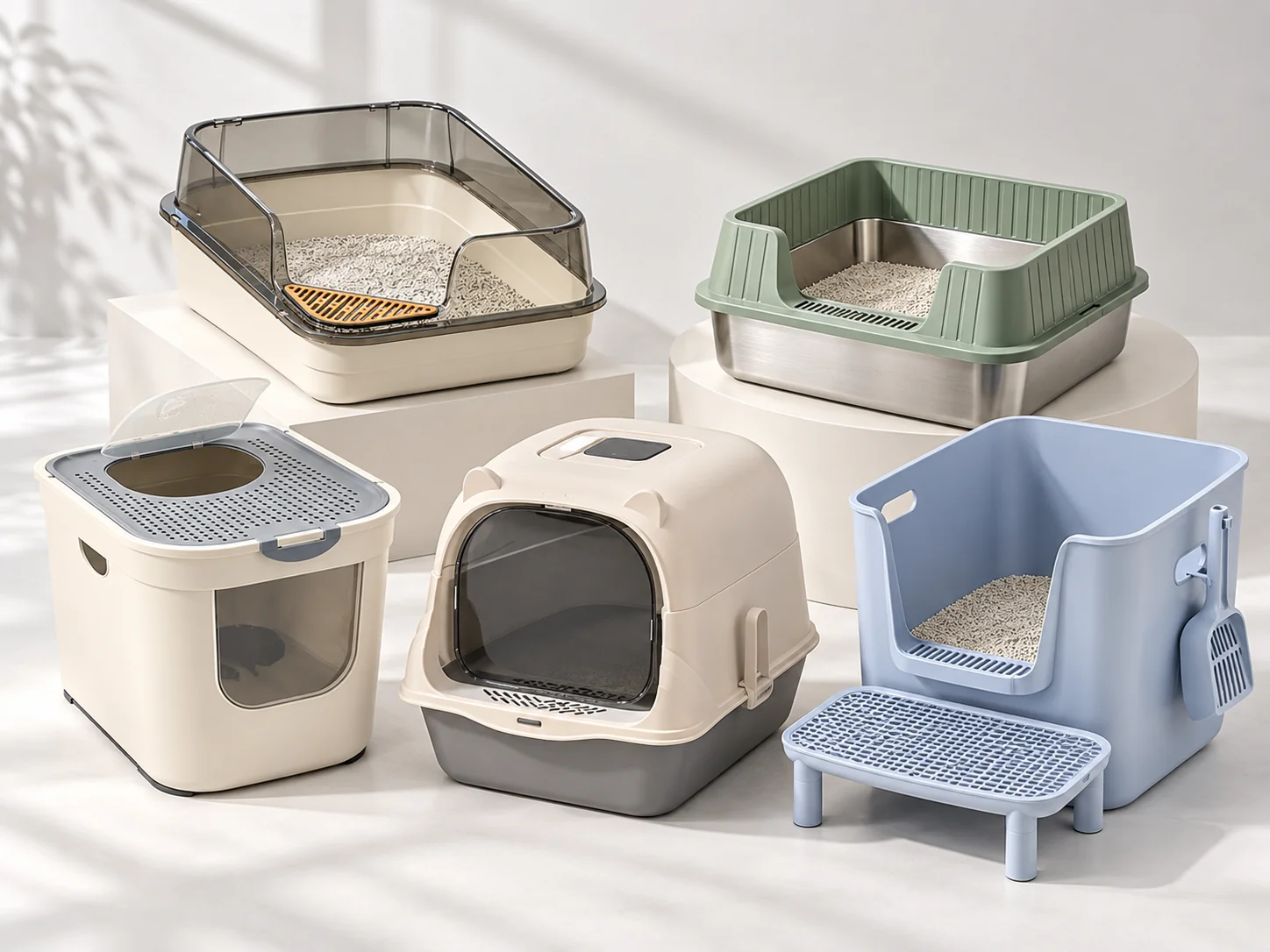
Cat litter boxes can be described by their body style, entry, cleaning system and material. These categories overlap. A stainless steel pan may have a plastic high-sided guard; a hooded box may use a top entry or additional manual cleaning components.
| Product direction | What changes from a basic tray | What deserves a closer look |
|---|---|---|
| Open litter pan / litter tray | No hood; the pan is directly accessible | Usable space, entry height, edges and nesting |
| High-sided, low-entry box | Taller walls with a lower step-in point | Wall coverage, entry position and usable floor area |
| Open-top box with a clear splash guard | Still open above, with a clear or translucent guard | Guard attachment, joints, cleaning and protection in transit |
| Hooded / covered box | A hood and defined entry; some have a swing door | Interior clearance, door and hood operation, fasteners |
| Top-entry box | Entry moves to the lid | Opening size, lid surface, cleaning access and intended cat users |
| Manual sifting / drawer-style box | Extra components for removing used litter | Litter compatibility, moving parts and cleaning access |
| Collapsible / travel box | Designed around storage and temporary use | Stability when open, seams, cleaning and packed size |
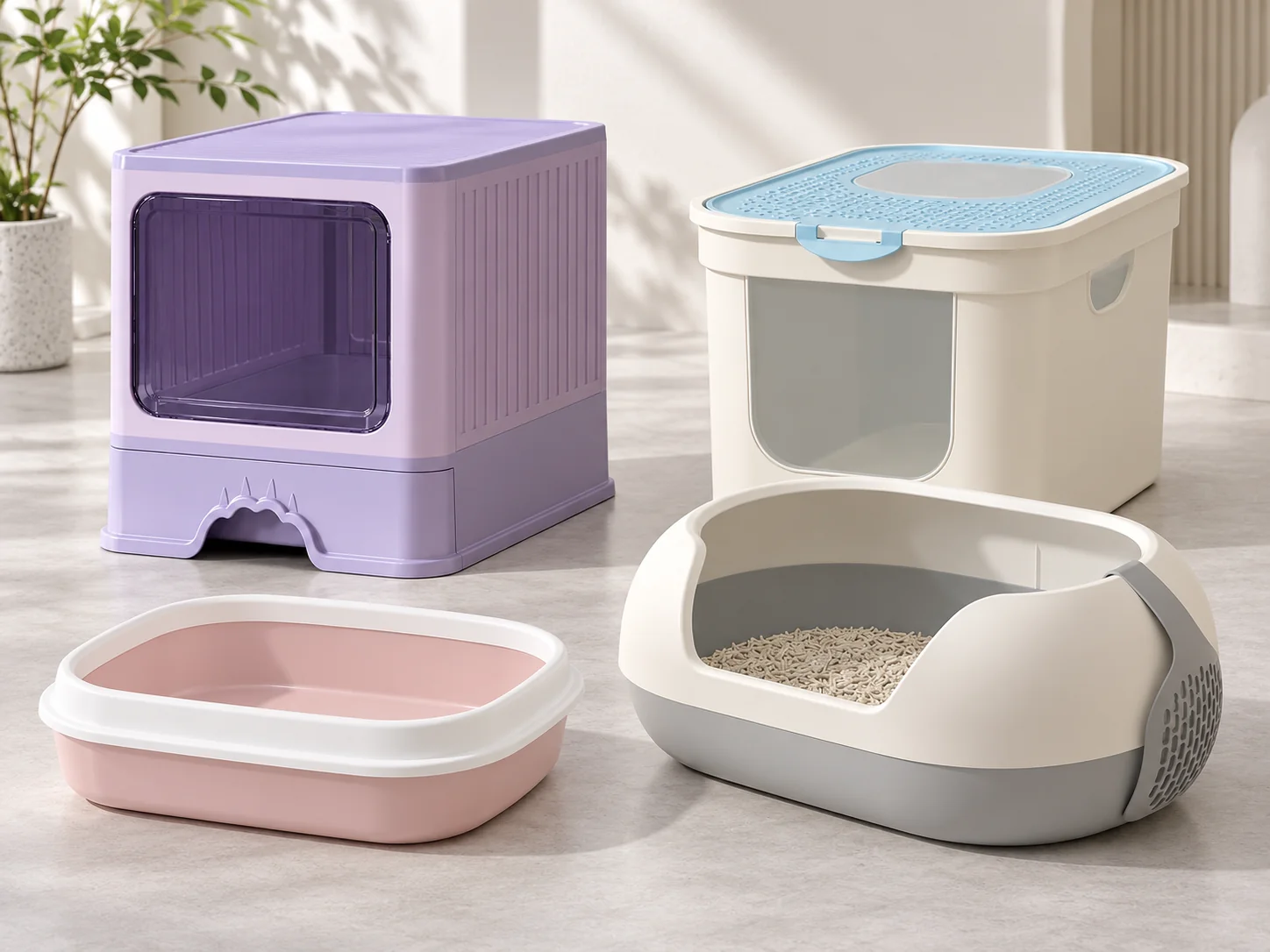
Plastic, stainless steel and combinations of the two are material choices that can appear across several of these designs—not additional entry types. Automatic litter boxes involve powered components, electrical considerations and different after-sales requirements, so they should not be evaluated as though they were ordinary non-electric trays.
Match the range to the sales channel before choosing quantities
A new litter box needs a reason for a customer to choose it. What that reason looks like can differ by sales channel.
Pet specialty stores can present open, high-sided, hooded and different cleaning formats as distinct choices. Before adding another high-sided pan with a similar silhouette, consider whether the existing assortment is missing a genuinely different way to use or clean the box.
Private-label ecommerce brands depend heavily on photos and accurate specifications. A hooded box is easier to understand when shoppers can see it open and view the interior. A top-entry model needs a clear view of the opening and lid. A sifting design should show how its parts work. If the main benefit can be explained only with an exaggerated claim rather than the actual structure, the listing may create the wrong expectation.
Home and lifestyle retailers may place more emphasis on appearance, color and discreet placement. Even so, a hood that suits a room must still allow reasonable space inside and practical cleaning access. Appearance and usability belong in the same decision.
Importers and distributors also manage SKUs, sizes, colors, accessory sets, retail packaging and replenishment. An additional design can mean an additional carton specification, packaging version and inventory line.
There is no universal ideal number of styles. A sensible starting range covers distinct reasons to buy rather than the largest possible assortment.
Which differences justify a separate product—and which are options?
Treating every color, size, material and accessory change as a new design can complicate a catalog without adding meaningful choices for the shopper.
| Change | A practical way to organize it | When a separate comparison helps |
|---|---|---|
| Same pan, different colors | Color options | When channels need different color assortments |
| Same design, different sizes | Sizes within a range | When space, entry or packaging changes substantially |
| Add a scoop, grate or door | Alternative sets or configurations | When the accessory changes how the product is used or positioned |
| Open pan to high-sided or hooded box | Different body designs | When customer needs and use are clearly different |
| Add sifting, a drawer or top entry | Evaluate a distinct cleaning or entry system | When it solves a relevant customer need |
| Replace plastic with steel or a hybrid assembly | Evaluate a material and construction option | When appearance, weight, manufacturing and sourcing differ materially |
This does not mean offering fewer choices across the board. A brand may still need a strong range of colors, sizes and sets. The distinction is that shoppers see a coherent assortment while the sourcing team manages precise models and configurations.
A practical comparison: three guard and hood designs
A high-sided box with a low front entry, an open-top box with a clear high guard, and a hooded box with a front door look different. Their sourcing implications go further than appearance.
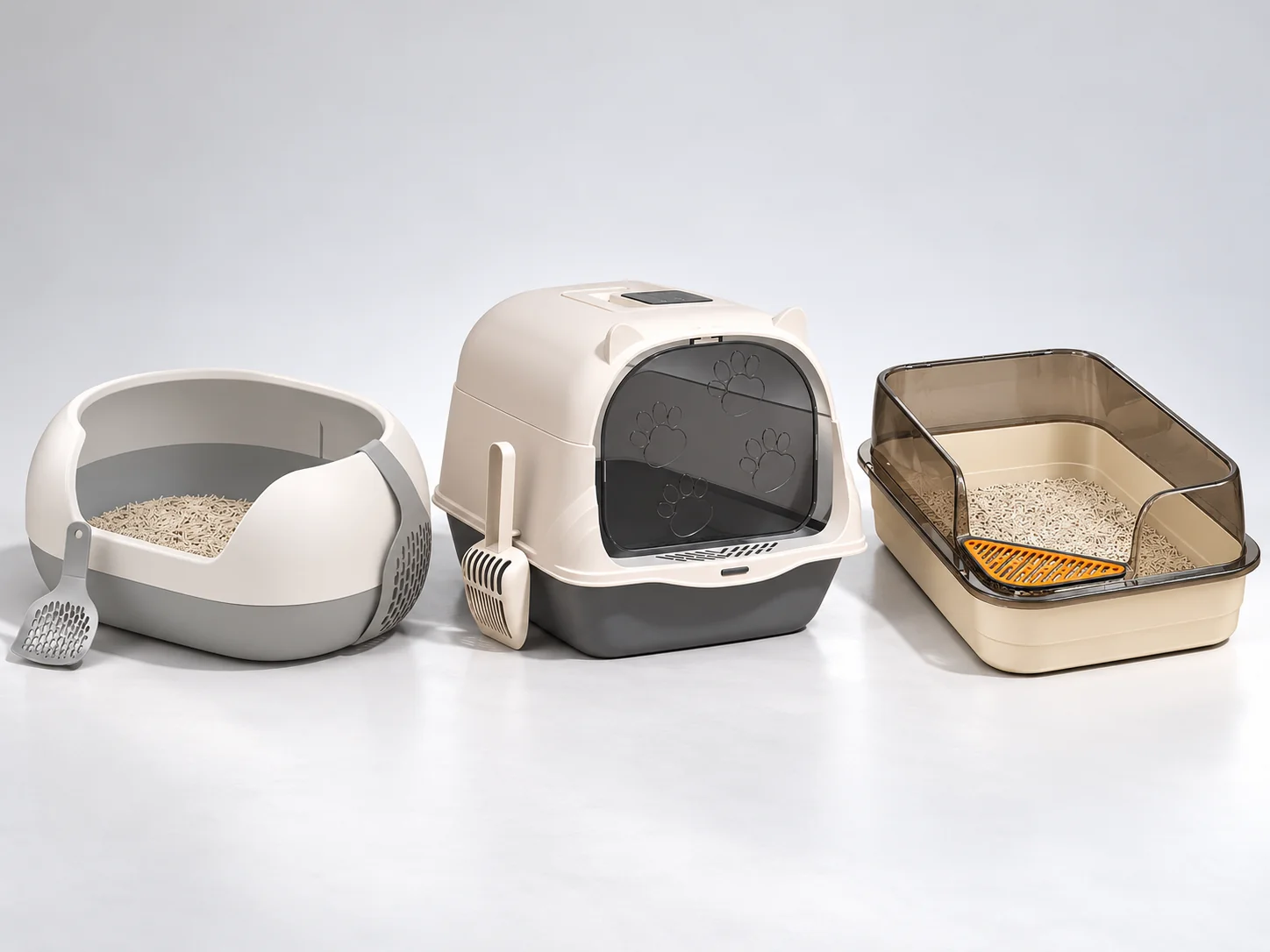
High sides and a low entry: two features to balance
Higher walls can intercept some litter kicked up during digging. A lower front entry changes the way a cat steps into the pan. Both need to be considered together: the lower opening may ease entry, but it is also a lower section of the guard.
Compare the entry height, usable floor area, wall shape and any corners that may be awkward to clean. For a size range, look at the actual space available in each size rather than relying on an external “large” or “XL” label.
A clear guard: what does the additional part change?
A clear guard keeps the top open while changing the coverage and look of the litter box. Some styles add a grate or step near the entry.
If the guard is a separate component, examine how it attaches, how easily the joint can be cleaned and how the surface will be protected in retail packaging. State whether the grate is standard or optional. A photo showing a grate does not demonstrate a measured reduction in litter tracking.
Whether a clear-guard style deserves a place alongside a one-piece high-sided pan depends on meaningful differences in the guard, day-to-day handling and target channel—not simply clear versus opaque plastic.
A hood: what changes beyond appearance?
A hood creates a different look and degree of concealment. It also changes entry, turning room and cleaning access. Buyers should see assembled, open and base-only views, rather than just an attractive front shot.
Compare the clear entry opening, door movement, internal height, attachments and what is involved in scooping or removing the hood for a thorough clean. A hood or vent-shaped component is not, by itself, evidence of odor-removal performance.
If the brand offers both open and hooded styles, the useful distinction is how they work and what they contain—not an unsupported claim that one is inherently more premium.
Explore Cat Litter Boxes and Custom Options
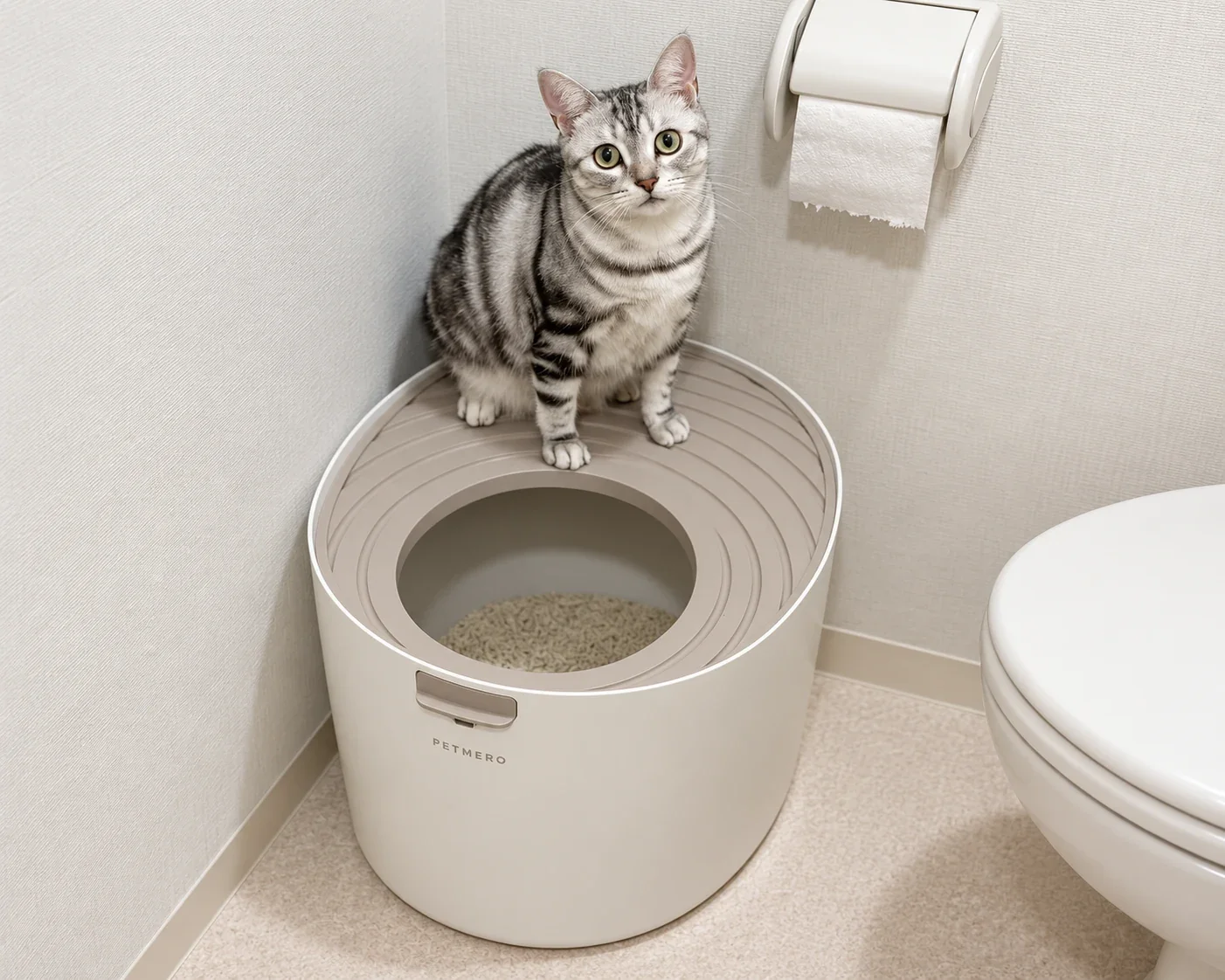 Cat Litter Boxes
Browse PETMERO’s litter box products and select the structures or styles you want to compare.
Explore Cat Litter Boxes →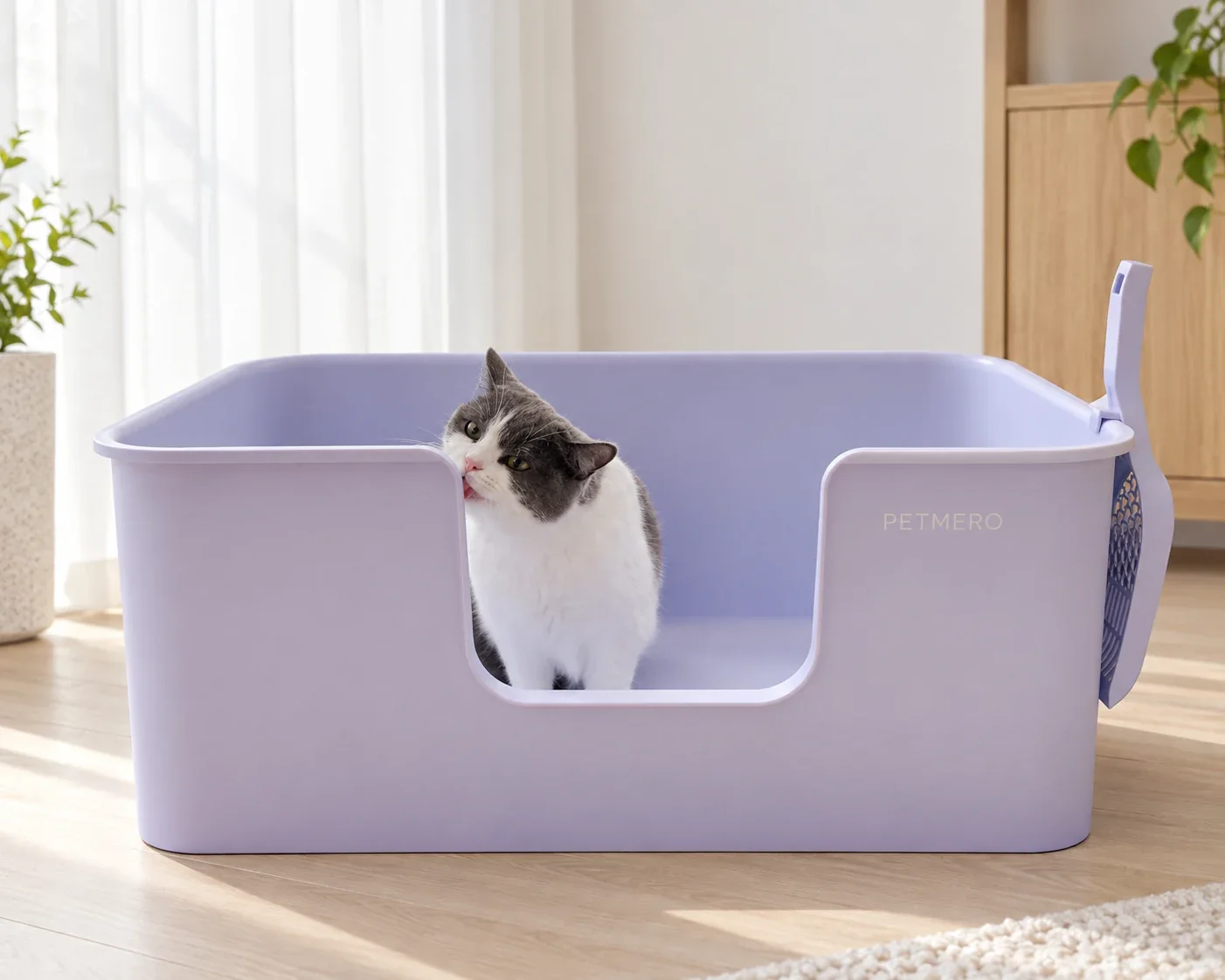 Toileting & Cleanup
See related pet toileting and cleanup products for a coordinated assortment.
Explore Toileting & Cleanup →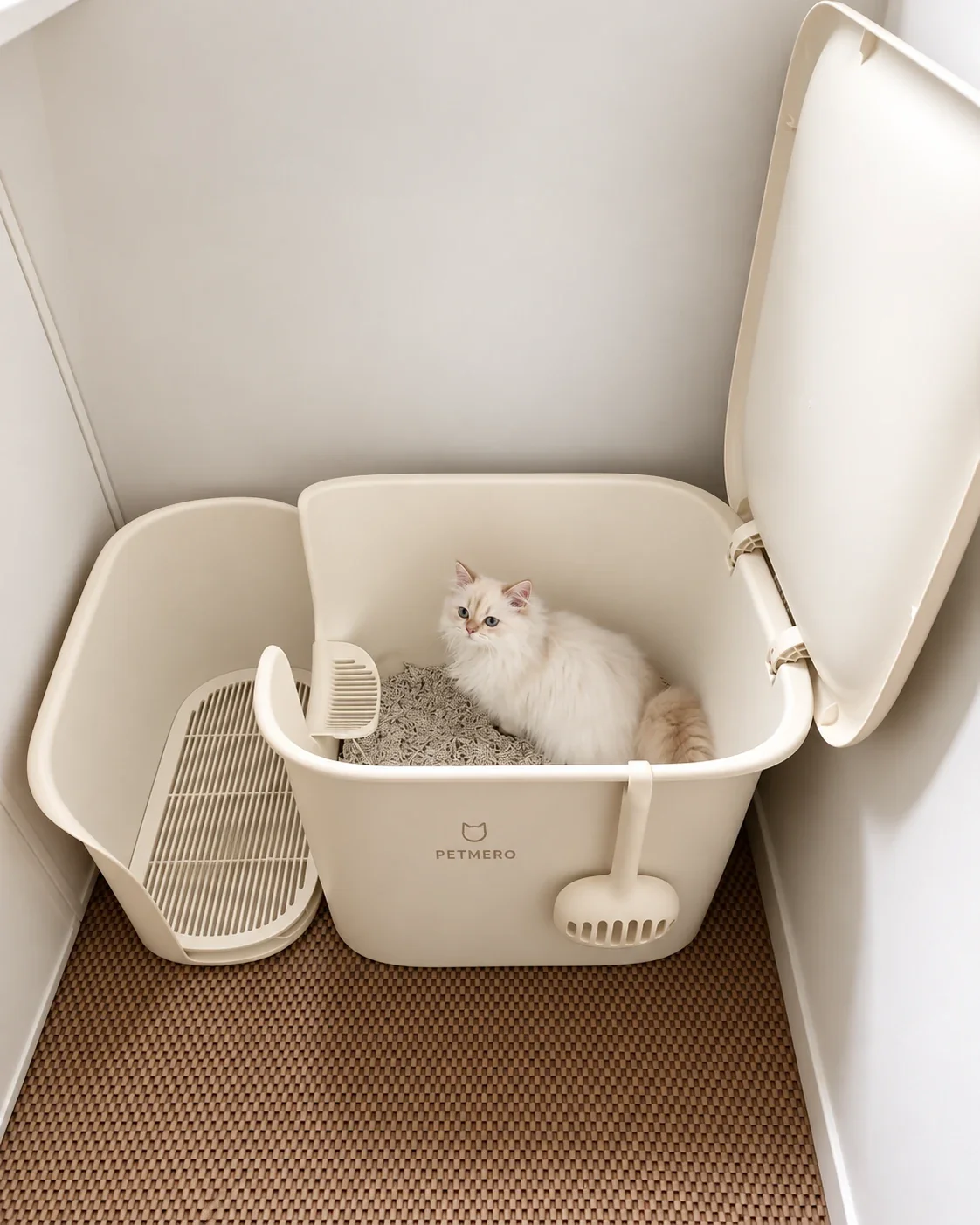 Customization
Already have a reference sample or brand requirements? See how to discuss the product and its retail packaging.
Explore Customization →Before adding a cleaning mechanism, consider how it works
An extra feature can create a useful reason to buy. It can also add cleaning steps and parts to manage.
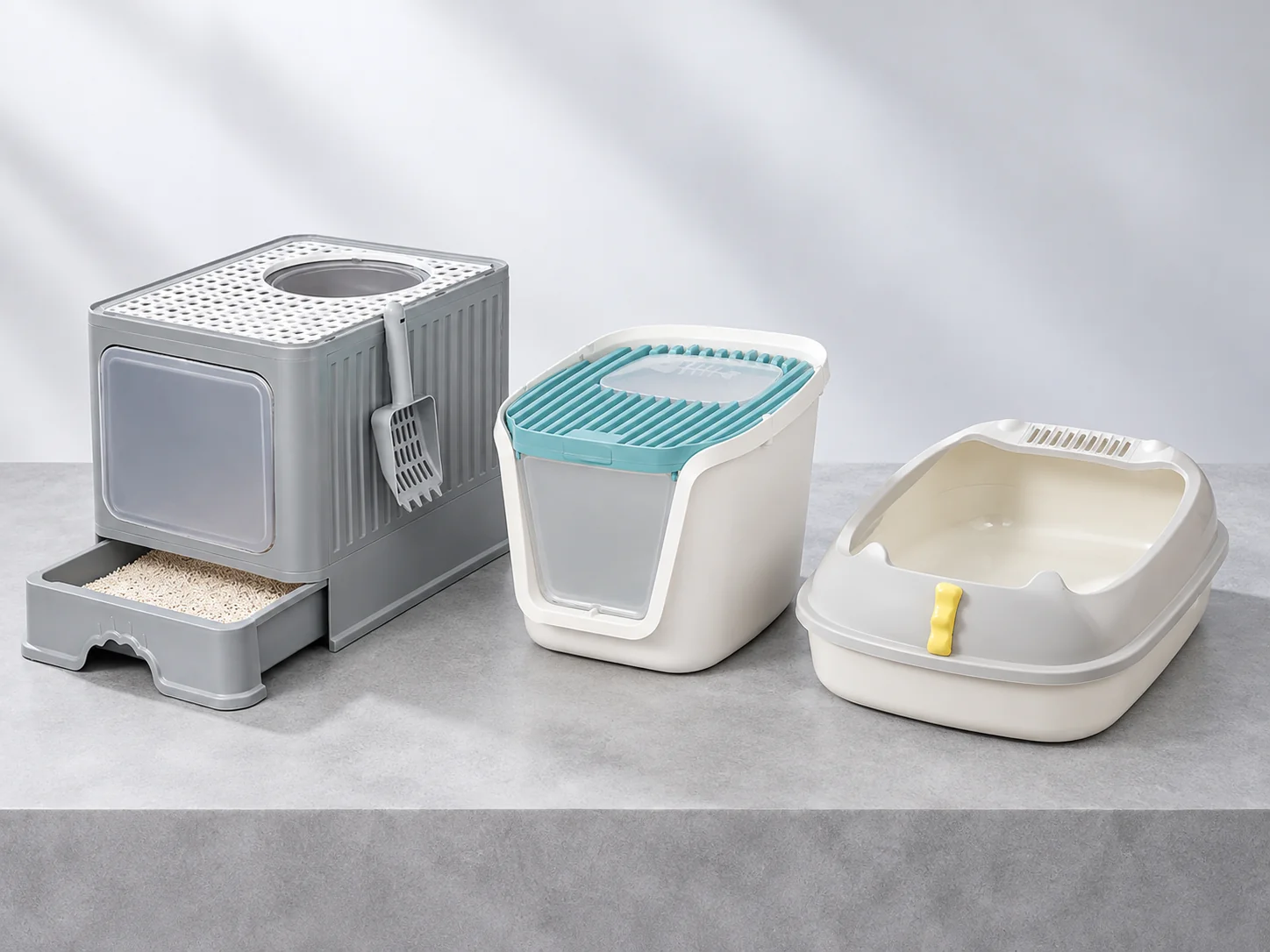
A manual sifting box is about more than the number of trays. Its openings need to work with the particle size and clumping behavior of the intended litter. Buyers should also consider how the screen and base are cleaned after use. A sifting insert does not automatically work with every litter type.
A drawer-style box needs a smooth pull, accessible corners and parts that fit back together correctly. A more elaborate mechanism is not necessarily easier to maintain.
A top-entry box changes the cat’s route into and out of the pan. The opening and lid surface are central to that choice. It should not be assumed to suit every cat or replace every low-entry design.
A collapsible travel box offers a different purpose: portability. Stability when open, seams, cleaning and packed size matter. Any leak-resistance claim needs to match the specific construction and the conditions in which it was checked.
These distinctions help a brand decide whether a feature serves the intended shoppers or merely makes the product description longer.
Materials, dimensions and parts belong in the same comparison
Two litter boxes can have a similar shape and different materials, but a material name alone is not a complete product specification.
For plastic designs, the resin, molded structure, finish and fit between parts matter. For a stainless steel pan, the steel grade, sheet thickness, edge finishing and surface treatment should be clear. A hybrid assembly adds another question: how the steel and plastic components connect and how they are cleaned. Material labels alone do not prove antimicrobial, scratch-resistant or odor-removal performance.
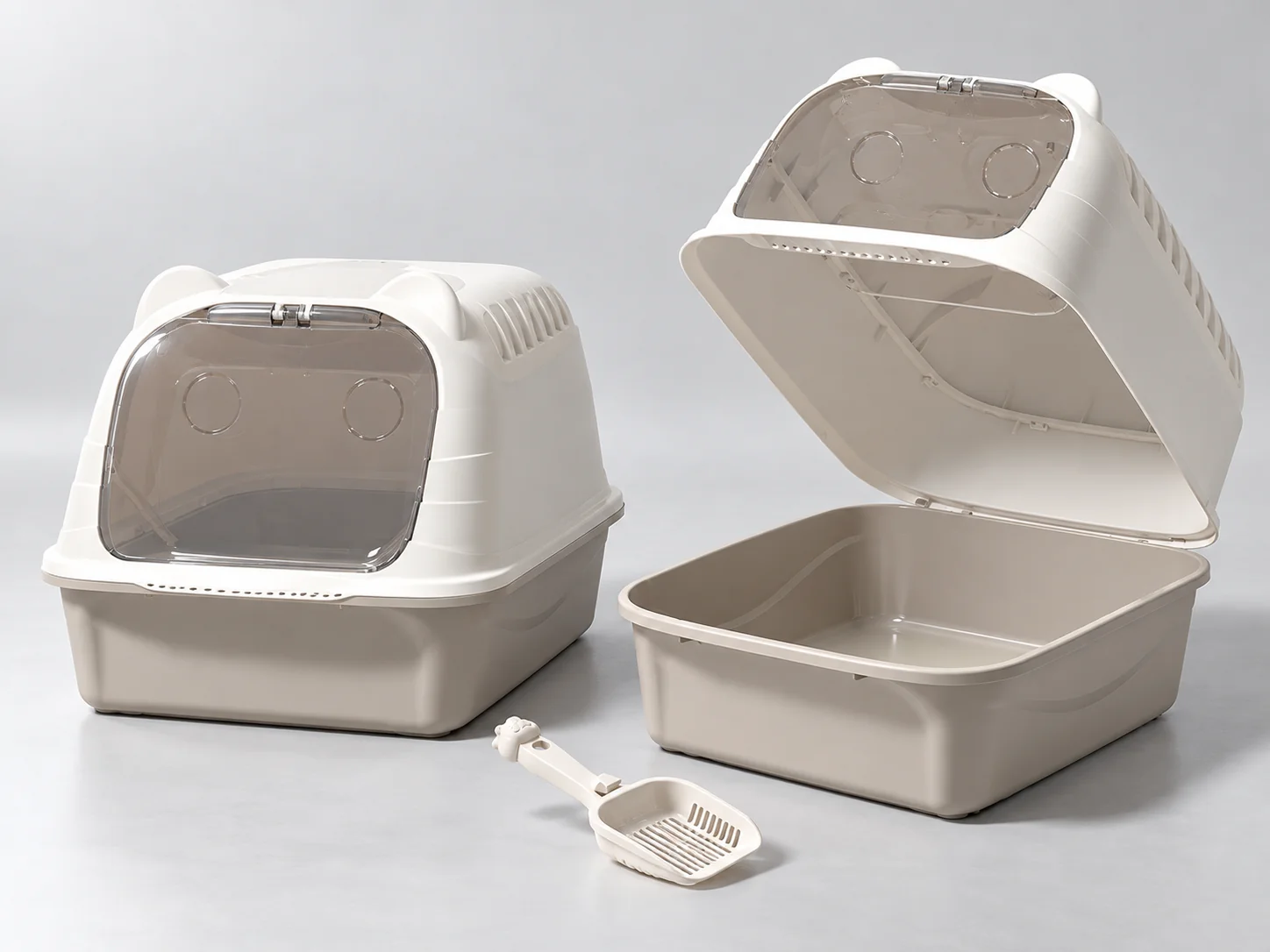
Dimensions deserve more than one length–width–height line. Separate external size, usable internal dimensions, clear entry size and packed dimensions. The tallest external point of a hood does not mean that same height is available everywhere inside. The height of a high-sided box does not tell the buyer how low its entrance is.
The contents of each set also matter. A scoop, grate, swing door or detachable guard shown in a photo may not be included in every quoted configuration.
| Information to compare | Why it changes the decision | Useful evidence |
|---|---|---|
| External, internal and entry dimensions | Shows usable space and supports accurate product listings | Dimensioned views tied to the actual model |
| Material and assembly | Affects appearance, cleaning and scope for modifications | Material description and full parts list |
| Assembly and cleaning | Shows how the product works beyond a front photo | Open, disassembled and reassembled views or video |
| Accessories per set | Keeps samples, listings and quotes consistent | A clear configuration sheet |
| Color, logo and retail pack | Separates the standard design from the branded version | Decorated sample and packaging sample |
| Carton size, quantity and weight | Supports freight and replenishment comparisons | Packing data for the actual configuration |
A useful sourcing specification need not be complicated. It does need to ensure everyone is talking about the same model and set of parts.
What changes when you move beyond an existing design?
If an existing litter box already has the right dimensions and structure, color, branding, accessories and retail packaging may be the most relevant choices. Available processes and order conditions depend on the selected design.
Changing the entry, adding a guard, altering hood joints or redesigning a sifting tray is different from changing a color. Tooling feasibility, component fit and sample approval may need to be revisited.
A new body or cleaning system needs a clearer description of intended use, main dimensions, materials and component relationships before development can be assessed.
These project levels do not always fit neatly into one universal use of the terms OEM and ODM. The practical question is which existing components can be used, which must change and which require a new design.
Compare like-for-like products before comparing quotes
Two products described as “high-sided litter boxes” can differ substantially in material, size, included scoop, guard and packaging. A unit price that includes a retail color box cannot be compared directly with a price for a bare pan in a plain master carton.
Packaging is especially relevant for importers. Some open trays can nest if their shape permits it. A hooded style may be packed with the hood apart from the base. Separate clear components may need extra surface protection. Nesting efficiency, carton dimensions and pieces per carton must come from the actual packing arrangement—not assumptions about the product type.
A fair sourcing comparison specifies the model, material, sizes, included parts, colors and branding, quantity per SKU, retail pack, carton details and trade terms. It also makes later reorders easier because the version can be checked against the same records.
After sample approval, keep the delivered configuration consistent
The approved item is more than a product photo. Its parts, dimensions, finish and packaging all belong to the same version.
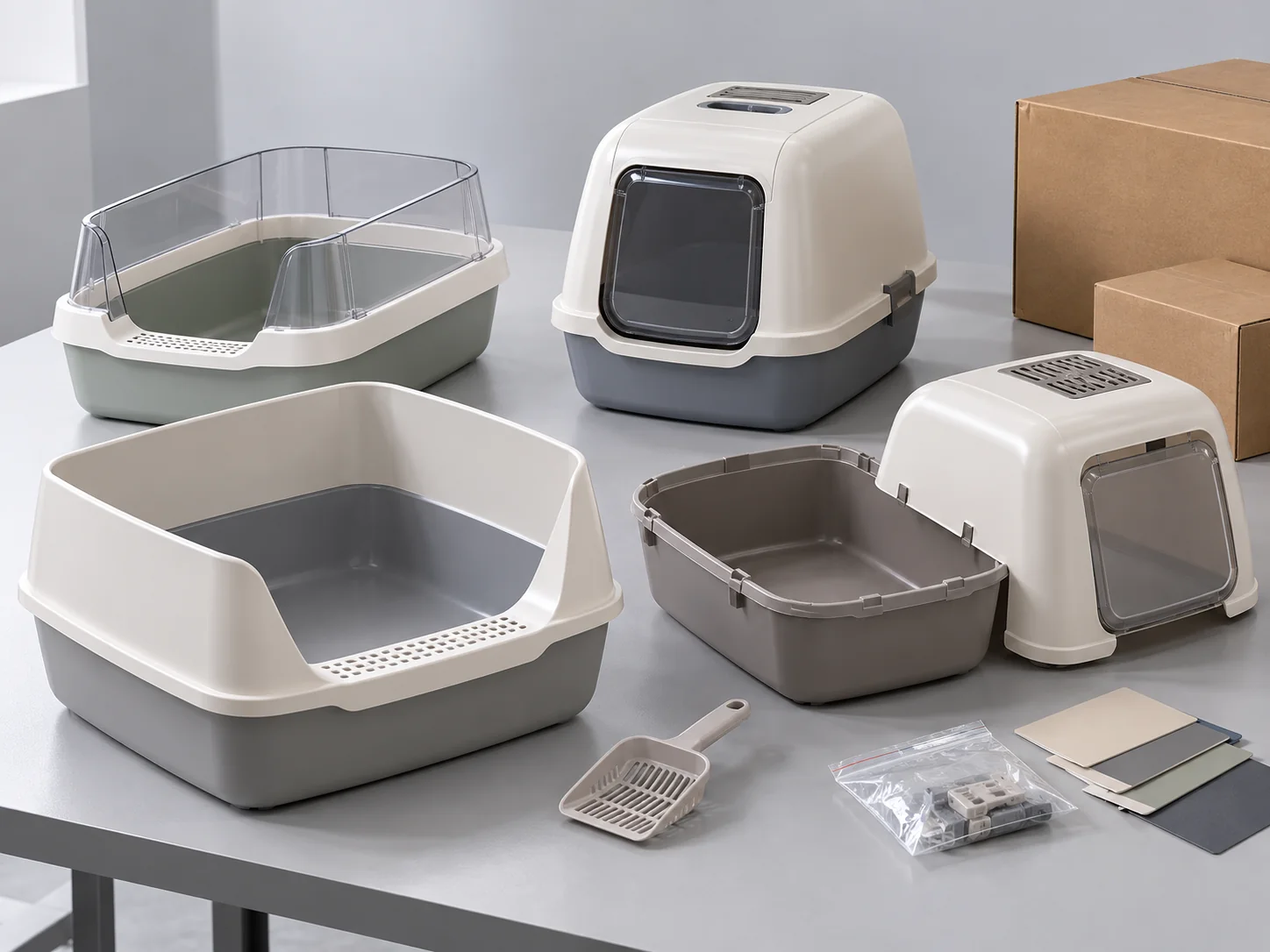
If a swing door is removed after sampling, the parts list and pack images should show the doorless version. If the base dimensions change, related accessories, specifications and packaging may need updating too.
For designs with screens, grates or connectors, the final sample should make clear what is included, how it fits and how it is cleaned. If the retail listing will make a specific claim about leakage, tracking reduction or another measured effect, the claim should match the relevant test conditions and results.
Once the product, parts, color, branding and packaging are agreed, subsequent purchasing and delivery should refer to that same configuration instead of mixing old images with the latest sample.
What should you send PETMERO to start a discussion?
You do not need a complete technical drawing for a first inquiry. A target market, preferred design or reference image, estimated quantity, and any settled branding or packaging requirements provide a useful starting point.
If you are weighing two directions, say so—for example, a high-sided open pan versus a hooded model, a plastic versus stainless steel base, or a standard tray versus a manual sifting system.
Color, logo, accessories and packaging can be specified where already decided. Other details can be narrowed down through product and sample comparison.
Frequently Asked Questions
Do we need every litter box type in our first range?
No. Start with designs that meet distinct customer needs, then decide which sizes, colors and structures deserve to be sold together. Closely overlapping products can remain alternatives rather than all entering the first order.
Should two visually different high-sided pans be separate SKUs?
Not necessarily. Compare the entry, usable space, guard, cleaning and packaging. An appearance change can be a variation within one range or a separate style when the positioning meaningfully differs.
Can a stainless steel pan be combined with a plastic hood?
That construction exists, but actual compatibility depends on the rim, dimensions, attachment method and sample. Similar external dimensions do not prove parts are interchangeable.
Does a manual sifting system work with every cat litter?
No. The screen design must suit the particle and clumping behavior of the intended litter. The cleaning steps also differ between systems, so compare the specific design.
Can we start a custom project with only a reference photo?
Yes. A reference photo is enough to establish an initial direction. Size, material, accessories, quantity, branding and packaging can then be defined for sampling and a more precise quote.
A clear range is more valuable than simply adding styles
Open, hooded, top-entry, sifting and different material constructions can form a broad litter box range. Not every possible combination needs to be purchased.
Give each style a clear reason to buy, explain the difference through its actual design, and keep samples, quotes and packaging tied to the same version. That makes both product selection and the path from inquiry to order easier to manage.