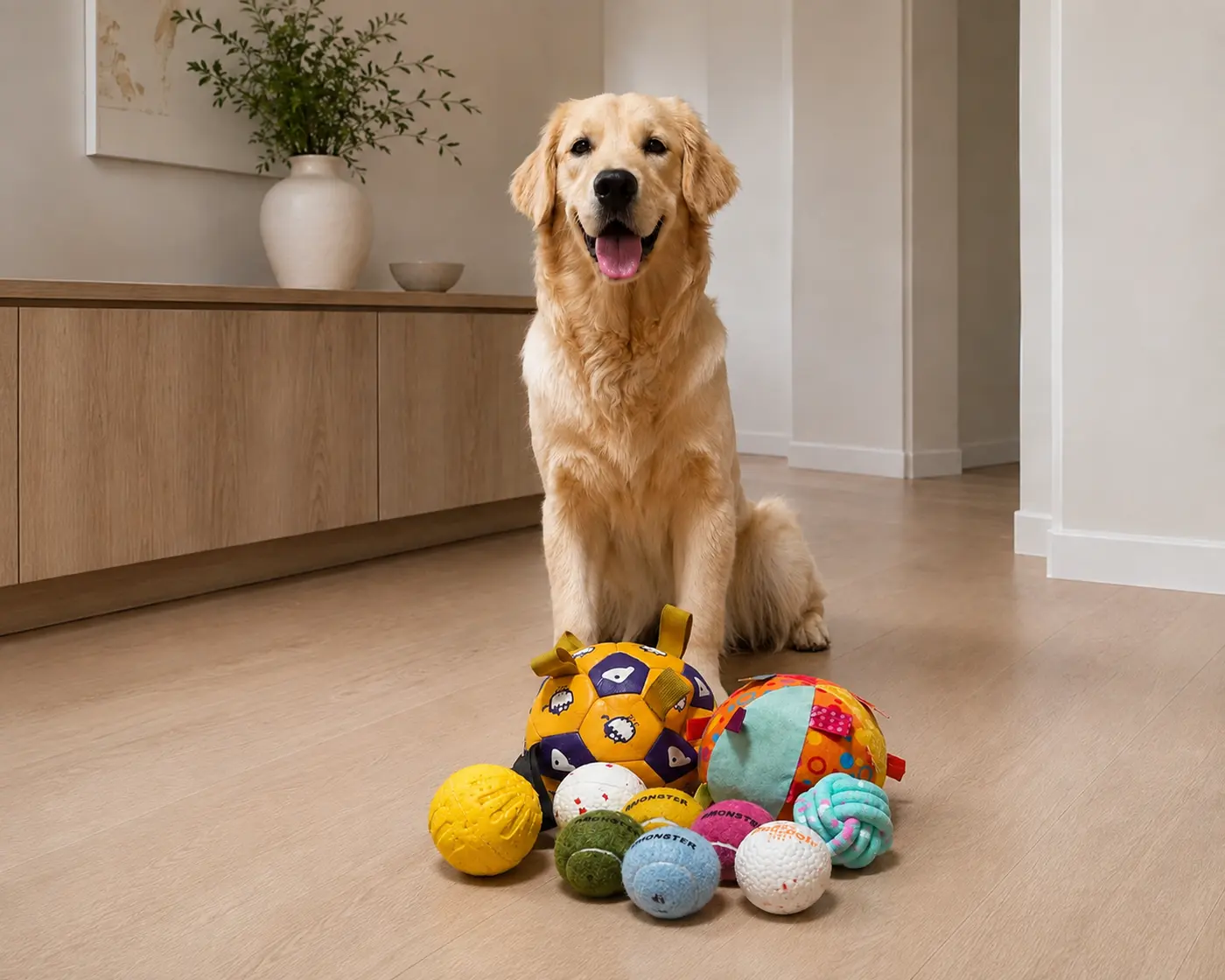
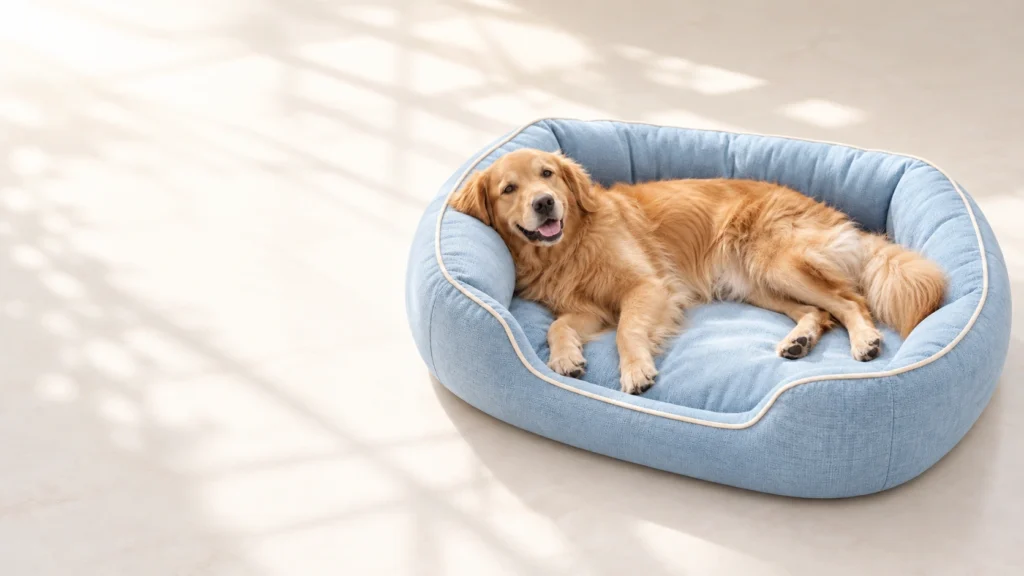
Two dog beds labelled Large can be quite different in size. Even when their outside dimensions are identical, a bed with thick bolsters may leave much less room to lie down than a flat mattress-style bed.
To choose the right dog bed size, start with the space your dog naturally uses while resting. Then compare it with the space available for lying down—not just the S, M or L on the label.
Here’s how to measure that space, compare beds using the measurements, and understand why pet brands and buyers also need to check the difference between overall dimensions and usable sleeping space.
How much sleeping space does your dog need?
Don’t choose a dog bed by measuring only your dog’s body length while standing.
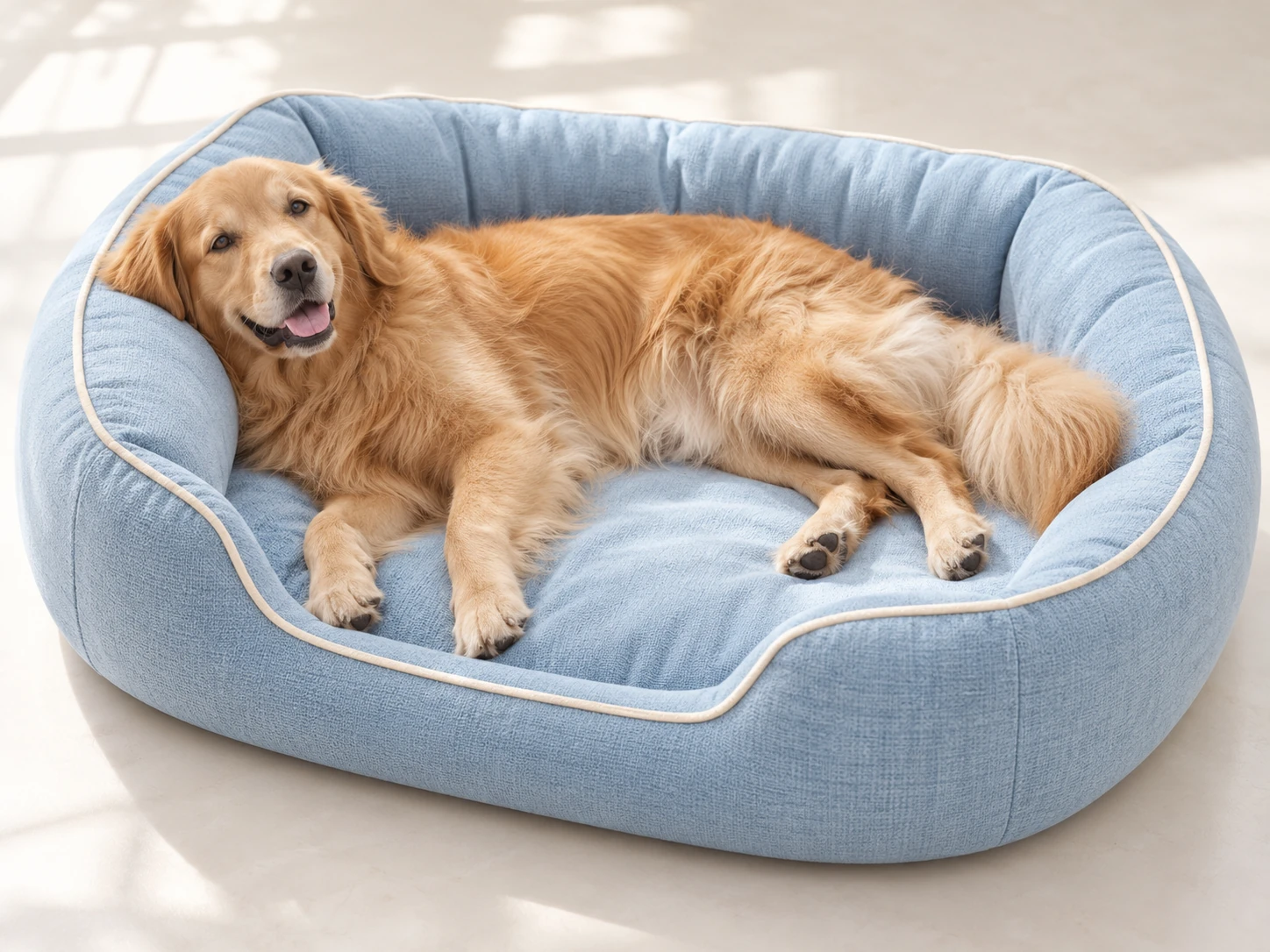
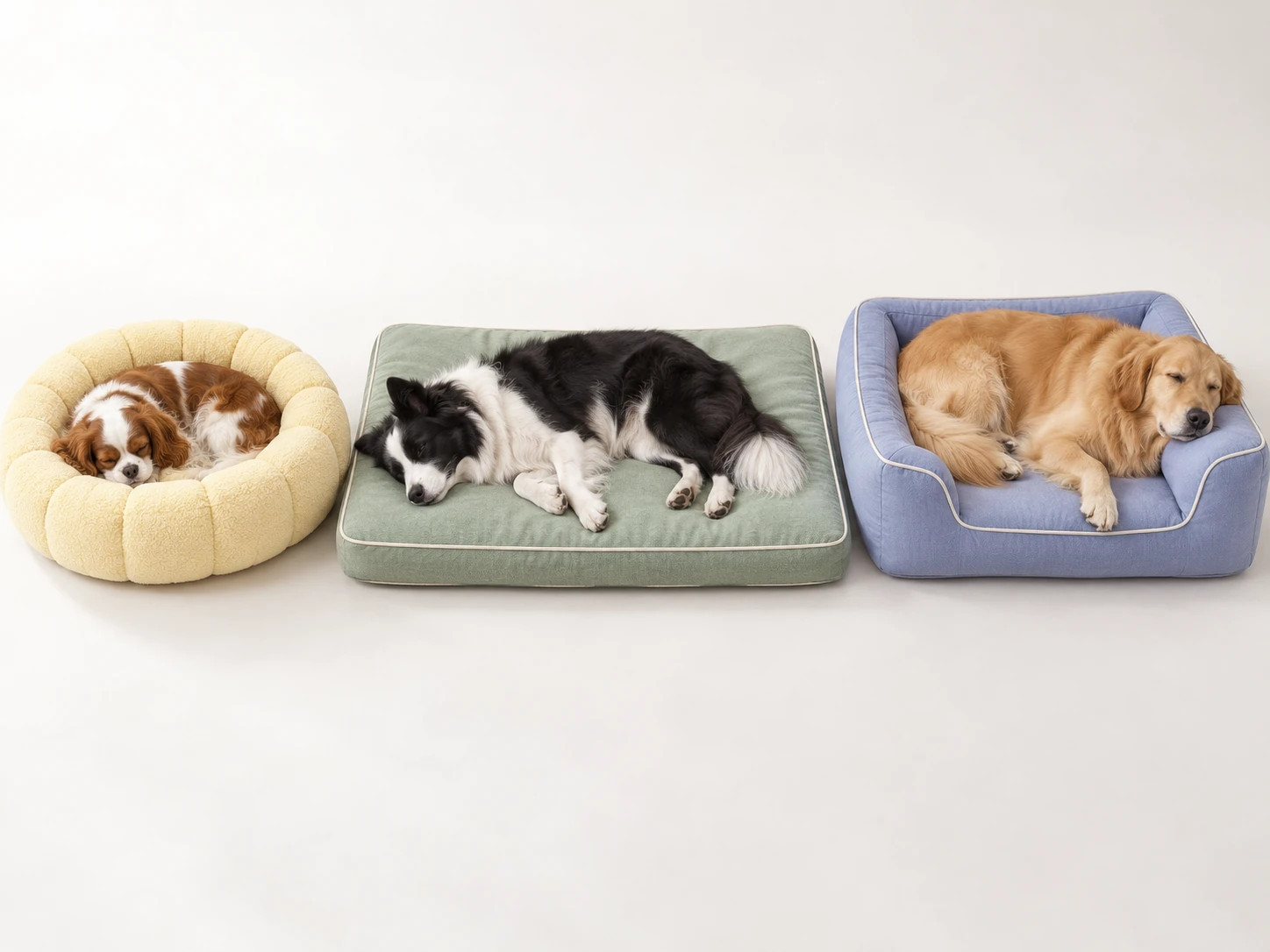
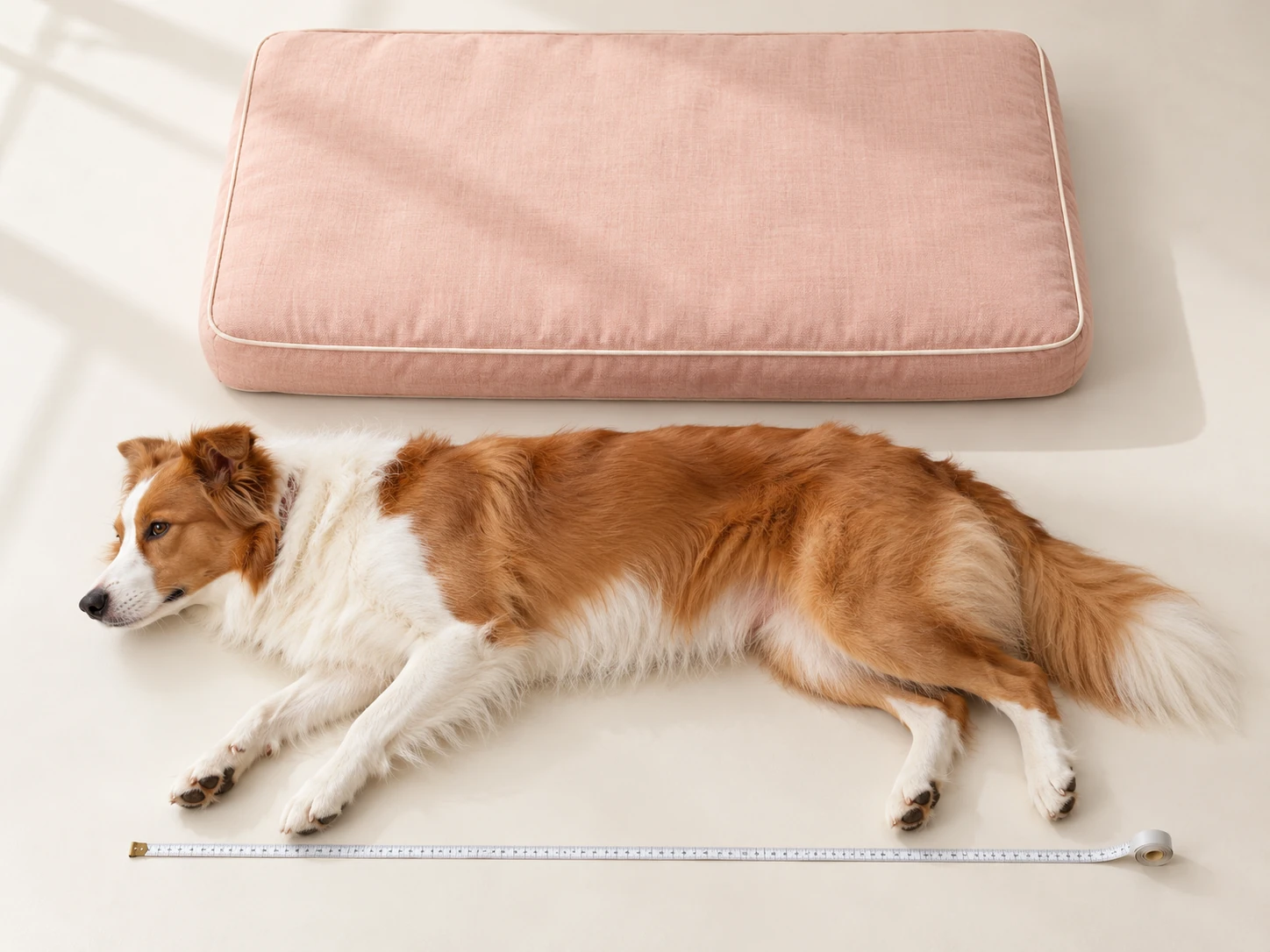
Dogs may sleep on their sides, stretch their legs or curl up. Each position takes up a different amount of space.
Watch how your dog naturally rests
Choose a familiar place where your dog feels relaxed and watch how they lie down.
If your dog often lies on their side with their legs stretched out, that position will usually take up more room than curling up.
If your dog likes to curl up, don’t base the bed size only on that smallest sleeping position. Notice whether they also stretch their legs, lie on their side or change positions while sleeping.
The goal isn’t to stretch your dog out as far as possible. It’s to see how much space they use when they rest comfortably.
Record both sleeping length and width
When your dog is resting naturally, note two measurements:
- Sleeping length: the distance from the furthest point at one end to the furthest point at the other, along the main direction of your dog’s body, including naturally extended legs.
- Sleeping width: the widest space taken up by the body and legs at a right angle to that length.
If your dog sleeps in several positions, observe more than one. The bed should accommodate their usual resting positions.
There’s no need to pull your dog’s legs straight. And don’t measure just the torso while ignoring naturally outstretched paws.
Leave room to change position
The available length and width of a dog bed shouldn’t only just match your dog’s measurements.
There should also be some extra space for turning, stretching their legs or shifting position.
However, there is no fixed allowance that suits every dog and every bed. The space needed depends on body size, sleeping habits and bed design.
Your measurements are the starting point for comparing beds, not an automatic final bed size.
Once you’ve measured, which bed is the better fit?
What you need to compare is the bed’s usable sleeping area.
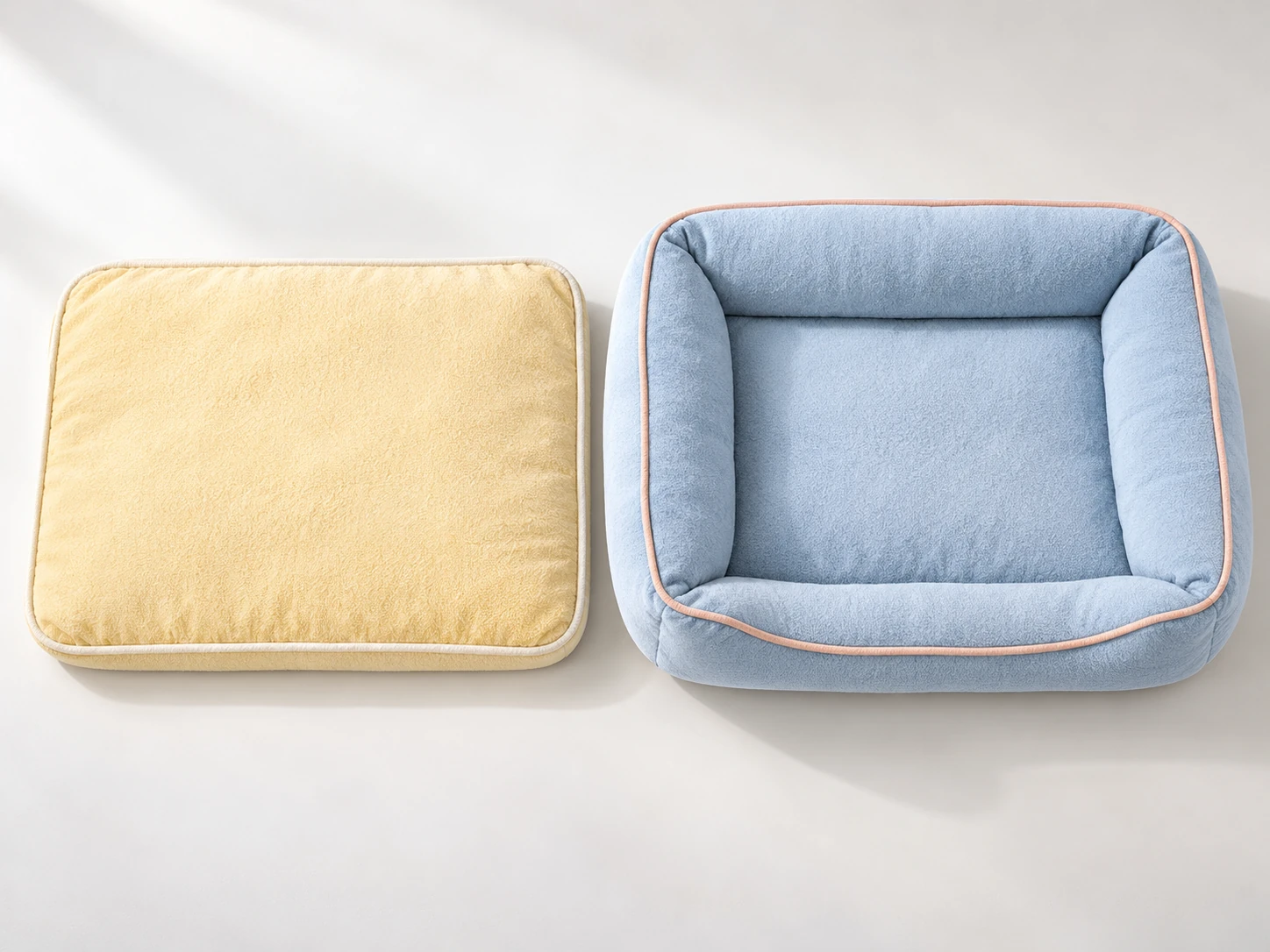
Overall dimensions tell you how much space the whole bed takes up. Usable sleeping dimensions tell you how much room your dog actually has to lie down.
For a flat dog bed without thick bolsters, the two measurements may be quite close.
For a bed with thick padded sides, the space inside can be considerably smaller than the outside dimensions.
Example: a bigger outside size doesn’t always mean a better fit
Imagine a dog that needs about 74 cm in length and 42 cm in width when naturally lying on its side.
Now compare two beds:
| What to compare | Bed A | Bed B |
|---|---|---|
| Design | Flat mattress-style bed | Bed with thick bolsters |
| Overall dimensions | 88 × 56 cm | 100 × 70 cm |
| Usable sleeping space | 86 × 54 cm | 70 × 40 cm |
| Fits the dog’s measured space? | Yes, with some length and width to spare | No, both usable dimensions are too small |
| Initial choice | Worth considering further | Choose a larger size or another design |
These figures illustrate how to compare dimensions. They are not PETMERO product specifications or a universal sizing chart.
Bed B has larger outside dimensions, but its bolsters take up much of the available space.
Bed A is smaller overall yet offers more room to lie down.
This doesn’t mean every flat bed is better than a bolster bed. Different designs suit different resting habits.
The important thing is to check the space your dog can actually use, not just the outside dimensions.
How much bigger should the bed be than your dog?
Leave some extra room, but don’t assume every dog bed needs an additional 10, 15 or 20 cm.
If your dog likes to stretch out fully, check whether there’s enough spare length and width.
If your dog likes curling up against a bolster, consider both the inside space and the shape of the raised sides.
When choosing between two sizes, compare their usable sleeping dimensions before deciding based on a Large or XL label.
Which measurements matter for different dog bed shapes?
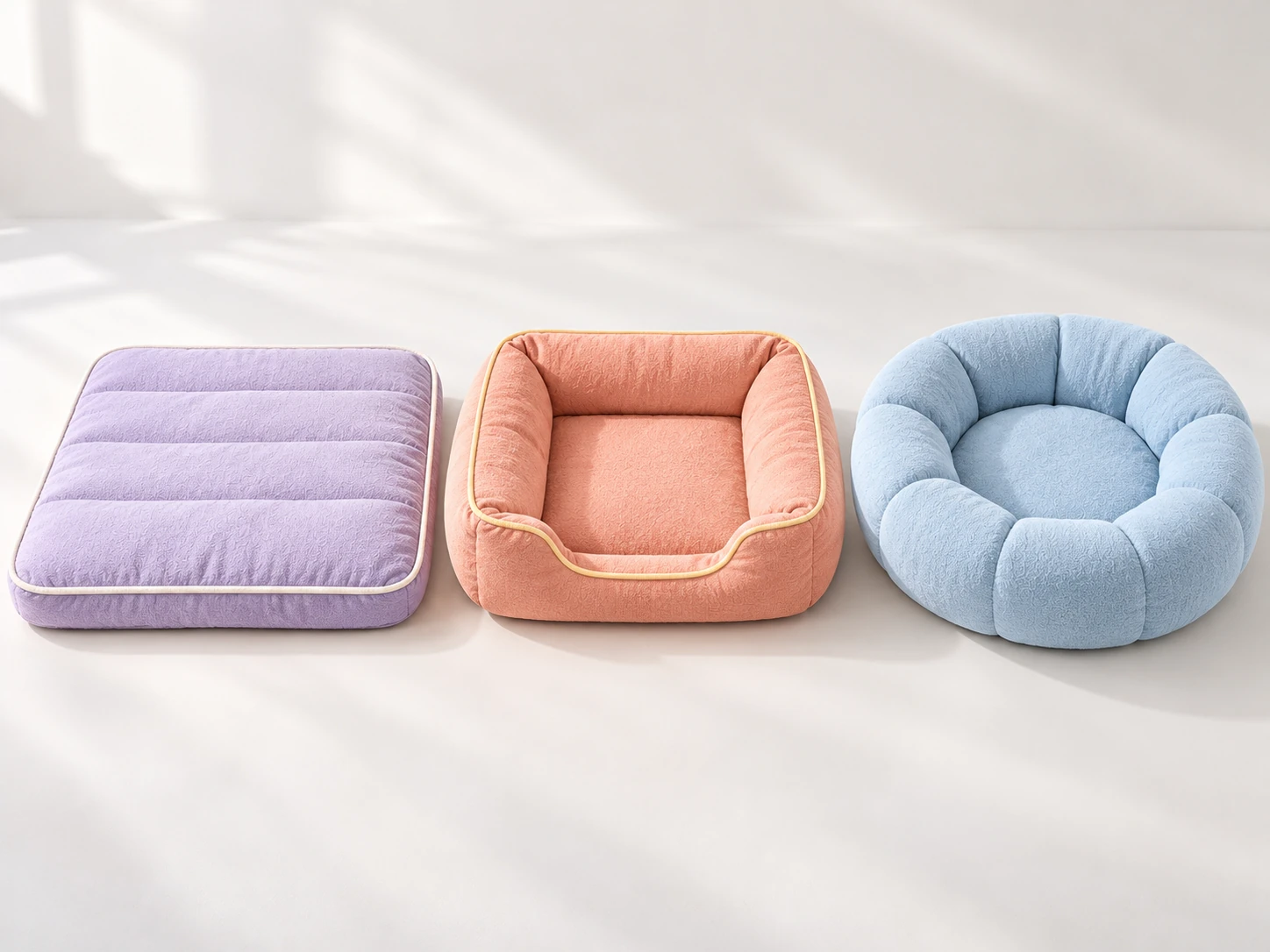
The shape of a bed changes how much of its space a dog can use.
That means the same dog may need different overall dimensions in a flat, bolster or round bed.
Flat dog beds
A flat dog bed usually has no thick raised sides, so most of its surface is open for lying down.
Start by comparing the actual length and width of the mattress.
If the edges are noticeably thinner, curved or very soft, check how much of that area is usable rather than assuming the entire outside footprint provides the same sleeping space.
Bolster dog beds
Bolster beds have padded sides around part or all of the bed. Some also have a lower opening at the front.
These sides give dogs somewhere to rest their head or body, but they also take up space.
For these beds, look for:
- the overall outside length and width;
- the usable length and width between the bolsters;
- the bolster height and whether the entrance is easy to use.
For dogs that regularly stretch out, the space between the bolsters is especially important.
Round and donut dog beds
Round beds often suit dogs that like to curl up.
But the advertised outside diameter is not necessarily the diameter of the space where the dog can lie.
A thicker bolster leaves a smaller centre.
Check the diameter of the usable inner area and consider whether your dog also stretches out or changes positions.
Dog bed size comparison
| Bed type | Dimensions to check | What is easy to miss |
|---|---|---|
| Flat dog bed | Usable mattress length and width | Whether the edges reduce usable space |
| Bolster dog bed | Inner length and width, bolster height, entrance position | A roomy outside size with too little space inside |
| Round dog bed | Usable inner diameter and outside diameter | Thick bolsters taking up the centre |
| Mat for use inside a crate | Mat dimensions and the crate’s internal floor dimensions | An oversized mat restricting the dog’s ability to turn or rest normally |
Explore more dog bed and custom product options
Once you know how much sleeping space your dog needs, you can compare different bed designs, related bedding and custom options for a brand project.
Explore Dog Bed Options and Next Steps
Dog Beds
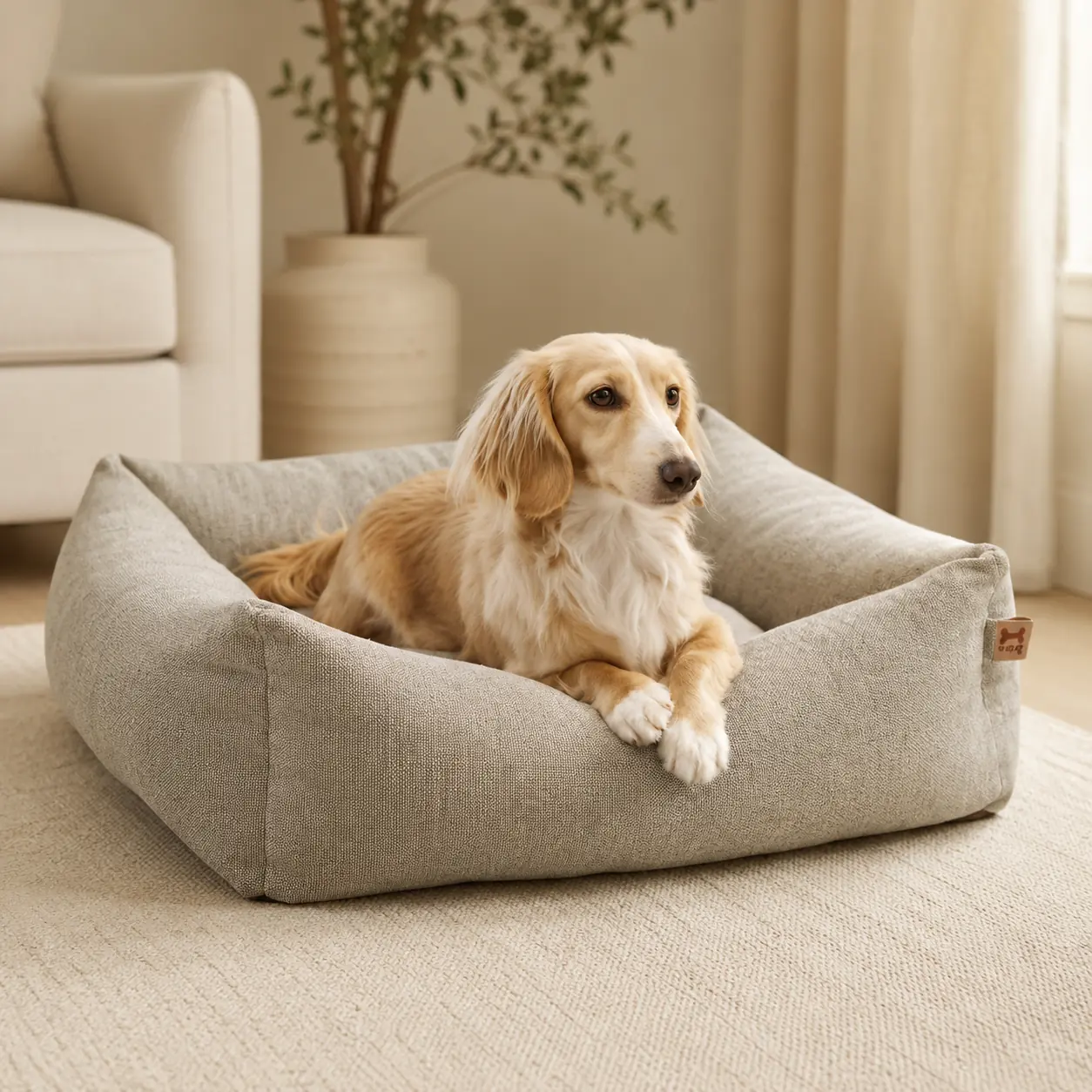
Compare flat, round and bolster dog beds and the sleeping space each design can offer.
View Dog Beds →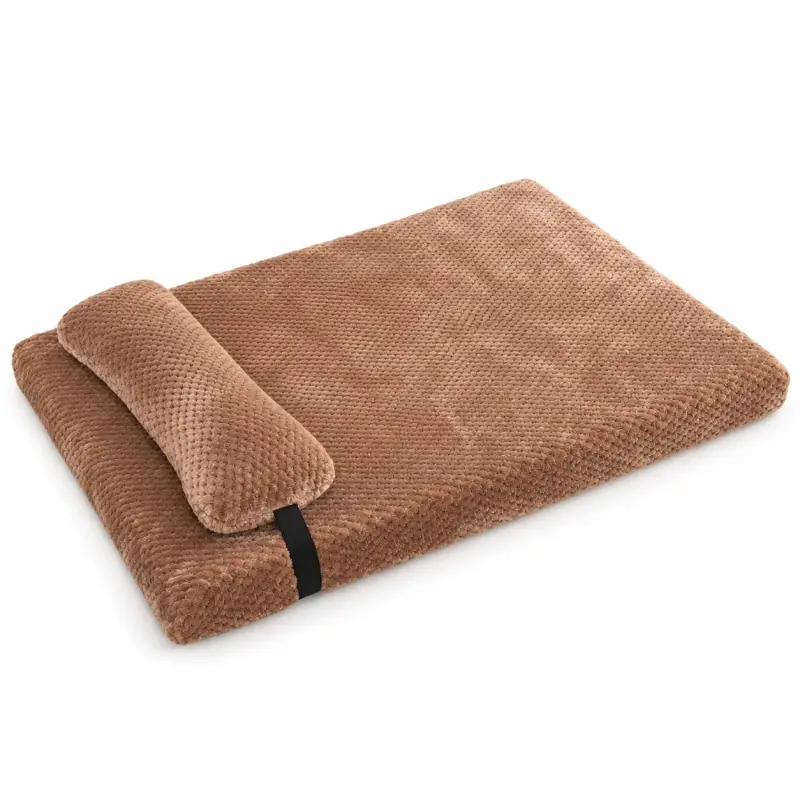
Pet Mats & Blankets
Explore pet mats and other soft bedding when a lower, flatter resting surface is preferred.
View Pet Mats & Blankets →
Customization
Once the design and sizes are clear, review material, branding, samples and packaging for your project.
View Customization →Can you rely on weight, breed or S/M/L labels?
Weight and breed can help narrow the choices, but they can’t replace measuring your dog.
Two dogs of similar weight may have very different body proportions and sleeping habits.
A long-bodied dog that often stretches out may need a longer bed than a more compact dog of similar weight.
So even if a product lists a recommended breed or weight range, check its actual dimensions.
There is no single S, M, L or XL sizing standard used by every dog bed brand.
When comparing brands, look at the actual dimensions. For beds with bolsters, check the usable space inside as well.
What if your dog falls between two sizes?
First, check whether the smaller size accommodates your dog’s usual sleeping positions and leaves enough room to change position naturally.
If the smaller bed feels tight and the larger bed provides more comfortable space, the larger size is usually worth considering.
Remember that a larger outside size doesn’t always mean an equally large increase in the space inside.
Compare the usable sleeping dimensions before making your final choice.
Should a puppy use an adult-size dog bed?
You can keep your puppy’s future size in mind, but you don’t have to choose only by their estimated adult body length.
Start with a bed that lets the puppy rest comfortably now, taking cleaning and available floor space into account.
As the puppy grows, measure again and check whether the current bed is still a good fit.
How should brands check a dog bed size range?
For pet brands and wholesale buyers, size affects more than a customer’s choice. It also affects product development, sample approval and the final size information shown to customers.
When planning S, M, L and XL versions, check the space available for sleeping as well as the outside dimensions.
With filled, raised-sided dog beds in particular, the amount of filling, bolster thickness and finished construction can all affect the final measurements.
Check how much usable room each size offers
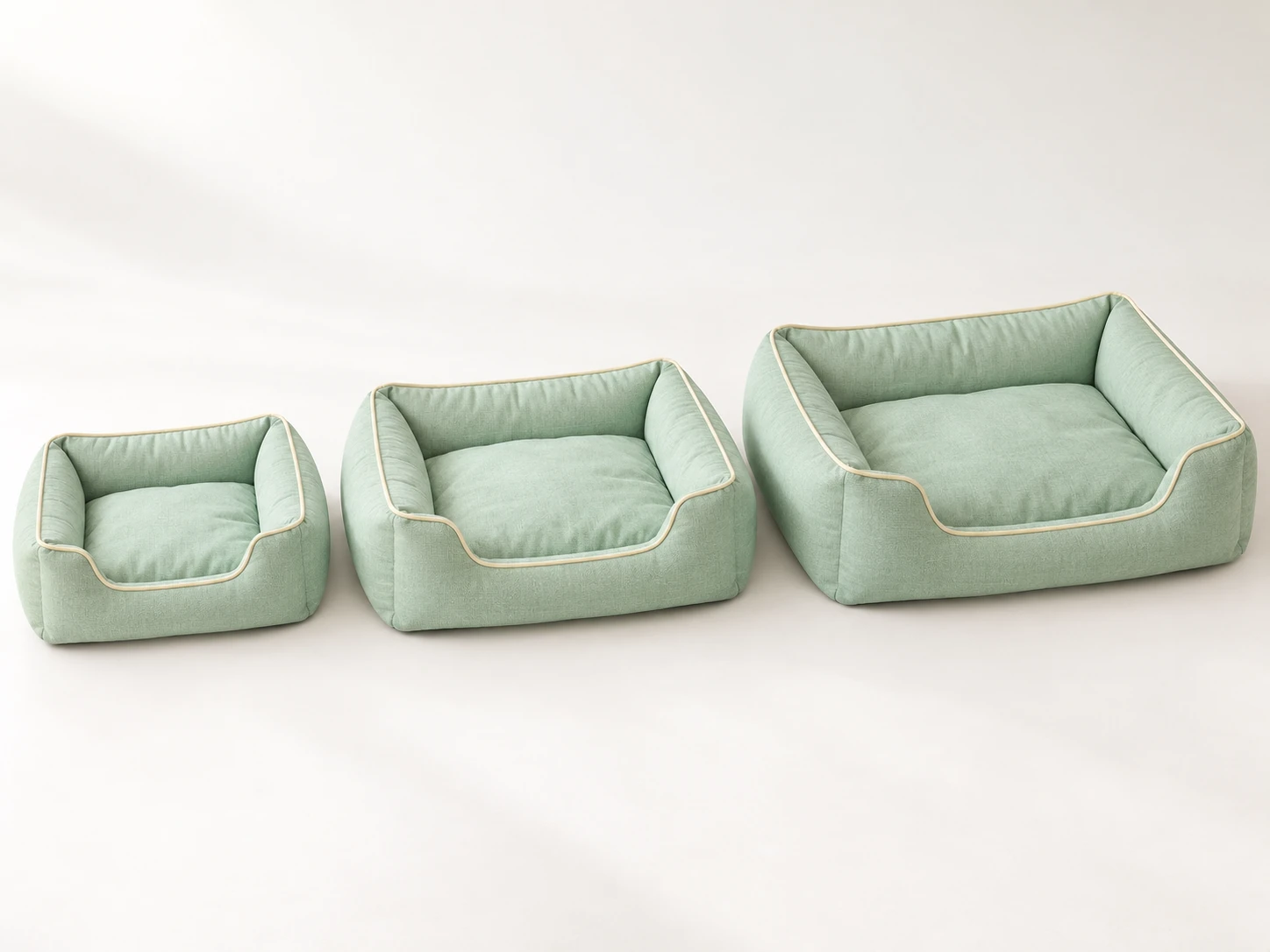
Don’t judge a size range only by whether the outside dimensions increase from one size to the next.
For example, a larger bed may also have thicker bolsters, so the space between them may not increase by much.
When comparing neighbouring sizes, check that the usable sleeping length and width offer a meaningful difference as well.
Measure a complete sample, not just the drawing
Dog beds are soft products. Their dimensions can change once the cover is sewn and the filling is added.
That’s why dimensions should be checked on a complete, finished sample.
If the bed is packed under compression, allow it to recover under the conditions agreed by the buyer and supplier before checking its dimensions in normal use.
This doesn’t mean every dog bed needs the same recovery time. It means both sides should measure it under consistent conditions.
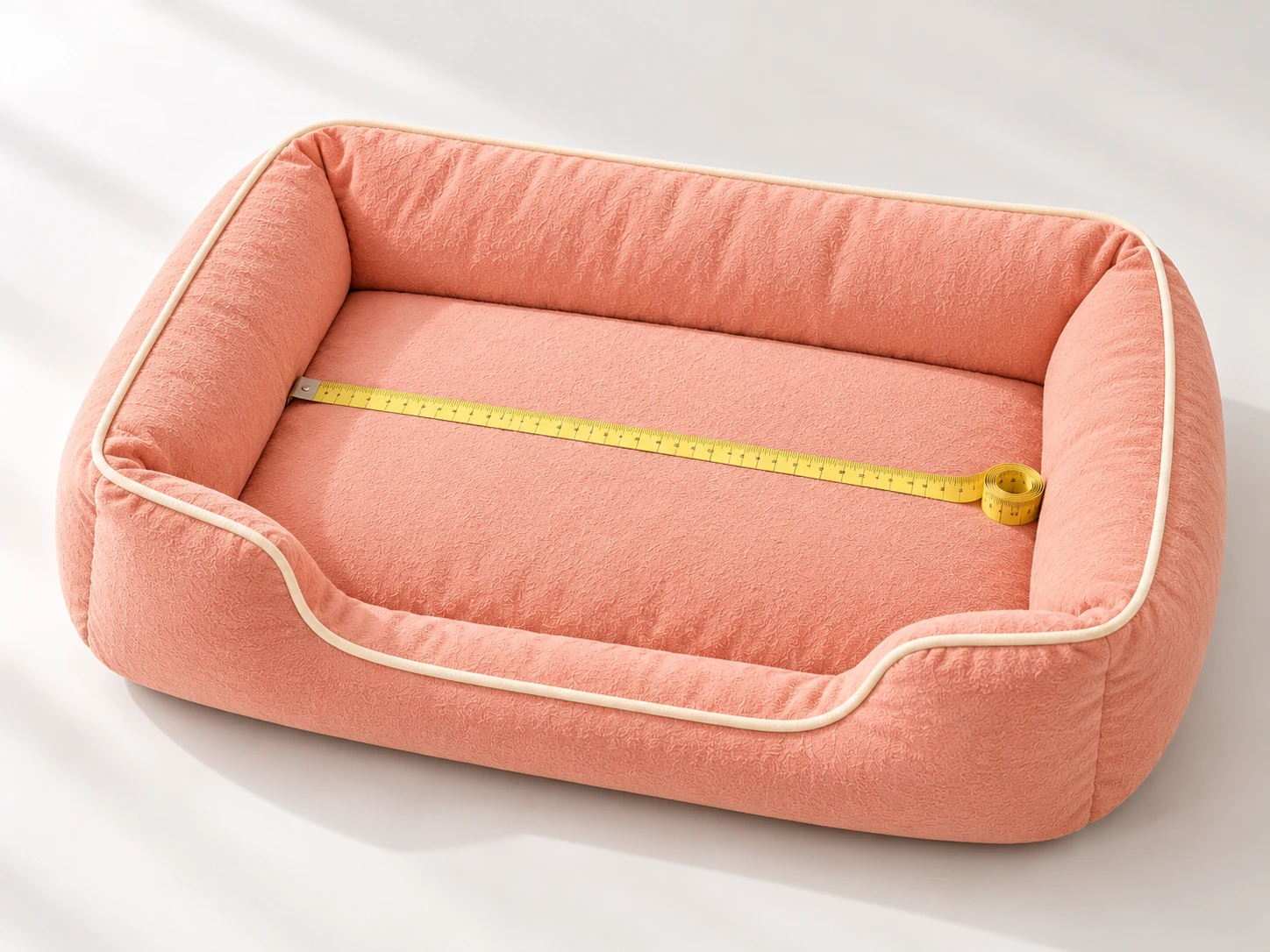
Agree on exactly where to measure
Measurement points matter on soft dog beds.
For example, should the overall width of a bolster bed be measured from the outermost padded edges or between two seams?
And which points along the inside of the bolsters define the usable sleeping area?
Two people may get different results from the same sample if they use different measurement methods.
Agree on the measurement points, sample condition and permitted tolerance during sample approval.
Match the final size chart to the approved sample
Changing the bolster thickness, filling amount or construction during sampling can also change the usable sleeping space.
If those details change, check the dimensions again rather than continuing to use the original drawing measurements.
The size chart shown to customers should reflect the approved finished-product specification.
Dog bed sample size checklist
| What to check | What to confirm | Why it matters |
|---|---|---|
| Overall dimensions | Does the finished bed match the agreed length and width? | Keeps product information consistent with the finished bed |
| Usable sleeping area | What length and width can a dog actually lie on? | Helps customers choose an appropriate size |
| Adjacent sizes | Does each size offer a meaningful difference in available space? | Avoids size options that are too similar in practice |
| Bolsters and entrance | Are the bolster thickness, height and entrance position as agreed? | Confirms how the design affects space and access |
| Measuring method | Are the measuring points, condition and agreed tolerance clear? | Reduces disagreements caused by different measuring methods |
| Final size chart | Does it match the approved finished sample? | Reduces confusion about bed dimensions |
For a dog bed project with a chosen style, buyers can send reference images, target dimensions, the planned size range and branding requirements to the supplier.
The finished samples can then be used to confirm the dimensions of each size and how much room they give a dog to rest.
Dog bed sizing questions
How much bigger should a dog bed be than the dog?
Leave enough extra space for your dog to stretch and change position naturally, but there is no fixed allowance that works for every dog or bed shape. Measure your dog’s usual resting positions first, then check the usable sleeping space.
How can I tell if a dog bed is too small?
If your dog’s body or naturally stretched legs regularly can’t fit on the sleeping surface, or the bed makes their usual resting positions difficult, consider a bed with more usable space. Some dogs like resting their head or paws on the edge, so don’t judge by one position alone.
Why are two Large dog beds different sizes?
Brands may use different size ranges, and different bed designs also affect the area available inside. Check the measurements rather than relying on Large or XL alone.
What if a dog bed listing gives only outside dimensions?
For a flat bed without substantial bolsters, the main mattress dimensions may be a useful starting point. For a round or bolster bed, ask the supplier for the usable inside dimensions or a measurement diagram.
Can I choose a dog bed by breed or weight alone?
Breed and weight can help with an initial shortlist, but dogs of the same breed or similar weight can have different proportions and sleeping habits. Their actual resting dimensions are usually a better guide.
Do dogs need a larger bolster bed?
Not necessarily a larger outside size, but you do need to account for how much space the bolsters occupy. If the inside is too small, even a bed that looks large overall may not let your dog stretch out comfortably.
Choosing or customizing dog beds for your brand?
When choosing a dog bed, the space your dog can actually use matters more than its size label.
For pet brands and wholesale buyers planning several bed sizes, clear dimensions also help customers understand the differences between products.
If you already have a preferred dog bed design, reference dimensions or customization requirements, contact PETMERO to discuss product options, the size range and sample approval.