Ref. R07-01
Compare open trays, high-sided, covered and top-entry cat litter boxes. Review dimensions, cleaning access, accessories and private label options.
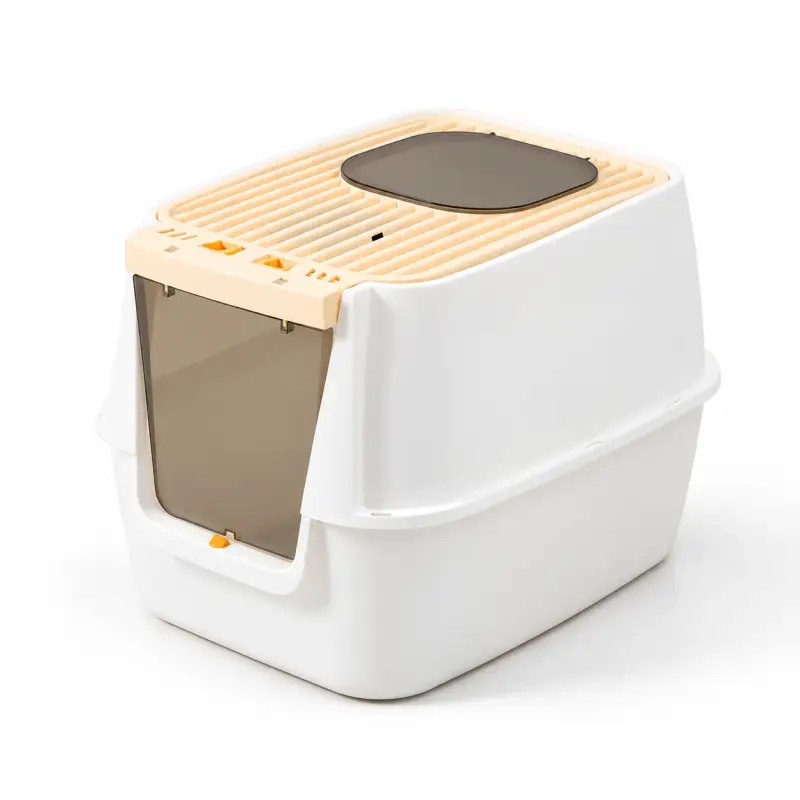
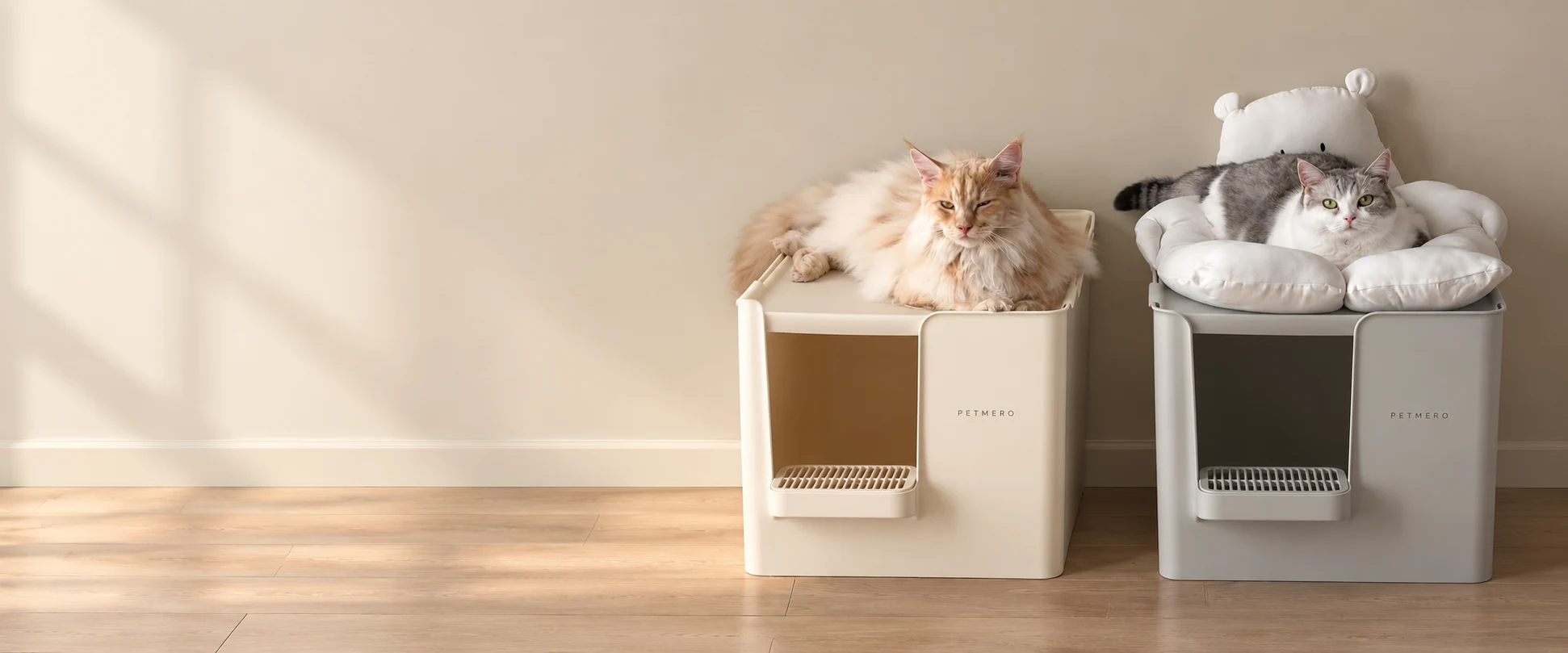
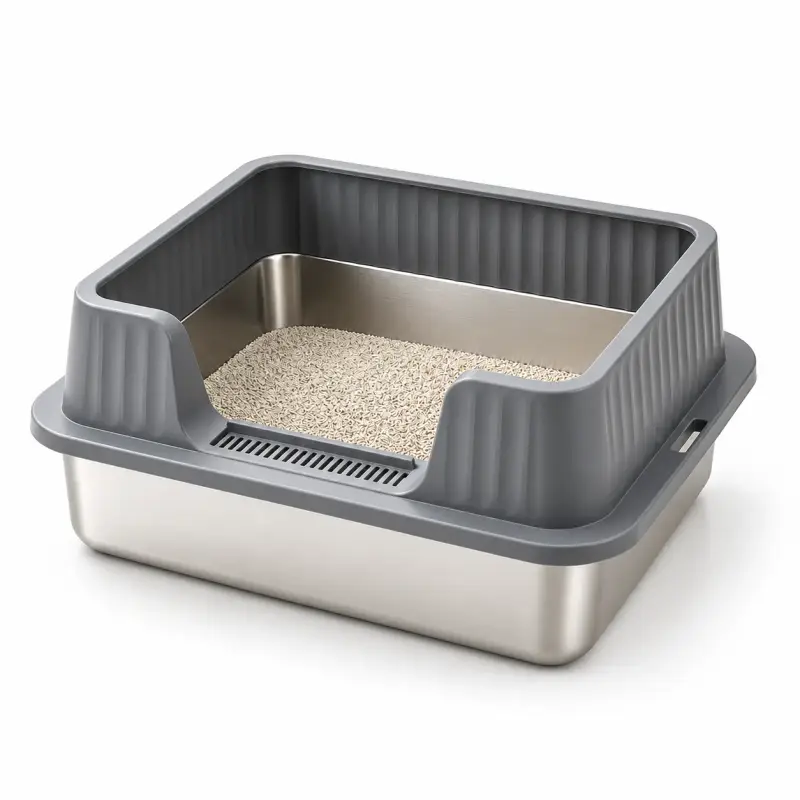
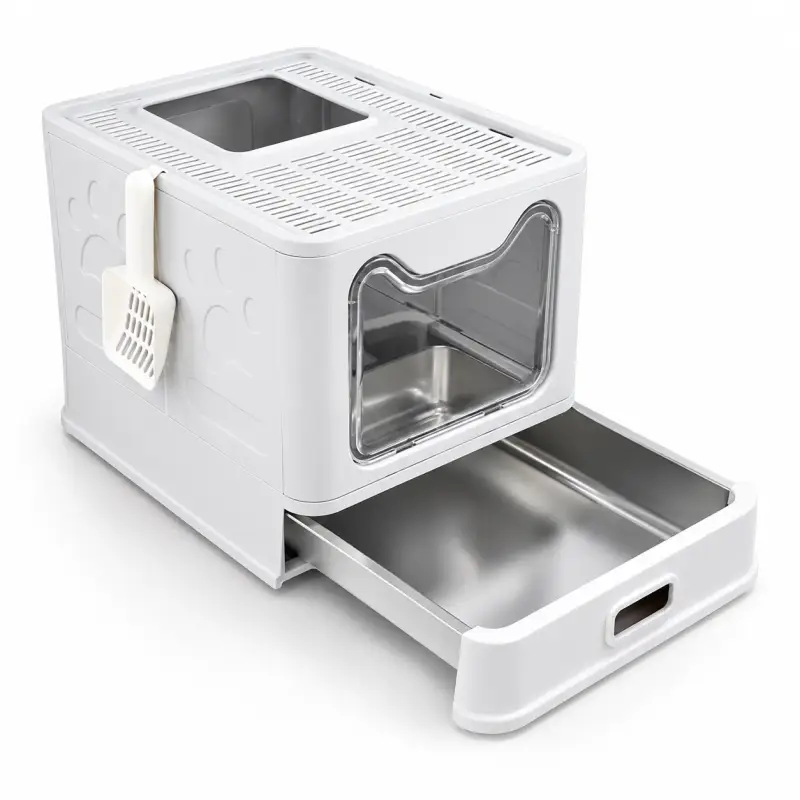
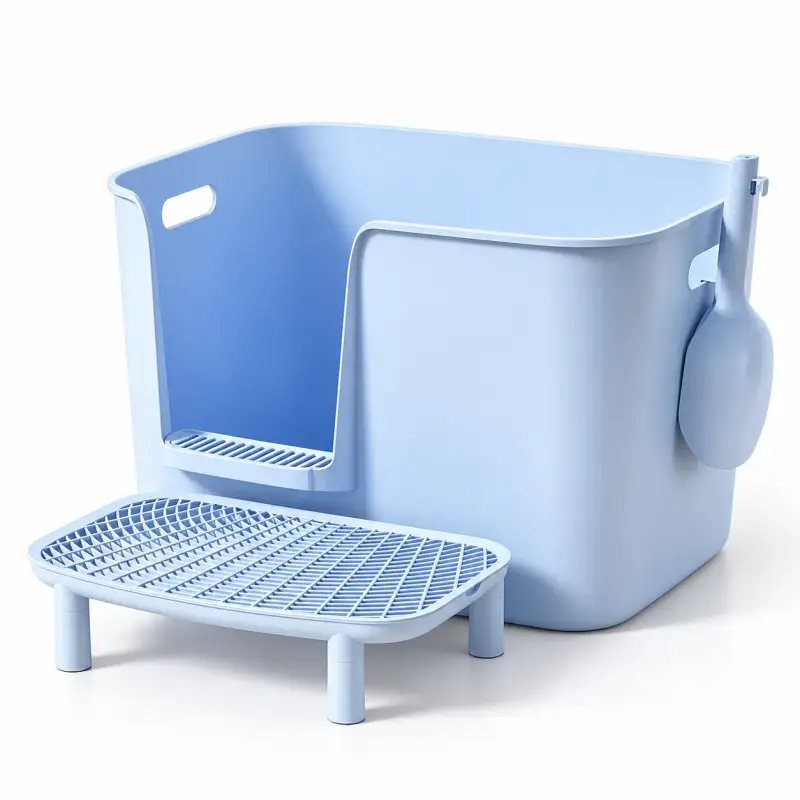
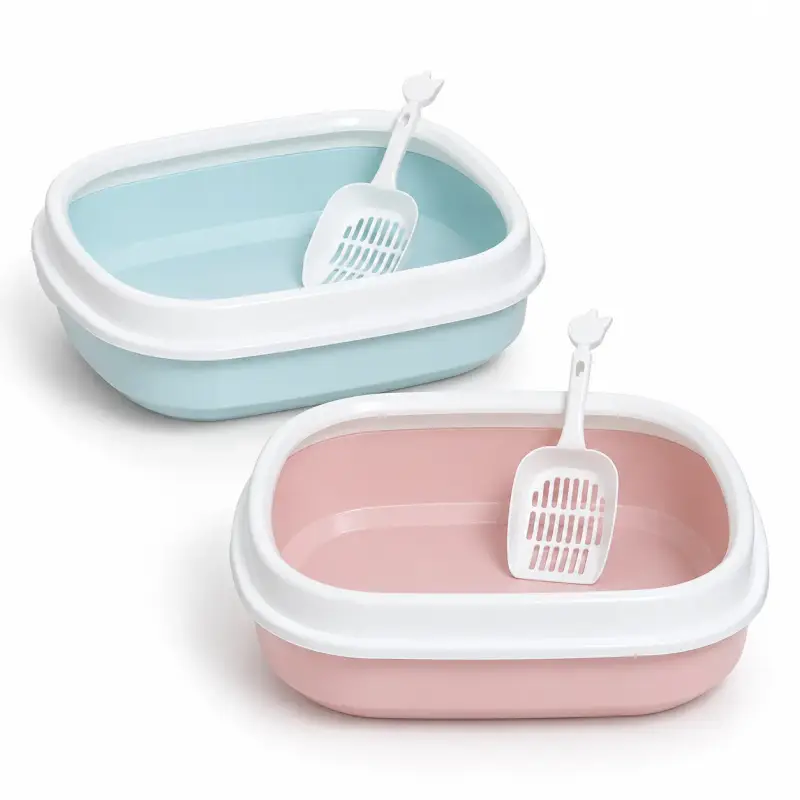
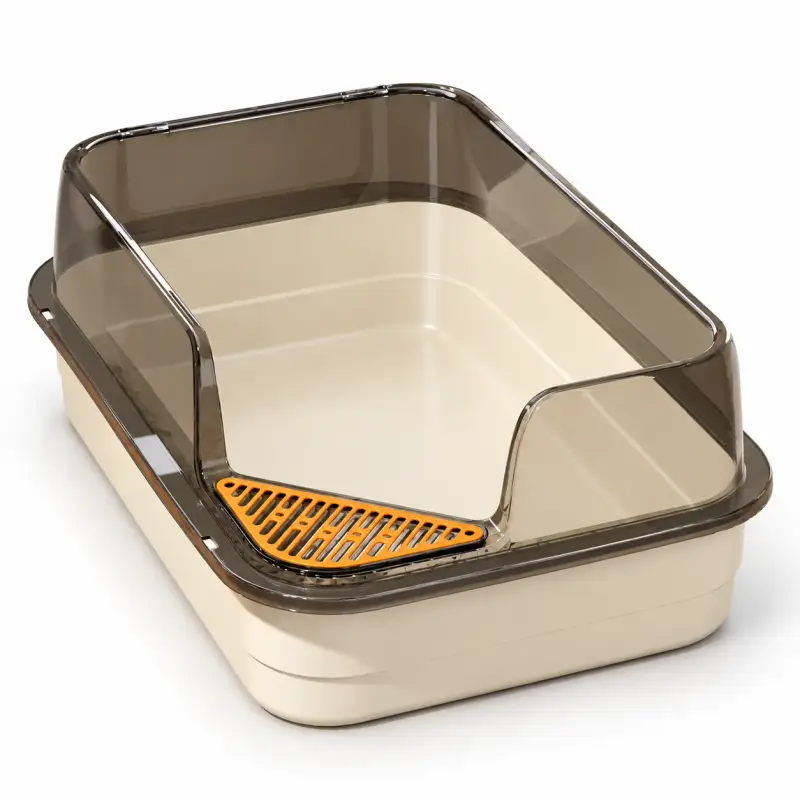
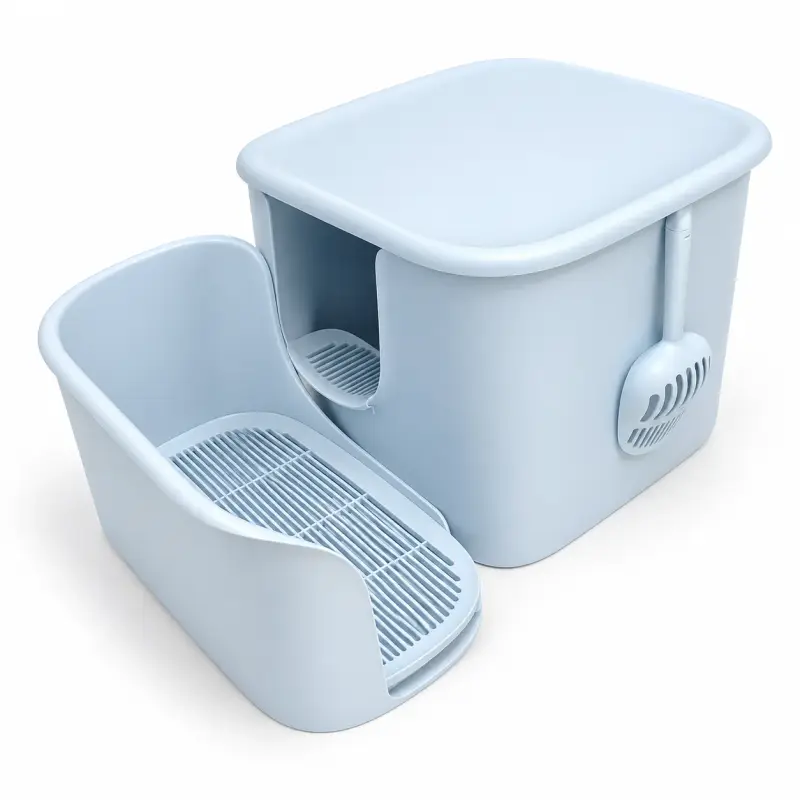
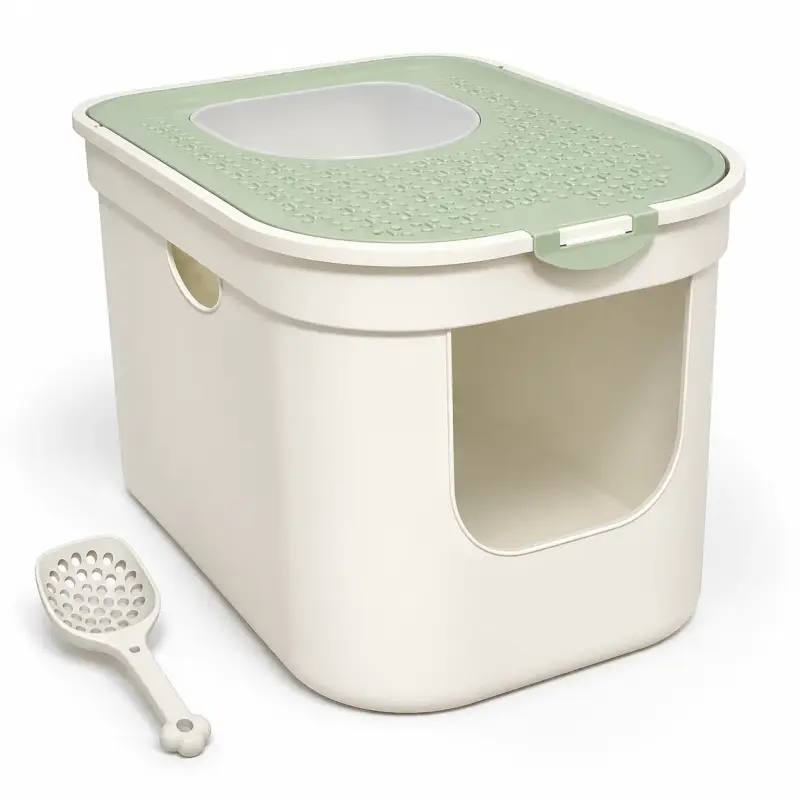
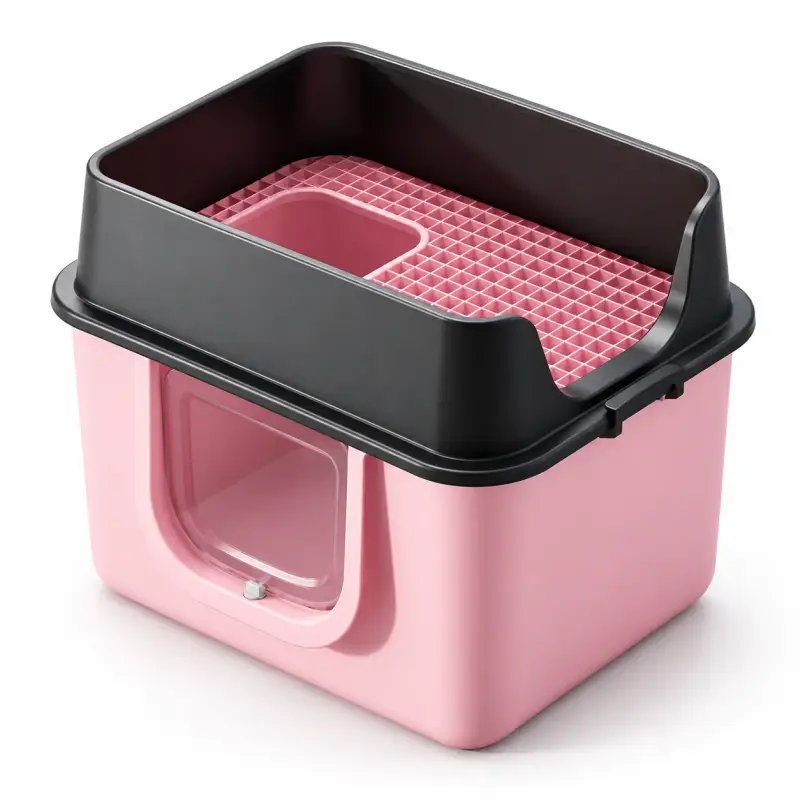
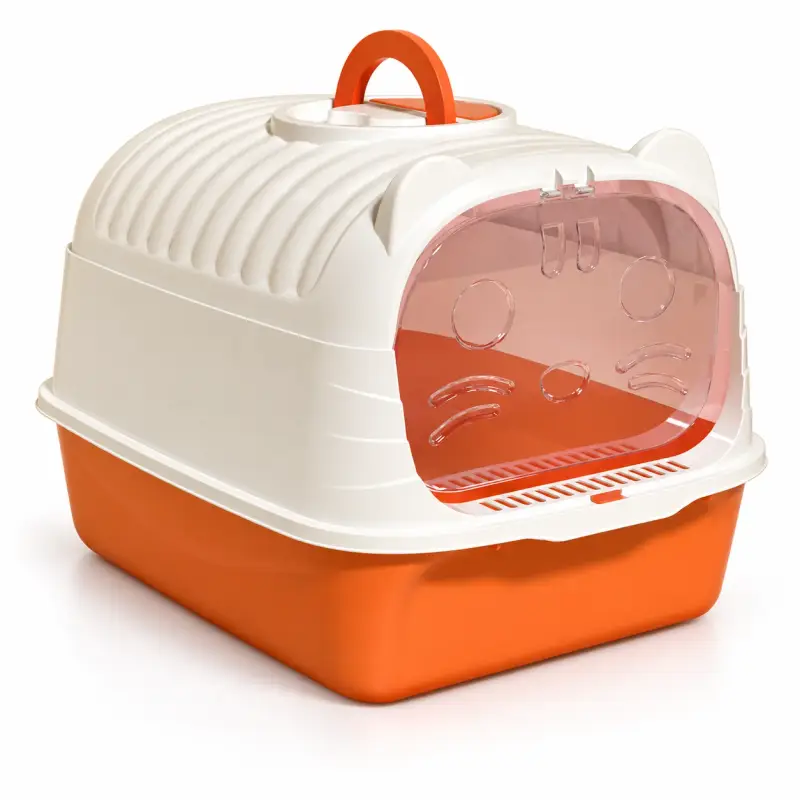
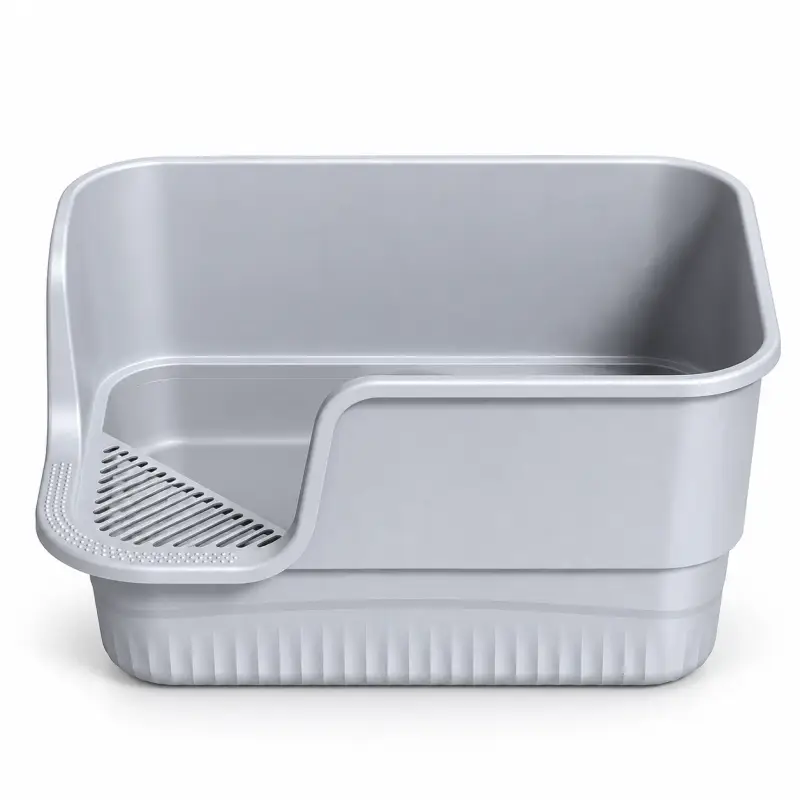
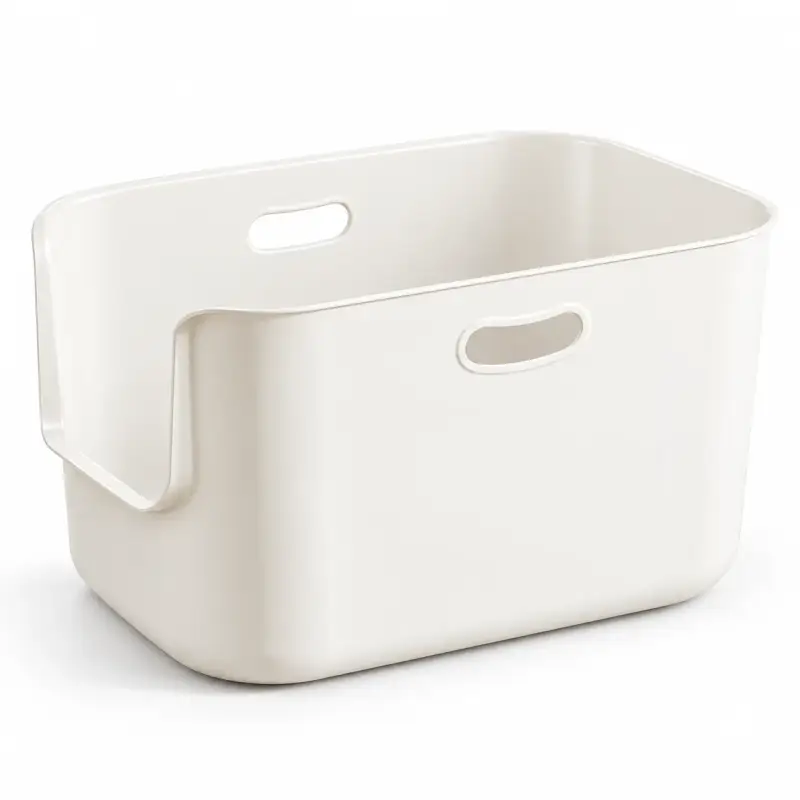
These 12 non-electric references address different needs: R07-05 gives open access with visible scoops, R07-02 and R07-11 have high sides with lower front entries, R07-03 uses a pull-out cleaning tray, and R07-08 has a top entry. R07-04 and R07-07 show separate grated entry platforms. Check the selected sample for usable interior dimensions, removable parts and what is actually included in the pack; a pull-out tray is not an automatic cleaner.
See a direction that fits your range? Ask about the Ref. ID or send your own example. Custom details can be discussed after the first message.
Compare open and enclosed cat litter boxes by usable tray space, entry height, cleaning access, lid attachment and the selected plastic construction.
Open access makes scooping and full-box cleaning straightforward, and low-entry versions reduce the step-over height. The trade-off is less physical containment around the rim.
Taller walls can help contain kicked or scattered litter while the top stays open. Compare the lowest entry point as well as wall height, especially for ranges that may serve kittens, senior cats or cats with limited mobility.
A hood can help contain scattered litter and visually screen the litter area, but entrance size, usable headroom, ventilation and cover removal all affect usability. A covered box is not the preferred setup for every cat.
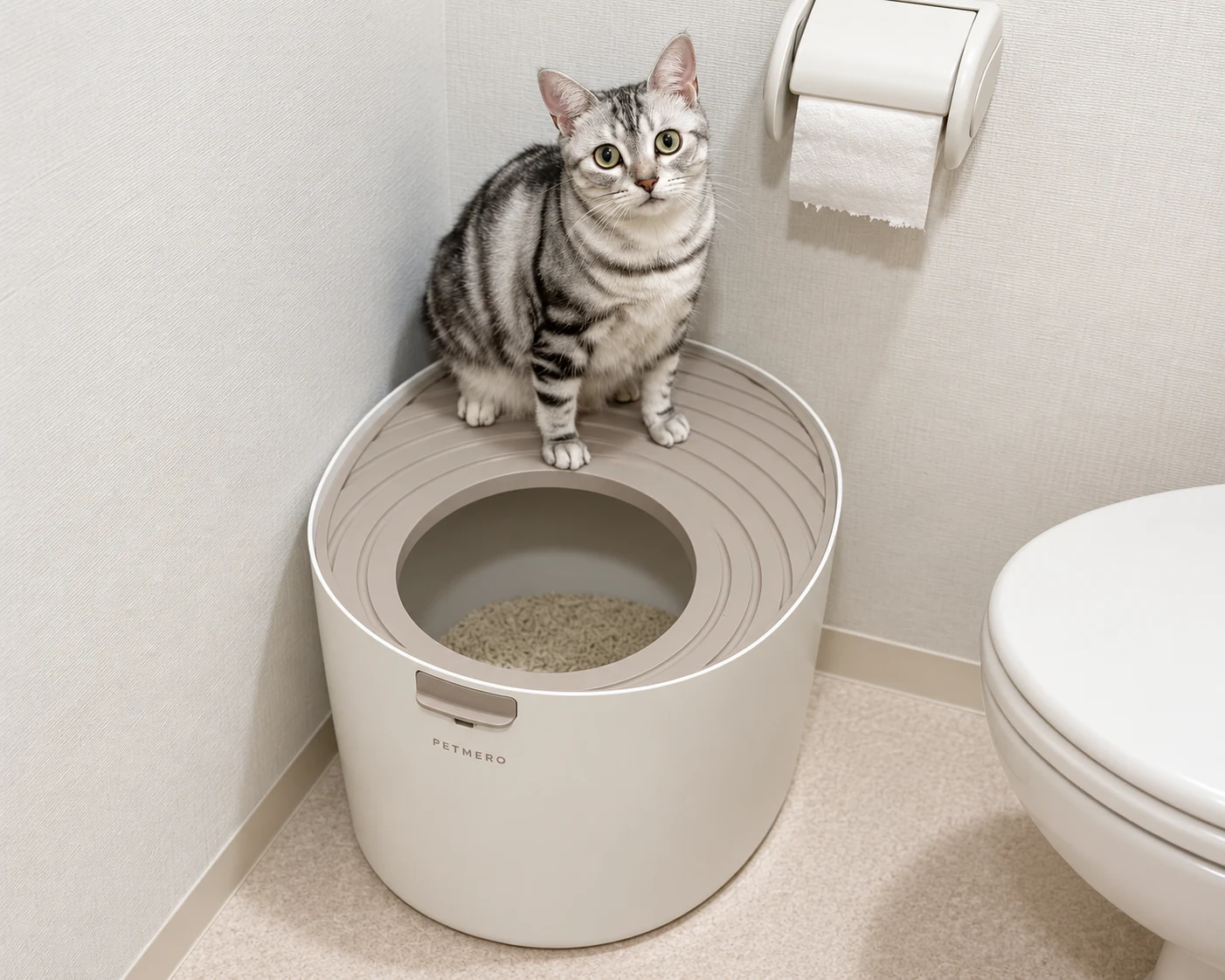
High walls and a top exit can help reduce litter scatter and tracking around the box, but the raised entry requires more agility. Consider whether the target shopper needs an easier low-entry option.
A sliding lower tray can make routine litter access more convenient without lifting off the whole enclosure. Check drawer travel, corners, joints and whether the tray can be fully removed for cleaning.
For a cat litter box range, the important differences are not only shape and colour. Buyers also compare litter containment, entry access, cleaning routine, usable interior space and what is included in the pack.
Use these points to decide which references belong in the assortment. Claims such as reduced tracking should be treated as a design direction to verify on the selected sample, not as a guarantee across every cat, litter or home setup.
| Option | The useful difference | What to compare |
|---|---|---|
| Litter scatter & tracking | Higher walls, covers and top-exit geometry can help keep more loose litter around or inside the box. | Compare wall height, the size and position of the entry or exit, and any grated step or lid surface. Verify the selected sample before using a tracking-reduction claim. |
| Entry & accessibility | Low-front designs reduce the step-over height; top-entry and tall-front designs require more climbing or jumping. | Compare the lowest entry point as well as the opening size. Low-entry options may suit ranges aimed at kittens, senior cats or cats with limited mobility. |
| Cleaning routine | Open trays give direct access, while hoods, rims, drawers and platforms add removable or moving parts. | Check how the box opens for daily scooping and a full clean, including corners, drawer travel and parts that lift, slide or detach. |
| Usable interior | Outside dimensions can make two boxes look similar even when the usable floor area or headroom is different. | Record internal floor length and width. For covered designs add usable headroom; for top-entry designs record the clear top opening. |
| Retail set & pack-out | Scoops, steps, platforms and removable lids change both the shopper offer and the carton configuration. | Confirm exactly what is included per SKU, whether pieces nest or pack separately, and the assembled versus packed dimensions. |
Keep the same measurement and parts language on the quotation, sample record and retail specification. That makes different references easier to compare and helps repeat orders stay aligned with the approved version.
Record overall length, width and height, then add usable internal floor length and width. For covered versions, include usable headroom; sloped walls, rims and covers can reduce the space inside.
Record entry width and height separately from the tallest wall. For top-entry versions, measure the clear top opening rather than using the lid's outside dimensions.
List lids, rims, drawers, platforms, handles, feet and other removable pieces. On the sample, open, remove and reassemble the parts that are handled during routine litter-box cleaning. For changed component layouts, see the customization and sample-review process.
Record included pieces by Ref. ID: R07-05 visibly includes scoops, R07-04 and R07-07 show separate entry platforms, and R07-03 has a pull-out cleaning tray. These photos show configurations, not a confirmed sales pack. Check whether each pictured piece is included, plus its material, separate or nested packing and the assembled versus carton dimensions.
Confirm the specified material and surface finish for the selected litter box. Do not infer a material grade from a photograph; if the target market requires documentation or testing, define it for the exact finished version.
For moving or removable parts, confirm how they locate, slide or detach, which pieces are included and which interfaces need to be checked on the sample.
Review edge finish, corners, seams and visible joints on the sample, especially around entries and removable parts where cleaning access matters.
Keep structure and branding as separate decisions. First confirm the litter-box body, entry and included parts; then define colour, marking and packaging for that exact version.
Specify the colour of each visible component where the construction uses separate parts. Approve the proposed combination on the sample or agreed reference before bulk production.
Share artwork and the preferred marking area if you have one. The suitable method and usable area depend on the selected surface and construction, so confirm the finished result on that version.
List the included scoop, step, platform or other pieces by SKU and define the pack format. Confirm any required label, instruction or insert together with the packed dimensions.
For cat litter boxes, choose open, high-sided or covered construction, then confirm entry dimensions, removable parts and packing. Sample and order requirements depend on that model.
A PETMERO reference, your own product photo or a short description is enough for a first inquiry. You do not need a finished specification before contacting us.
Use a Ref. ID, photo, product link or simply describe the open, high-sided, covered, pull-out or top-entry direction you want to discuss.
Size, approximate quantity, colour, logo, included scoop or step, packaging and target market are useful when available, but they are not prerequisites for first contact.
Final dimensions, removable parts, approved sample, branding, pack-out and commercial terms are confirmed before the order is released.
Approximate quantity and destination become useful when you want more specific commercial or freight terms, but they are not required just to start the conversation.
There is no single best format for every shopper or cat. Open trays prioritise direct access and simple cleaning; high-sided boxes add more side-wall containment; covered boxes create a more enclosed litter area; top-entry boxes can help reduce scatter and tracking but require more agility. Build the assortment around the use cases you want to serve.
They can. The higher walls and top exit can keep more loose litter inside or around the lid as a cat leaves the box. The result still depends on the exact opening and lid design, litter type and the cat, so tracking reduction should be checked on the selected sample rather than treated as a universal guarantee.
A lower front opening reduces the step-over height. It can be useful when a range is intended for kittens, senior cats or cats that need easier access. The trade-off is that a lower opening may contain less loose litter at that point than a taller wall, so compare entry height and side-wall height together.
Do not compare only the outside length and width. Record the usable internal floor area, entry dimensions and wall height; for covered boxes also check usable headroom, and for top-entry boxes record the clear opening in the lid.
No. The 12 references shown here are non-electric litter trays and boxes, including covered, top-entry and manual pull-out-tray designs. A pull-out cleaning tray is not an automated waste-removal mechanism. An electronic self-cleaning unit would require a separate model-specific review and should not be inferred from the examples on this page.
You can start with a Ref. ID, a photo, a link or a short description of the style you want. If you already know approximate quantity, target size, branding or packaging, add it for a more specific discussion; otherwise those details can be clarified later.